Miss Representation

It is one thing to read about sex-trafficking; it is quite another to see it up close. I have painfully vivid memories of the first time my international travels brought me face-to-face with sex-trafficking.

Witnessing scantily clad young women walking the dark streets with a steady stream of cars pulling up alongside to pick them up is worse than those recurring nightmares where something awful is happening that you can’t stop, no matter how hard you try. Only this wasn’t a nightmare from which to awake. It was and is actually happening—not just overseas, but in our own communities.

So I was feeling not a little shell-shocked when I walked into the international airport on my way home, only to see an oversized ad picturing a nude female model sprawled out—appropriate parts of her body concealed, but not enough to blunt the sexual force of the image. I had seen such images before, but now they took on a whole new meaning.

The disconnect between what I witnessed on the streets and what I was seeing in the airport was disorienting. Appalling and abusive criminal activity—human rights violations of the most degrading sort—on the one hand. On the other, socially accepted Madison Avenue marketing genius and an enviable modeling career on display that fuels the dreams and aspirations of countless young girls.

Super Bowl XLVII brought on a disturbing sense of déjà vu by juxtaposing similarly conflicting images. Tragically, Super Bowls and sex-trafficking are inextricably linked.

Research demonstrates that sex-trafficking activities surge dramatically in cities hosting major sporting events like the Super Bowl—meaning women and girls against their will are bought and sold repeatedly that night to satisfy men. So I was heartened to read how New Orleans law enforcement had mobilized to prevent these atrocities from happening in their city.

With that battle raging on the streets of New Orleans on behalf of trafficked girls, America sat back, munched on chips and dip, and watched a collection of commercials that devalued, degraded, and objectified women as sexual objects. None was more pointed than the young man exiting a one-night stand who was willing to ditch the girl, but not his favorite T–shirt.

Those commercials and Beyonce’s half-time performance left me flummoxed.

What kind of cultural and moral confusion, not to mention double standard, is behind abhorring the reduction of women and girls to their sexuality on the streets and cheering an audience-riveting performance or being indifferent to ads that sing the same basic song? According to this standard of value, even for Beyonce the clock is ticking and, unless she can pull off the kind of career-longevity that rocker Mick Jagger enjoys, she’ll soon be heading for the sidelines.

These issues took on even sharper focus for me when I recently attended a screening of Miss Representation—a powerful documentary (Oprah Winfrey Network production) that focuses on the media’s portrayal of women and the impact of that portrayal on women and girls—as well as on men and boys.

For an hour and a half, I watched how women are being systematically and relentlessly misdefined by media images that distort and diminish their value as women—not to mention as human beings—images that demand physical “perfection,” focus on sexual attractiveness, and demonize and trivialize smart successful women leaders such as Hillary Clinton and Condoleezza Rice. I was especially taken by Katie Couric’s candid comments. In a moment of reflection and self-reproach she lamented that the focus on her short hemlines and sexy legs may have influenced the increasingly provocative attire of other newswomen.

OK, so our culture sexualizes women—what’s new? Realistically, that is not going to change anytime soon. The next anchor woman will have shapely legs, and the Super Bowl commercials and half-time shows will find ever creative ways to tantalize its largely male audience. As much as I loathe these trends, I am more concerned about the church and whether we have the chutzpah to address these issues at a core level, not with criticism, but by completely undermining—pulling up by the roots—the fallen value system that sustains these destructive views of women and the degrading behavior that thrives on such thinking and replacing it with a robust life-giving vision that causes women and girls to thrive.

There are deeper questions we need to be asking.

Does the church’s message for women truly and thoroughly counteract low views of women and girls, or are we part of the problem? Is our message simply about abstinence, modesty, and submission to and dependence on men? (Try delivering that sermon to a young girl who has been freed from her traffickers!) Perhaps most importantly, do we, will we courageously engage?

Many Christian women view the church as irrelevant to their everyday lives. Scores of women have already quit listening to what the church has to say on the subjects of women and our relationships with men. What they’re hearing doesn’t comport with what they know to be true of themselves or with what the realities of life in a fallen world demand of them. All too often the contemporary church is so culture-bound that it tragically fails women (and men).
As powerful as Miss Representation is, it is not radical enough.

God has an image of women and girls too, and it looks nothing like any of the representations we see in the airport, the evening news, the Super Bowl half-time show, or even the church.

Women and girls bear God’s image and as such represent him. They are vice-regents of this planet and thus are central to God’s strategy for establishing his kingdom. God created them to be ezer-warriors in a Blessed Alliance with their brothers, fiercely defending the honor of their Creator in whose image they were created. In God’s representation of women and girls, they are to strive to be more, never less!

To read more about that vision:  Half the Church: Recapturing God’s Global Vision for Women

If you have trouble viewing the Miss Representation trailer below, go to http://www.missrepresentation.org/

Posted in Uncategorized | 4 Comments

Big Changes in Boxford!

Over two and a half millennia ago Heraclitus the Greek philosopher of Ephesus stated the obvious,  

“Everything changes and nothing remains still . . . you cannot step twice into the same stream.”

I don’t know enough about Heraclitus (a.k.a. the “weeping philosopher”) to know if he was lamenting the relentlessness of change and longing for the past, or if he celebrated change for introducing newness, fresh challenges, and progress. Would he prefer a murky pond to the fresh cool flowing water of a stream? I wonder.

With respect to recent developments in Boxford, change in our case signals progress and the beginning of a whole new chapter. In case you haven’t already heard, Frank has accepted Biblical Seminary’s invitation to become their 4th president.

After spending several days on Biblical’s campus in Hatfield just outside of Philadelphia, Frank was clearly inspired by what he’d seen.

“After interacting with the board, faculty, staff, and students, I’m convinced that Biblical is unlike any seminary I have known. The missional vision is a game changer and I want to be a part of this. I am especially thankful for the leadership of President Dave Dunbar who has blazed the missional path at Biblical Seminary. Carolyn and I are looking forward to joining the Biblical community as we Follow Jesus to Hatfield.”

You can read Biblical Seminary’s full announcement here and also their Statement of Convictions which explains why Frank is so enthusiastic about assuming this new post. 

The move to Pennsylvania brings us full circle, for that’s where we lived for the first seven years of our marriage, where I took an unexpected detour from ministry into software development, where Frank launched into doctoral studies, and where our daughter Allison was born. We’re looking forward to returning to our old stomping ground and rekindling old friendships. We’re especially excited that this move puts us within driving distance to my cousin Karen, her husband Tommy, and their family.

One change is certain NOT to happen—for no move yet has managed to dislodge Frank from his undying loyalty to his beloved Dallas Cowboys. I, however, am more fickle and have every intention of switching from the Red Sox to being an avid Phillies fan . . . again.

Next on our to-do list is getting our Boxford house ready to sell, putting it on the market, and praying the recent positive reports of the improving housing market is for real.

Frank officially begins his duties as Biblical’s fourth president on July 1.


Posted in Uncategorized | 4 Comments

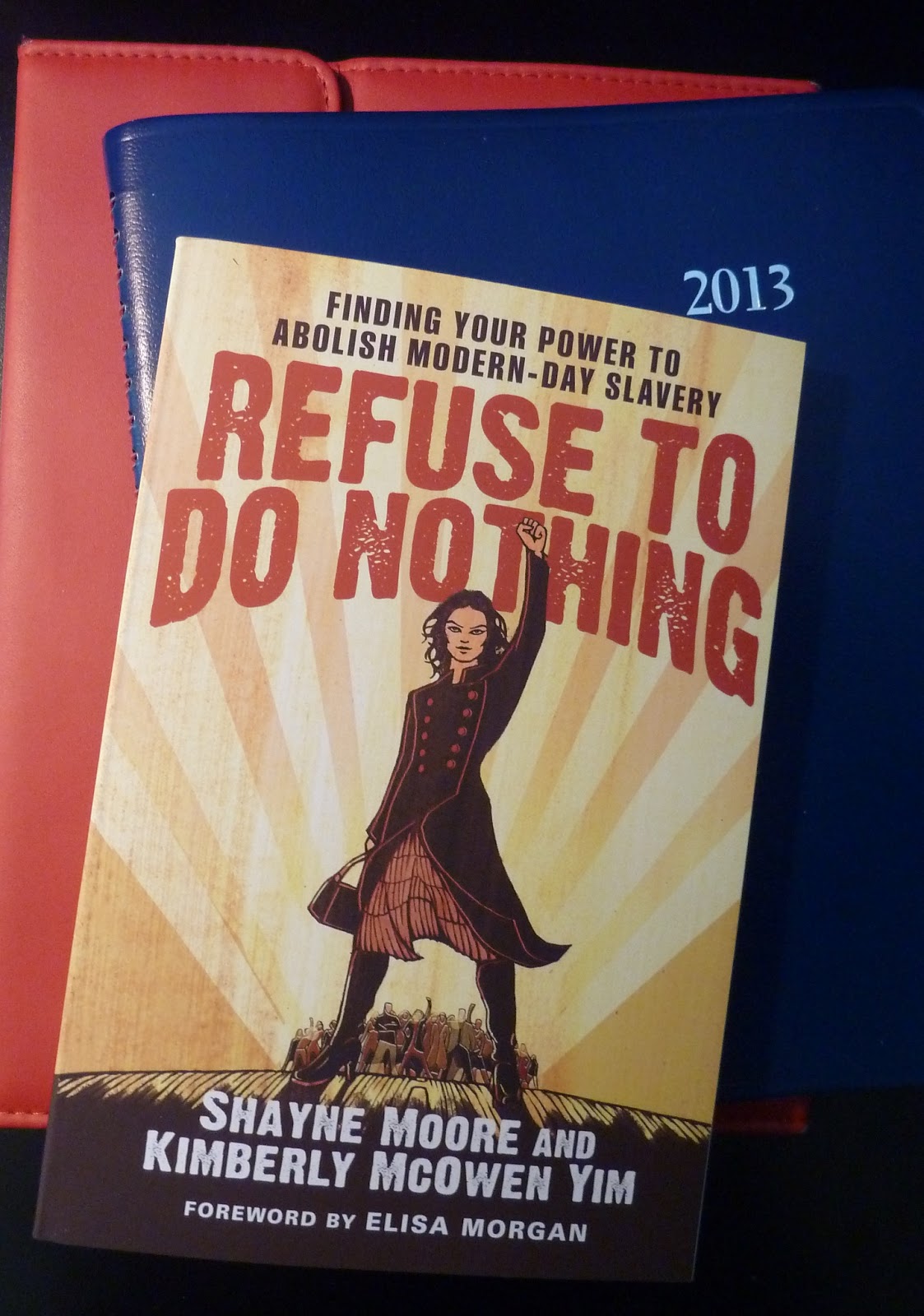
Refuse to Do Nothing!

Last November, I posted my enthusiasm for a new book by Shayne Moore and Kimberly McOwen Yim that was scheduled for release in February 2013.

You can read what I said here.

Today, my copy arrived in the mail ahead of schedule, and my earlier enthusiasm remains undiminished. I am thrilled to be able to recommend it again to you!

Refuse to Do Nothing takes us beyond being upset about human trafficking to see that we really can―and as Christians actually should―do something about it. Instead of helplessly wringing our hands over these appalling atrocities, Refuse to Do Nothing provides the concrete tools we need to become part of the solution.

Elisa Morgan’s relentlessly passionate “She did what she could” foreword may be enough to move you to action. Shayne and Kimberly not only inform us of the oppression of so many, they offer practical ideas for how we can actually make a real difference. 

Shayne Moore
Kimberly McOwen Yim

Here are some of the endorsements:

“Beautifully answers the aching question many of us ask: ‘What can I do?'”

Cindy Breilh, National Director, 
Women of Vision, World Vision

“The issue of modern slavery is far more horrific than most of us can imagine. But I believe it’s far more hopeful than most of us can imagine too.  Read this book reflectively and join those who believe you do have something to offer.”

Laurie Bolthouse, Producer, Trade of Innocents

Refuse to Do Nothing is not a comfortable read. It is intended to open our eyes to the brutal world of human trafficking, to break our hearts over what grieves God’s heart and to make us uneasy if we do nothing. I pray that God will use this powerful and practical book to ignite in us a fierce resolve to engage this battle and that we will not rest until the last captive is freed.”

Carolyn Custis James

Besides purchasing and reading the book, you might also consider attending the Philadelphia Justice Conference, February 22-23, 2013. You’ll have the opportunity to hear Kimberly and Shayne talk about their new book during the pre-conference sessions, along with an incredible line-up of justice activists.

I am personally looking forward to this conference and hope to see you there!

Posted in Uncategorized | Leave a comment

Once An Ezer, Always An Ezer

After the death of a loved one, you start counting off the firsts. First trip home when he’s not there; first Thanksgiving dinner; first Christmas; first New Years; first birthday. All of those firsts are hard.

Today is another one of those firsts.

Today my parents would have been married 70 years, and for the first time my mother is celebrating alone.

Even though my dad is gone, she has a lot of memories to celebrate. And he would be so proud of her and how gracefully she’s navigated through these first lonely months of missing him. The hole he left in my life, is nothing compared to the canyon he left in hers. Yet, like the ezer she is, she has pressed forward into the headwinds of grief and loss and widowhood with a stubborn faith and a determination to walk with God in this stretch of her journey too.

It is a marvel—a sacred privilege—to watch.

When I visited her in November, shortly after she moved to her new retirement community, I walked straight into a silent but devastating epidemic that passes quietly under the radar, but is wildly out of control in retirement homes.  

According to statistics 9 out of 10 wives will spend some portion of their lives in widowhood. That’s not an abstract statistic in a retirement home. These places are swimming with widows. When I visited my mother in November, for a whole week I was surrounded by widows. These women belong to the Greatest Generation. Many had triangular glass cases in their rooms containing American flags from the funerals of their WWII veteran husbands.

I heard their stories all week long.

  • Marti, a gifted artist and former college art professor, and her husband had been good friends with the late Oregon Senator Mark Hatfield and his wife, Antoinette. Visiting Marti’s apartment to see her paintings was like entering a private art gallery.  
  • Bea was once a dance instructor and owned her own studio. Even thought she walks with a cane, there’s plenty of dance left in Bea who to this day has trouble sitting still for very long and is bent on starting a dance class for fellow-residents—so far without much luck. 
  • Margaret, whose memory is failing but her sense of humor is not, belongs to a multi-generation Chinese family that raises and sells hops in Central Oregon to brew for beer. I think she explained that process to me at least three times. 
  • And Eva’s eyes sparkled as she told how WWII ignited a love affair with a soldier that turned quickly into a lasting marriage.

Watching my mother enter a different season of her life and meeting her new friends, reminded me of a major demographic we habitually overlook in our discussions about women today. Debates that center on women’s ordination, submission and headship in marriage, juggling career and family don’t touch down in these women’s lives anymore. But the questions we are asking—about God’s purposes for women—remain as relevant for women when they enter their eighties and nineties, perhaps even more. After all, there is the unspoken assumption that nags at their hearts—especially for elderly widows—that the story for them is over. It can leave them feeling worthless and believing their lives no longer count.

Yet, some of the most remarkable women I meet in my ministry are in their eighties and nineties, some even pushing 100. These women are alive with purpose and they aren’t slowing down. I keep saying, God’s purposes cover all the days of a woman’s life—from her first breath to her last. The Greatest Generation puts that thesis to the test and they’re proving it is true. God is in the business of mobilizing his daughters, and he doesn’t have an age limit when it comes to who can serve. It just may surprise some to see what is he is doing.

Consider just a few ezer stories:

  • Dr. Pamela Reeve entered her nineties asking God what he wanted her to do next. Inevitably she’d receive a new assignment—none of them quiet or behind the scenes either. I’m one of many women she has blessed with her wise mentoring.
  • At a conference a great-grandmother had one of those firsts. She discovered for the first time in her life that she is an ezer-warrior. It was plain to see that this discovery had energized her. She could hardly contain her excitement when she told me, “I thought I was finished. I was planning just to sit back and enjoy my grandkids and great-grands. But God has more work for me to do.”
  • Delma—a single missionary to Cuba whose passion for ministry never diminished—thought her life was over when, in her nineties, she was admitted to an extended care facility. In an email she confided, “When I came here, I thought my life was over. But I’m an ezer. I started looking around here and discovered a mission field no one is doing anything about.” Delma spent her last years focused on kingdom work as she visited and ministered to her fellow-residents.
  • Even my own characteristically outgoing grandmother entered assisted living with the dismal belief that she was too old to make new friends. Then she met Hilda, and a deep friendship blossomed. Unbeknownst to my grandmother, God had a mission for her. Hilda invited my grandmother to watch Lawrence Welk on her television. Grandmother invited Hilda to hear my dad preach. God worked through that friendship to reel Hilda into the kingdom.

My mother may be traveling through that difficult year of firsts, but her story is far from over. She knows that. She’s starting a different chapter. And although that chapter contains challenges—hard ones she never expected to face and an unbearable loneliness because of the partnership she once enjoyed—God’s purposes don’t come stamped with an expiration date. He has more for her to do.

Once an ezer, always an ezer

For more on the ezer, read The Return of the Ezer

Posted in Uncategorized | 11 Comments

Getting Swept Away

As a writer, I have great admiration for authors who write books that readers find impossible to put down.

I still recall one torturous day when, commuting to my job in downtown Portland, I arrived at a cliffhanger moment in the novel I was reading at precisely the moment I was supposed to start work. Putting that book away in my desk drawer was a sheer act of self-control.

So why is Bible reading a recurring New Year’s resolution along with other things we need to do (like dieting and exercise) but that require “discipline” to sustain? Considering that it hasn’t been all that long since we’ve had access to this book and that it stands apart and above all other books as God’s revelation to us and as the bestselling book of all time, you’d think the Bible would be the one book we’re dying to get our hands on and struggling to put down.

Why is reading the Bible viewed as a duty?

Professor N.T. Wright thinks at least part of the problem is our habit of reading the Bible in fragments that detract us from the grand and gripping story the Bible is telling and that we are part of. In the video below he presents a more compelling approach—challenging readers to get swept away by what God is doing from creation to eternity instead of being governed by chapter and verse breaks.

Readers who want to “dive in” and “swim around” as Dr. Wright suggests may appreciate a little help. I was excited to learn about a break-through version of the Bible that makes the Bible read like the story it really is and makes it easier to get swept away.

The Books of the Bible removes all those inserted chapter and verse numbers to recover the story nature of the Bible. Each book of the Bible starts with a well-written introduction to help new and experienced readers gain more from reading.

The short video below explains the thinking behind this design.

“Sometimes the best ideas are the simplest. The Books of the Bible sweeps away many of the pious additions that can obscure the ancient text of Scripture, revealing connections that readers have all too often missed. I will be turning to this edition often to clear my mind and refocus my attention on the grand story that addresses us from the Bible’s pages.”

—Andy Crouch

I find when I read this version that I do get swept away by the story and keep reading. It comes in two versions—the whole Bible and just the New Testament.

Churches are using the N.T. version for small book clubs in their congregations. You can find information on how to do that at  http://www.biblica.com/cbe/ 

Posted in Uncategorized | 3 Comments

Racial Reconciliation Check-up

My good friend, Natasha Robinson, is going to be a guest on Midday Connection‘s live broadcast next Tuesday, January 8, along with Trillia Newbell.

The topic is Racial Reconciliation, and Midday hosts Anita Lustrea and Melinda Schmidt will be asking, “The heart of the Civil Rights movement was 50 years ago, but what progress have we really made?”

Count on an honest and thoughtful discussion—definitely worth listening!

Frank and I have known Natasha for several years and love watching her develop as a ministry leader and writer. You can read more about her here. She blogs regularly at A Sista’s Journey, but she’s also a guest blogger for Her.meneutics.

Information about the broadcast is on her website: http://asistasjourney.com  Audios of broadcasts are posted on Midday’s website for those who can’t listen live or want to hear it again. http://www.moodyradio.org/middayconnection/

Rock on Natasha!

Posted in Uncategorized | 1 Comment

Looking Back While Moving Forward

Don’t get me wrong: I am looking forward to 2013. I fully expect it to bring unanticipated delights. But for many of us the arrival of the New Year is bitter-sweet. Even as we look forward in anticipation with all our resolutions and plans, we cannot escape looking back and remembering what we have lost.

End of year news reports give us a rundown of the “important” people we’ve lost in 2012—a litany of leaders, journalists, artists, scientists, and entrepreneurs the world will truly miss.

As I listen to these retrospectives I am always a little disappointed that they do not include mention of my father who died in July after 70+ years of faithful ministry. I believe in God’s eyes my father was as significant a loss in 2012 as Steve Jobs—if not more so. I’m sure many others have similar sentiments about lost loved ones too.

I lost my dad last year, but as Christians and as human beings we all shared some very profound and disturbing losses—and they should rock our world.

It is difficult even to remember, but here goes: Sixteen separate mass shootings in the U.S. ended with December’s appalling tragedy at Sandy Hook Elementary School. Hurricane Sandy left a swath of destruction and suffering in the East. Brutality attempted but failed to silence Pakistan’s Malala, the courageous teenage advocate for educating girls. It snuffed out the life but raised the voice of New Delhi’s anonymous gang-rape victim in national protests heard round the world over violence against women in India. So many lives were lost on both sides of the ongoing wars that raged around the world through and beyond 2012, we’ve simply lost count. Documentaries like Half the Sky and the relentless efforts of relief and justice organizations made us increasingly aware of the costly minute-by-minute loss of human potential to us all when women and girls are caught in a web of violence and oppression and human beings—sometimes multiple generations of whole families—are trafficked or are swallowed by poverty.

In all the hoopla of welcoming the New Year (and that is a good thing), let us not fall prey to the delusion that 2013 will be pain free, but rather let us eagerly move forward into the future with courage knowing the God who holds our lives in his hands is good and that we are his agents in putting things to rights.

In a previous post, I wrote of how the writings of Walter Brueggemann have fueled my faith. The blog below was written earlier for FullFill Magazine (online subscriptions are free). It is no attempt to answer those troubling “why?” questions. I don’t think anyone is capable of doing that. Instead, my hope is that it will cultivate in us a stubborn faith in God that refuses to yield ground to the Enemy in our hearts or in our broken world.

Happy New Year!


Stubborn Faith

SheLovesMagazine.com is a blog I follow—a sisterhood of mostly Canadian women engaging with raw honesty the intersection where life and beliefs collide. They’re producing some rather rich and gritty writing. One of the bloggers is Kelley Johnson-Nikondeha’s whose bio reads: “She loves handwritten letters, homemade pesto and anything written by Walter Brueggemann.”

 I don’t connect with handwritten letters or homemade pesto, but I share her crush on Brueggemann. As someone who spends a lot of time digging in the Old Testament, I have a natural affection for anyone who will take me deeper.

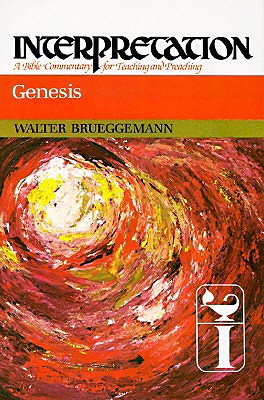
Some months ago I picked up Brueggemann’s Genesis commentary and was immediately hooked. I had intended to read only selected sections, but this commentary became a page-turner. I know it’s weird, but once again I found myself in the grips of a commentary I can’t seem to put down. Brueggemann’s work is a deep well, and I see why Kelley is hungry for anything he’s written.

I’ve just passed the half-way mark where God asks Abraham to sacrifice Isaac, his long-awaited child of promise. Like a skeleton best left undisturbed in the family closet, this is one of the darkest most disturbing scenes in all of scripture—certainly not one to bring up when talking with non-believers. It doesn’t exactly cast God in a marketable light. Christians tend to tiptoe around this scene, fearful of asking questions that will unsettle our cozy views of God or of getting in over our heads. Brueggemann dives in and resurfaces, not with trite platitudes or lame excuses for what is happening here, but with an armload of honest insights that reach deep into every reader’s story, including mine. The timing couldn’t have been better for my research on a new book about Lost Men of the Bible, but especially because of struggles I’m facing personally, the most glaring being my father’s terrible battle with cancer and the awful hole left in my life now that he’s gone.

Surprisingly, Brueggemann connects the Isaac story with words we say whenever we pray the Lord’s Prayer: “Lead us not into temptation.” For Brueggemann the plea doesn’t suggest that God might tempt us to sin, but that he does lead us into situations where our faith is tested—those Abraham, Job, and Naomi places where to our utter bewilderment God takes away what he has given (Job 1:21), where emptiness and loss displace the fullness we once enjoyed from God’s good gifts (Ruth 1:21).

We may sing and sway to the words, “He gives and takes away,” but I have yet to hear anyone claim Job’s agonized words as her life verse. Those fierce places where faith is on the line and the pain of loss engulfs us are places God’s children—from Job, Abraham, and Naomi to us—would do anything to avoid. The apostles warn us these are places we will travel too. Faith takes a beating when we suffer loss and from the agonies that bring those losses about. The Isaac story elevates our stories to a cosmic level where naked faith battles tenaciously to cling to God in the rubble of loss, without the happy props that make faith all too easy—where God’s own heart is blessed to see the stubborn refusal of his child to turn away no matter how dark things get, how broken we are, or what we’ve lost.

[Originally published by FullFill in the Fall 2012 {Think} column and reprinted with permission here.] 

Posted in Uncategorized | Leave a comment

Undying Hope

You may think I’m crazy, but I just finished reading Walter Brueggemann’s Genesis commentary from cover to cover. It has been a marvelous journey that I wouldn’t trade for anything, and my dog-eared copy is worse for the wear. I’ve underlined, drawn circles, filled the margins with my comments, folded down corners, and added lots of little colored post-it tags to take me back to places I want to read again.

I know most people don’t read commentaries straight through. This was only the second time I’ve picked up a commentary that I couldn’t put down. The other page-turner was Robert Hubbard’s commentary on Ruth.

Trust me, if you ever study or lead a Bible study on either of these Old Testament books, you’ll want Brueggemann or Hubbard along as mentors.

The longer I read Brueggemann on Genesis, the more I dreaded getting to the last page. Now that I’m here, I’m just sad that Genesis only has 50 chapters and that Brueggemann has stopped talking. 

But for 50 gloriously riveting chapters of Genesis, Brueggemann has taken me on a faith-nurturing, eye-opening journey I won’t forget. He shines the spotlight on the grounding truth of God as Creator who both calls creation into existence and then calls human beings to walk with him, believe him, and be the agents who do his work in the world. God gives them promises and dreams that seem utterly lost and impossible at times, yet are more potent and sure than every force or plan that comes up against them, more than even the great Egyptian empire. God’s people find themselves holding fast to his word from within the worst calamities, the deepest disappointments, and the wreckage that they make of their own stories.

Faith can sink her teeth into this kind of teaching.

What Brueggemann said about the death of Jacob was especially poignant for me, especially in the aftermath of my father’s death. Somehow, talk of what heaven is like and trying to envision what might be happening there right now, has been powerless to comfort me.  I actually did some speculating of my own before my dad got sick when I told him I find it hard to imagine arriving in heaven to a welcoming committee of angels and harps. I suspect it will be much more rowdy—like a 9th inning walk off victory celebration. My dad was a baseball fan, so he liked the thought of that.

Still, that’s just speculation.

What Brueggemann wrote about Jacob’s death embraced reality and matched up with how things actually looks when you lose a loved one. His words proved especially timely for me and put my grieving on solid ground.

Jacob dies in Egypt. The promises are yet future. But his faith in God and in God’s promises remains firm. That is apparent in the instructions he gives to Joseph not to bury him in Egypt, but to take his body back to the land, back to the cave where Abraham, Sarah, Isaac, Rebekah, and Leah are buried.

Jacob doesn’t see the promise fulfilled. His life, like my dad’s, doesn’t end with a period but with a comma; not with a completed to-do list or with a checked off prayer list, but with lots of unfinished business and unanswered prayers, for there is more to the story. God’s promises stand firm, are still working, and will be fulfilled.

I find enormous comfort in Brueggemann’s words,

It is the story of the promise that gives shape to the dying. There is nothing here of any life after death. Jacob goes not to heaven, but to Hebron. Going to Hebron at death suggests an important and distinctive attitude toward death. Jacob continues to hope in his death. But his hope is not that immorality is to be remembered by his children, one often held by Jews. Nor is his hope one that is often held by Christians in a stereotyped “life after death.” Rather, Jacob does his dying as he does his living, in terms of a promise that is not doubted. And that is enough, even though he does not know the form of the fulfillment (48:3; cf. Heb. 11:17-22).

The fulfillments of well-being and land do not depend on historical indications of success, upon survival of specific human agents, nor upon the political capacity to capture. They depend only on the faithfulness of God. And that is guaranteed by nothing other than the word of the trusted promise-maker. It is that and only that which gives peace and well-being to Jacob in death. There is certitude that the promise is alive and at work. It is dependent upon and limited to no human or historical agent, because it is of God himself. . . . [Jacob’s] heirs are to trust that promise. The burial is to anticipate it. Fulfillments are not evident here, but they are fervently hoped for. The affirmation of the text is unmistakable. This man who has been so deeply in conflict all his life can die appropriately. All his conflicts have been in the presence of the promise-keeper. His is a troubled faith, but it is a robust faith. The listening community can learn from this old man about living and about dying.

Posted in Uncategorized | 2 Comments

A Time to Weep

One of the convenient features of a blog is the ability to schedule posts in advance.

Yesterday it backfired on me.

About a month ago, I scheduled a post for Monday that was a reprint of an article I wrote about something that was helping me cope with the loss of my father.

And then I forgot.

Right on schedule, it posted in the morning, and I didn’t realize it was up until later in the day. The timing couldn’t have been worse. I took it down. In light of the precious lives snuffed out in Newtown, Connecticut, the devastated families, friends, and community, and the heaviness of grief bearing down on the whole country, talking about what helps seems premature.

When Mary of Bethany was shattered by the death of her brother and by the fact that Jesus didn’t show up when they needed him most, Jesus didn’t try to use words. He didn’t explain. Didn’t try to cheer her up. Didn’t point out some silver lining to her pain.

Instead, Jesus entered her grief and simply wept with her. 

The Apostle’s advice to “Weep with those who weep” contains a wealth of wisdom and the deepest kind of empathy anyone can offer. If you’ve ever lost a loved one, you know exactly what I mean.

To quote from a blog I wrote back in 2007 after we lost Frank’s brother Kelly James on Mount Hood,  

“Grieving, I am learning, isn’t an event. It is a process. Right now I have no idea how long that process lasts. For some, I can imagine, it lasts a lifetime. But perhaps by following Jesus’ example we can find ways to allow the grieving to grieve and to be with them in their sorrow.”

Posted in Uncategorized | Leave a comment

Join the Advent Conspiracy!

This video speaks for itself. The link is www.adventconspiracy.org If you’re short on ideas, check out Strategic Links listed on the column to the right for some amazing organizations that could use your help.

This could be our best Christmas ever! 

Posted in Uncategorized | Leave a comment