During the January 21, 2025 Washington DC National Cathedral prayer service—the closing presidential inaugural event—Bishop Mariann Edgar Budde concluded her sermon with a courageous personal appeal to President Trump, seated prominently in the front row.
She urged him to show mercy to a large segment of the American population who, for a wide variety of reasons, now live in fear. Here’s the heart of what she said.
“Mr. President, millions have put their trust in you and, as you told the nation yesterday, you have felt the providential hand of a loving God. In the name of our God, I ask you to have mercy upon the people in our country who are scared now. . . . some who fear for their lives.”
America’s 47th president was none too pleased. He misinterpreted her appeal and assumed she was throwing rocks at him.
Instead of heeding the Bishop’s wise words, Trump took offense—later deriding her appeal as “nasty,” labeling her a “radical Left hard line Trump hater,” demeaning her as “not very good at her job,” and accusing her for bringing “her church into the world of politics in a very ungracious way.”
He demanded an apology.
The Bishop’s appeal was wise, compassionate, and prophetic. It produced a flashback that echoes through the ages—deep into ancient biblical history when God’s prophets risked their lives to confront and warn Israel’s kings who were abusing official power and wealth for selfish ends that harmed people the king was supposed to protect.
Her message to Trump was a sober a reminder that great power comes with heavy responsibility. It carries the potential for good or harm.
There is a sense of irony in the fact that the January 21 prayer service wasn’t the first time the Bishop and Trump were both in the Washington Cathedral at the same time. Nor was this the first time they both witnessed a service that elevated mercy, compassion, and care for others as vital character traits of a great leader.
Both were present only days before—January 9 to be exact—in the Washington Cathedral at the funeral of former President Jimmy Carter. The Bishop’s direct appeal to America’s 47th president would find powerful affirmation in the line-up of political leaders, family members, and friends who testified to Carter’s contributions as a leader who committed his entire life to look out for others
Both heard an outpouring of accolades honoring Jimmy Carter’s leadership and relentless efforts for the homeless, the sick, for women, and the poor. (If you missed the service, you can watch it here.)
Both witnessed a litany of testimonies documenting Carter’s deep friendships with political colleagues and adversaries. Close friends and political opponents were quick to display their deep admiration, respect, love, and honor for Carter. His was a life driven by his Christian faith and Jesus’ call to mercy. It impacted everything about him, including his 70-year remarkable marriage to Roslyn—his full-partner and ally. Ever aware of his higher calling to follow Jesus, President’s Carter’s mercy extended beyond his White House years. Even today, the noble world-wide work of The Carter Center continues.
Carter’s legacy of compassion was still echoing in the Cathedral when the Bishop boldly urged Trump to show mercy.
She wasn’t casting stones at him. She was throwing him a life-line that still has the power to transform President Trump and his legacy as a leader. May God awaken the President to find the Bishop’s courageous words of wisdom indispensable and impossible to shake—for his great good and for the good of our country and beyond.
As a young teenager, I was walking home after dark from a friend’s house when a car pulled up beside me and stopped. The driver pushed the passenger door open and told me to get in. That driver was my father. I will never forget the serious conversation we had as he drove me home.
My father taught me that the world is not a safe place for daughters—a hard fact that remains unchanged today—and that I needed to be wary.
According to United Nations research,
“Violence against women and girls remains one of the most prevalent and pervasive human rights violations in the world. Globally, an estimated 736 million women — almost one in three — have been subjected to physical and/or sexual intimate partner violence, non-partner sexual violence, or both, at least once in their life.”
The appalling 2017 #MeToo/#ChurchToo Twitter tsunamis confronted us with the fact that the USA is no exception. Even worse, we learned that the American evangelical church is not a safe place either.
Tragically, #ChurchToo sexual abuse continues today inside the church and the battle against it has lost momentum. New allegations surface almost weekly of another evangelical clergy leader facing sexual abuse charges. This battle is far from over.
Evangelical support of Donald Trump for U.S. president—now for his third campaign—creates an alarming dissonance in efforts to end this epidemic of abuse. It contributes to the growing exodus from American churches. We’ve all heard the Access Hollywood tape.
The For Our Daughters video powerfully reminds us that this battle is ongoing. Its message exposes the need to examine our political commitments and how we vote.
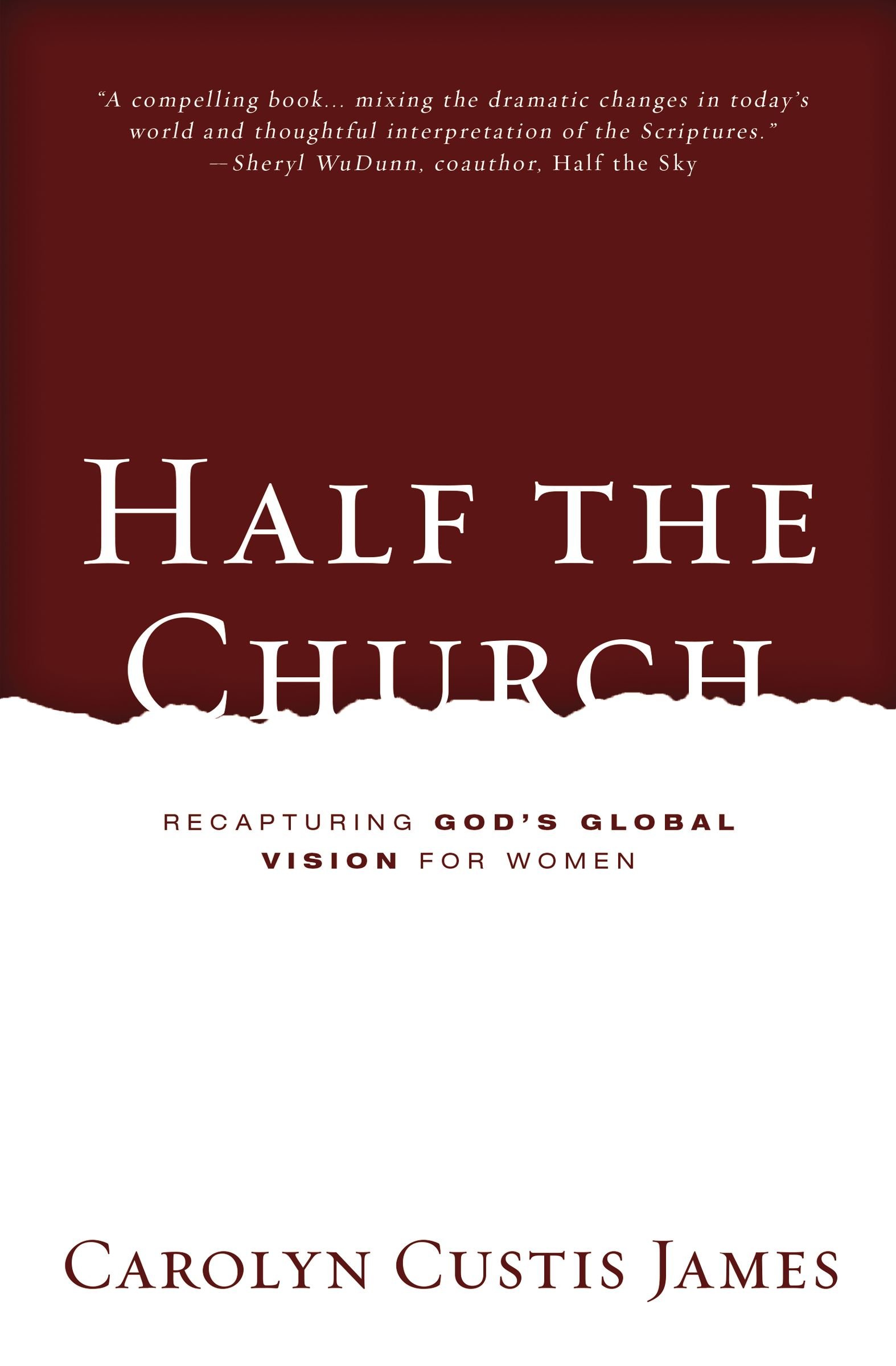
Kudos to producer, Kristin DuMez, and director, Carl Byker, for presenting this timely challenge. God bless the courageous ezer-warriors—Tiffany Thigpen, Rachael Denhollander, Jules Woodson, Cait West, and Christa Brown—who faced the cameras and told their stories to enlighten the rest of us.
So whether you’ve already voted or are still making up your mind, I’m asking you to watch For Our Daughters, share it with others, and take what you learn with you when you cast your ballot.
He also wanted me to know how his students were responding.
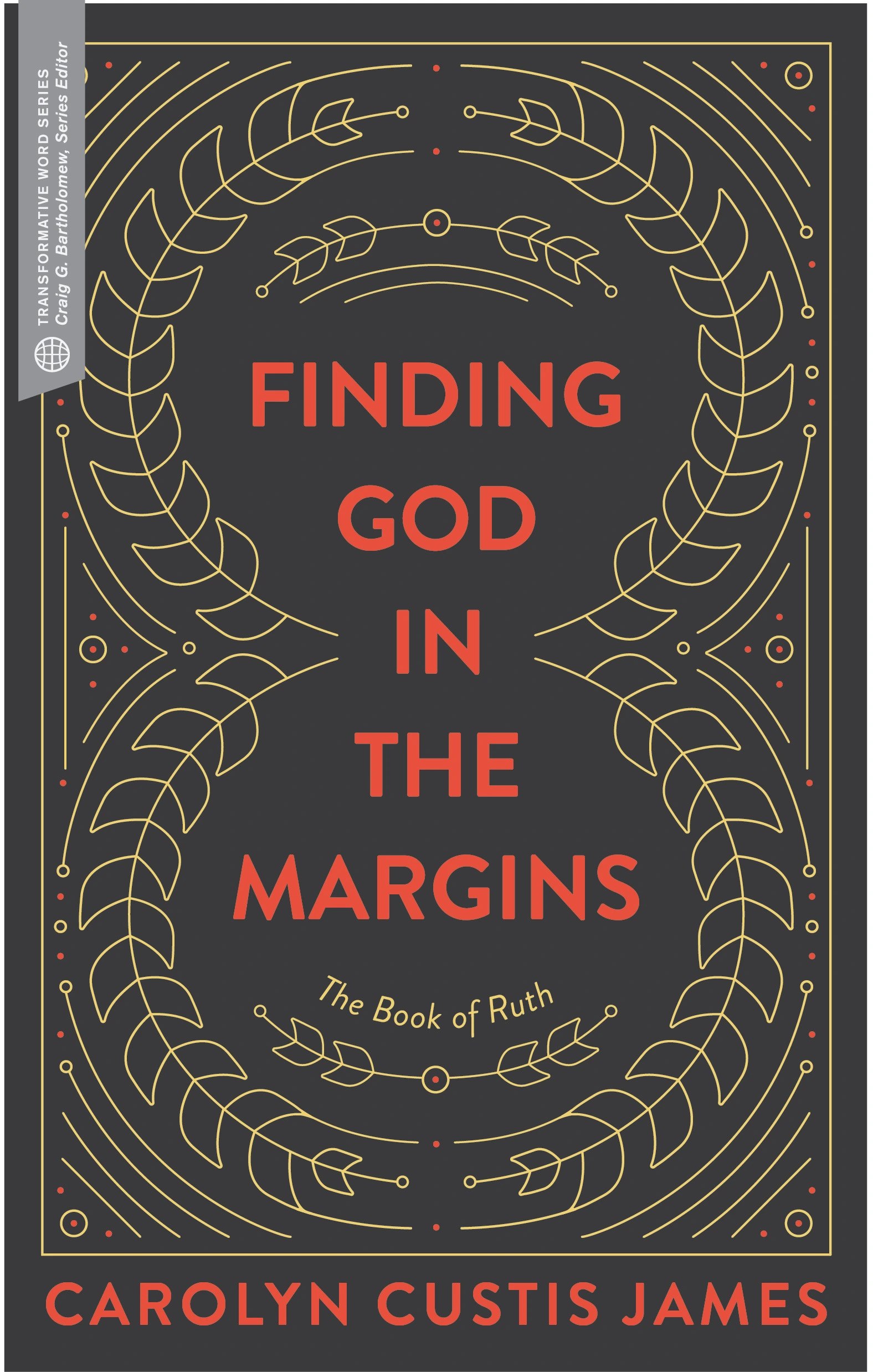
The book of Ruth is an Old Testament text that just keeps on giving. Students are discovering in Ruth a goldmine of rich theology along with astonishing relevance to 21st issues confronting us today.
Topics often covered by U.S. national media headlines are addressed in the book of Ruth. Some examples are famine, refugees, death, widowhood, infertility, border crossings, illegal immigration, poverty, the welfare system, female vulnerability to violence, male power, and a foreign female immigrant boldly challenging national compliance to the letter versus the spirit of the law.
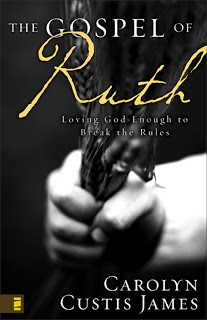
Often viewed (and preached) as a Cinderella love story between Ruth and Boaz, Old Testament scholars have for years recognized the book of Ruth as the story of a Female Job. The book of Ruth begins with Ruth’s mother-in-law Naomi. This is Naomi’s story. Naomi enters a Job-like struggle with God when her whole world falls apart. In her despair, Naomi’s discovers through the hesed (sacrificial love) actions of Ruth and Boaz for her, that God is still fully present in her story. He has a vital kingdom mission for her that depends on the theology she gleans in the school of suffering. Remarkably, through the costly acts of love demonstrated ultimately by all three major characters (including by Naomi), God was advancing his purposes for the world.
Learning what Old Testament scholars were discovering about the book of Ruth was life changing for me—gave me a whole new perspective on how to live as God’s child and truly strive to emulate Jesus, who is the perfect imago Dei and the ultimate hesed giver.
It is hard to describe how grateful I am to learn that today others are unleashing the power of the book of Ruth in their own stories.
Here are student comments:
Female student: “I am grateful to have been introduced to these books by Carolyn Custis James. She is an awesome author and easy to read. Also, she has made these deep theological themes easy to understand for people like me.”
Male student: “The second things I really noticed and stuck out to me was the tendency to look at the initial relationship with Ruth and Boaz the wrong way. The other digs into the fact that most people see this as a love type story that has Boaz actually pining for Ruth. When explained by the author, it actually takes this view off the table. If this was the intent all along, this would show that Boaz had ulterior motives, and thus take the picture of hesed out of the equation. This is also another new perspective to me, and I love it. It gives me a deeper understanding and a new way to speak about this book of the Bible.”
Male student: “Before starting the course, I was wondering why a full course should be devoted to this small book of Ruth, but now I completely understand, it is worth it. Many things we can learn from the book of Ruth to help us in our relationship with God and humanity cannot be over emphasized.”
From the professor: “Many of the men in the class have also spoken positively about the notion of the Blessed Alliance. I have been surprised as I wasn’t sure how they would respond.”
My good friend, Natasha Sistrunk Robinson (see above), recently introduced me to InTheCoracle.org and to their upcoming conference, “Do you want to be well?” Coracle’s mission statement is compelling and hope-filled.
“Coracle exists to inspire and enable people to be the presence of God in the brokenness of the world through spiritual formation for Kingdom action. Since 2012, we have consistently sought to help people say ”Yes” to the amazing invitations that God makes to them through faith in Jesus – joining God’s mission of making God’s Kingdom more real on Earth and becoming more like Christ.”
Here’s the conference description:
“Over the past few years, people have paid increased attention to various dynamics afflicting the White Evangelical church in America. The maladies that afflict this particular expression of the Christian faith have their roots in the movement’s formative years and continue through this day. They need to be honestly identified so lament can be made and repentance committed to for healing to occur, so that Jesus can have a truer witness in this tradition, and so that folks within it can encounter him more fully.
We love the church and grieve for the church. We love Jesus and want to make his love known. For the sake of the church’s healing and care of her members, we are offering an online conference.
We will offer something constructive, something we hope can be at least deeply encouraging if not transforming. While we will identify and explore the issues plaguing the church, we won’t stop there. We’ll move towards hope and healing, with opportunities for spiritual practice along the way. In view of the sicknesses afflicting the Body of Christ in America, we feel called to walk into the light and toward Jesus for our own healing and for the sake of others.”
We are grateful for more conversations, increased awareness, and insightful analyses that are being offered about issues of Christian nationalism, racism and white supremacy, and patriarchy. Still, we have noticed that these three threads are less often talked about in the same conversation. We have also noticed that most current conversations spend far more time on critique than on finding paths forward for healing. We hope this conference and conversation can weave these threads together and offer more than critique.
Natasha’s efforts led to an opportunity for me to participate and to present on patriarchy–one of the topics this conference addresses. I am looking forward to learning from what others will be presenting.
Every year we celebrate Love Your Red Hair Day for our beautiful red-head grand-ezer, Arden. As if we needed a national holiday to celebrate Arden or her little beautiful brunette sister Avery. They bring enormous joy to Frank and me. We thank God every day for them and not just on a National Day!
This year, against the backdrop of a tumultuous and toxic world, we are more profoundly aware than ever of the priceless treasure our children and grandchildren are and the joy of watching them grow up, learn, explore, and evolve into the ezers God created them to be.
May this day be a reminder to pray for the safety, health, and thriving of little ones throughout the world.
For years, friends of mine have been actively involved in ministry to and with Palestinians. Relationships they have forged and their understanding of the plight of Palestinians means they are personally devastated by the current crisis in Gaza. They too are outraged over the vicious October 7 Hamas terrorist attack on Israel and their horrifying atrocities against ordinary Israelis—men, women, children, even babies. They also grieve the estimated 200 hostages Hamas seized in this attack and are still holding—teenagers, young children and elderly people—and are praying for their safe release.
My friends are also grieving Israel’s retaliatory bombardment aimed at eradicating Hamas that is decimating Gaza and creating enormous collateral damage in the loss of innocent Palestinian citizens lives—men, women, children, even babies. Homes and entire communities are being destroyed. They know and love Palestinians, many who are Christians, but countless others others who are caught in the crossfire of a war they didn’t start and are helpless to end.
To help the rest of us understand both the Palestinian people and the ongoing conflict better, over the next 3 weeks, my friend, Rob Dalrymple of DetermineTruth, is hosting a series of livestreams (on YouTube and Facebook live). These livestreams will feature various Christian experts who are passionate about peace and justice between Israel and Palestine. They will help us understand more about this crisis and events leading up to it.
Eight livestreams are already scheduled; several more are in the works. Below are the links and a brief description for the first 3. The first one is already posted, with a second later today.
Rob will post updates on the DetermineTruth website daily to alert you of the next event and will also send out the links via email 2-3 livestreams at a time. He will also post these livestreams on his FaceBook account. These presentations will present a fuller understanding of the Palestinians’ and present information about the impact of this crisis on them that doesn’t always reach us or our church communities.
These friends of mine are passionate—as they should be. So buckle up and prepare to have your thinking challenged and expanded and your hope refueled in what God is doing through his image bearers to bring peace to this region. We all have a lot to learn.
In this livestream, Rob interviews Mae Cannon (PhD). Mae is the Executive Director of Churches for MiddleEast Peace. She is as deeply connected as anyone on the issue of Israel-Palestine. She is in regular communication with world leaders from the White House to Tel Aviv to Ramallah. This is a can’t miss interview. No one is better connected than Dr. Cannon. She speaks before the United Nations. She is in touch with the White House and other heads of state. And she is a really good person!
In this Livestream, Rob will interview Dr. Bruce Fisk. Dr. Fisk is a retired professor at Westmont College. He is the Senior Research Fellow for the Network of Evangelicals for the Middle East. This event will surely be informative and challenging.
It doesn’t seem to matter what chapter of world history our stories occupy or where we live on the planet. Every day the world over we are eye-witnesses to the never-ending abuse of and fight for power. Today’s “Breaking News” centers on Hamas terrorists’ brutal attack in Gaza against Israeli citizens that ignited fierce fighting and an escalating count of deaths and casualties of ordinary Israelite and Palestinian citizens.
Back home, the US government is embroiled in another (thankfully non-violent) fight for power within one political party to secure the next Speakership for their candidate.
But amid all this turbulence, we need to remind ourselves: This isn’t the whole story. Throughout history (and certainly in the Bible) we witness breathtaking examples of people using their power for enormous good, often at great cost to themselves.
Admittedly, the human story is fraught with power struggles of one sort or another. But power in itself is neither good nor bad. The more pressing question is: How does one use their power?
“The malestrom is the particular ways in which the fall impacts the male of the human species—causing a man to lose himself, his identity and purpose as a man, and above all to lose sight of God’s original vision for his sons.” —Malestrom, (xxiv)
Malestrom features men in the Bible who lived in a world defined by patriarchy—including what it means to be a man. These men appear in biblical narratives featuring women I was researching and writing about in earlier books. I was intrigued. In today’s world three of them—Judah, Matthew, and erstwhile religious terrorist Saul of Tarsus—would be behind bars. But God was in all of their stories. That changed everything.
The men whose stories appear in Malestrom led me to reexamine patriarchy and its impact on men and boys in every culture and generation from Genesis to the present. Each of the men in Malestrom reached a pivotal moment where following God’s call required swimming against the patriarchy’s currents and shedding their culture’s patriarchal manhood constructs.
Rejecting patriarchy demands freed them to live before the face of God and to follow Jesus, who never conformed to patriarchal rules. The manhood they came to embody looked a lot like Jesus. Their stories give reason for hope in the darkest evil and in the most desperate times.
Malestrom is good news for men and boys globally because the Bible—a story cast against a global darkness that still permeates today’s world—is great good news for men and for women. The dramatic changes in these men unleashed a new Jesus brand of power that fuels hope against the darkest evil and in the most desperate times—the kind of hope we need today.
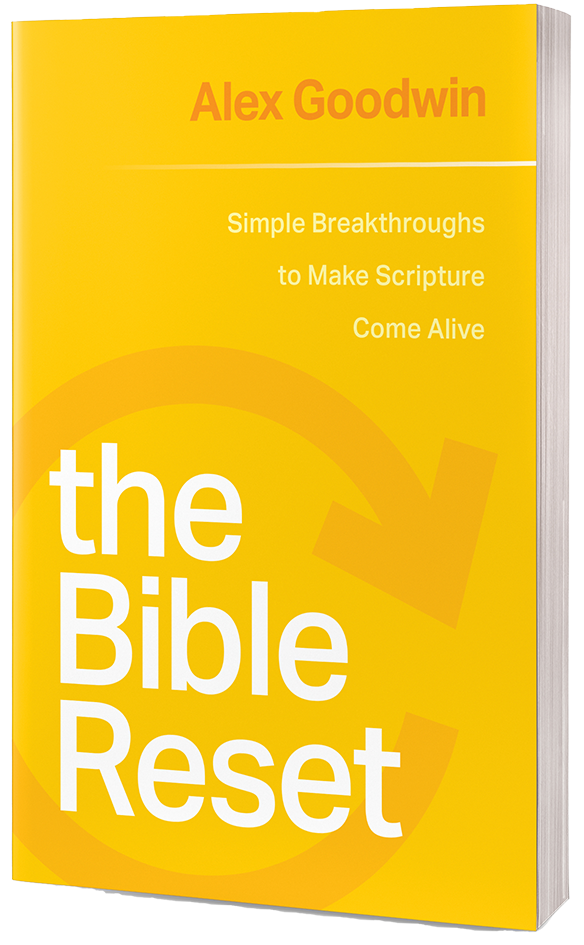
“As someone who grew up in the church, was raised on the Bible, and taught to read it from cover-to-cover, I struggled as a kid and as an adult to get through parts of the Bible that made no sense or didn’t seem relevant to me. How I wish a book like Alex Goodwin’sthe Bible Reset had come along. Whether you love reading the Bible (or wish you did), the Bible Reset will forever change how you read the Bible. You’ll be drawn into the grand story God is telling that centers on Jesus. You may even get a bit of help from Hobbits.”
—Carolyn Custis James
“Goodwin’s insights are practical, digestible, and will go a long way in helping frustrated believers reframe the Bible as a rich and complex grand narrative rather than a collection of bumper-sticker quotes. The faithful will be inspired.”
—Publishers Weekly
The Bible Reset releases October 17, 2023 and is now available for preorder!
After you read Alex’s book (which I hope you will), check out the Institute for Bible Reading’sImmerse initiative which implements recommendation contained in the Bible Reset. Immerse is designed to encourage modern readers to take up and read the Bible for themselves. Immerse republished the Bible in multiple volumes, using the New Living Bible translation, which is based on the most recent scholarship in the theory of translation, and employs the format Alex recommends in his book.
Growing numbers of individuals and church congregations are re-engaged in Bible reading individually and in small groups. It has already become something of a movement. Goodwin makes a strong case that changing the Bible’s format, common reading practices, and perception of the biblical narrative can unlock Scripture for millions of Christians who struggle to read it.
I’ve never lost my early love of the Scriptures and long to see to see more people “take up and read” this powerful hope-filled story of God’s relentless love for the world he created and that Jesus came to rescue.
“Like electricity, running water, well-stocked grocery stores, and endless miles of smooth paved roads, easy access to the Bible and the ability to own a copy are privileges we take for granted. We’ve lost sight of what it took to write this much-neglected book and the price many paid to get it into our hands. We’re missing out on the life-transforming wisdom and the hope-filled good news it proclaims. Nothing should hold us back from diving into the grandest and best story ever told and to discover afresh the God who loves us and draws us into his story. I am grateful to be part of a movement that aims to help us do exactly that.”
What better follow-up to Father’s Day than to witness a dad’s heart for his daughters.
Discussions and debates over gender roles for women in the church can be fierce, divisive, and abstract, although the impact on women and girls is far from abstract.
That whole discussion takes on a whole new sense of urgency when it impacts someone you love.
The Following to Lead podcast gave me another opportunity to promote women and girls as ezer-warriors for God’s purposes—created to cultivate the gifts God has entrusted to us and to use them for his purposes. This is God’s calling on all of his daughters, from first to final breath, and we are indispensable allies with the men and boys in our lives.
When host Kevin East started the conversation, I had no idea this discussion would take on such profound personal significance for him. But Kevin is a dad with young daughters he loves. For him, our conversation was about them and underscores the indispensable role a father has in the flourishing of his daughters. We need more dad’s like Kevin!
Like I said, this is a great follow-up for Father’s Day.
“Warring Brothers” is an appropriate subtitle for the book of Genesis.
Fierce sibling rivalry among brothers dominates the entire Genesis storyline. Jesus warned that there would be “wars and rumors of wars” (Matthew 24:6). History has played out exactly as he said with warring brothers on a personal and global scale. Even America’s Civil War is often described in family terms as “brothers against brothers.” That reality is no more evident than in the book of Genesis: Cain vs. Abel, Ishmael vs. Isaac, Esau vs. Jacob, and the all-out-war among Jacob’s sons.
Tamar, a young Canaanite girl, enters the Genesis narrative during a dangerous time in redemptive history (Genesis 38). The covenant family of promise (only in its fourth generation) is in disarray — torn apart by a bitter rivalry between Jacob’s ten older sons and Joseph (son number eleven). Jacob’s fourth son, Judah, is the ringleader when the brothers plot to murder Joseph — the son their father loves best and the younger brother who inflamed their resentment by bragging of dreams in which his whole family bows down to him.
The brothers abandon their murderous plan, instead selling seventeen-year-old Joseph as a slave to a group of Midianites (Genesis 37:12-36). A cover-up follows. The brothers shred, then soak Joseph’s royal robe in goat’s blood, present it to Jacob, and let their father interpret the evidence.
Jacob is inconsolable. In Egypt, the Midianites sell Joseph to Potiphar, Pharaoh’s captain of the guard.
Literary Misjudgment or Tactical Decision?
Then, just as the Joseph story reaches a fever pitch and readers are on the edge of their seats, instead of following Joseph into Egypt, the narrator follows Judah away from his family into Canaanite territory and into a salacious R-rated story involving prostitution with his daughter-in-law Tamar. From a literary perspective, the narrator’s choice seems counterproductive — an irritating disruption. From a pastoral perspective, this sordid story is problematic, unsuitable for a G-rated family audience, devoid of any spiritual value. Pastors often skip it.
In his Genesis commentary, Walter Brueggemann explains the problem,
This peculiar chapter stands alone, without connection to its context. It is isolated in every way and is most enigmatic…It is not evident that it provides any significant theological resource. It is difficult to know in what context it might be of value for theological exposition.1
Recent Old Testament scholarship has produced evidence that, far from being a literary gaffe, the narrator’s decision to include this “enigmatic” episode is strategic — that Genesis 38 is actually the hinge that holds the Joseph story together. It bridges Jacob’s destructive favoritism and the searing father wound Judah suffers with the climactic meeting between Judah and Joseph in Egypt where warring brothers finally make peace. Events in this often-neglected chapter and Tamar’s role in particular actually hold the key to understanding the story it seems to interrupt.
A strong case can be made to vindicate Tamar and demonstrate she has been unjustly vilified. Not only does she play a heroic, redemptive role that benefits Judah and his immediate family, the impact of her controversial actions ripples out globally to advance God’s redemptive purposes for the world. The royal line of Jesus is at stake. Her story is one of many remarkable instances recorded in Scripture when God raises up a woman to advance his purposes.
Contrary to pastoral hesitations, Genesis 38 contains rich fodder for pastoral application and is especially relevant for today’s church and world.
Vindicating Tamar and restoring to her the honor she rightfully deserves as a courageous agent for God’s purposes begins by considering three questions:
First, what evidence does the Bible present that warrants us to reconsider Tamar’s story in the first place?
Second, how does the patriarchal cultural context of the Ancient Near East shape the Tamar/Judah narrative and the larger Joseph story?
Third, what pastoral and theological relevance and wisdom does the Tamar/Judah story offer us today?
Reasons to Reconsider Tamar
In the court of religious opinion, the word “prostitute” governs our view of Tamar as a loose, vindictive woman who stoops to selling her body for sex in her desperation to have a baby or to get even with her father-in-law. Interpreters and preachers alike find it impossible to see her in any other light. One pastor thundered accusingly from his pulpit, “Tamar corrupted the line of Christ!”
It should, however, give us pause to note that this isn’t how her descendants or other biblical writers view her.
First, Tamar is named in a beautiful blessing to honor the marriage of Boaz and Ruth. “Through the offspring the LORD gives you by this young woman, may your family be like that of Perez, whom Tamar bore to Judah” (Ruth 4:12). At a sacred moment like this, it hardly seems appropriate to bring up a shameful skeleton out of the family closet.
Second, both King David and his son Absalom named their daughters Tamar. In the Hebrew culture, parents gave their children names to cause their children to aspire.
Third, in an unusual departure from standard genealogies, Matthew in the New Testament names Tamar in Jesus’ royal genealogy (Matthew 1:3) — along with three other women (Rahab, Ruth, and Solomon’s mother, a.k.a. Bathsheba) whose stories should also be re-examined.
But the fourth, and by far the most compelling reason to reconsider Tamar, comes from Judah himself. He publicly vindicates Tamar by calling her “righteous” (Genesis 38:26).
The Patriarchal Context
Contrary to Brueggemann’s assessment, Tamar’s story doesn’t exist in isolation. It is embedded within the Ancient Near East patriarchal culture and nested within layers of dysfunctional family history — both Judah’s family of origin and the family he fathers. Understanding both contexts is essential to make sense of her story.
The importance of patriarchy as a hermeneutical tool is hard to overstate. As Americans and Westerners, we interpret these ancient biblical narratives at a significant disadvantage, for we are culturally as far removed from the patriarchal world of the Bible as you can get in today’s world. The fact that patriarchy appears on virtually every page of the Bible has led to the mistaken conclusion that patriarchy (at least a softer version) is the God-ordained way for us to live. In my book Malestrom: How Jesus Dismantles Patriarchy and Redefines Manhood, I submit that:
“Patriarchy is not the Bible’s message. Rather, it is the fallen cultural backdrop that sets off in the strongest relief the radical nature and potency of the Bible’s gospel message. We need to understand that world and patriarchy in particular — much better than we do — if we hope to grasp the radical countercultural message of the Bible.”2
To understand Tamar’s story clearly, we must grasp the reality that at least three aspects of full-fledged patriarchy existed in biblical times and still have a pernicious hold on our cultural worldview today.
First, patriarchy (“father rule”) invests men with priority, power, and authority over women.
Patriarchy relies on female submission and deprives women of agency, voice, and legal rights. Women are essentially the property of men.3 This creates a chilling power differential between men and women. Marriage between Tamar and Judah’s firstborn makes Tamar the property of Judah’s family. Judah exercises life-and-death powers over her when he orders an honor killing for her prostitution. Patriarchy’s disempowerment of women puts them at risk and places an exclamation point beside Tamar’s audacious actions.
Second, primogeniture (“the firstborn son’s right to inheritance”) ranks sons by birth order.
The firstborn son is crown prince in the family with primacy and authority over his siblings, plus a double inheritance. Primogeniture intensifies the outrage of Jacob’s ten older sons beyond ordinary jealousy, when their father bestows firstborn privileges on Joseph, son number eleven. Jacob’s favoritism takes on physical dimensions when he gives Joseph a royal robe — hard evidence that Jacob “loved Joseph more than any of his other sons” (Genesis 37:3).
The Bible repeatedly overturns primogeniture — most often by God’s decree, choosing Abel, not Cain; Isaac not Ishmael; Jacob not Esau. Still, primogeniture is deeply ingrained in the Ancient Near East culture and in the Abrahamic family’s DNA in particular. It wreaks havoc in Judah’s family of origin and creates conflict among his sons.
It is entirely possible that Judah felt entitled to firstborn rights. His three older brothers disqualified themselves by dishonoring their father — Reuben by sleeping with Jacob’s concubine, Simeon and Levi by slaughtering the Shechemites. Judah, son number four, was next in line. This may explain Judah’s leadership among his brothers and also his intense hatred of Joseph.
Third, under patriarchy, wives were responsible to produce sons for their husbands.
It is not possible to overstate the pressure this obligation placed on women. A woman’s value was determined by counting her sons. Barren women in the Bible are desperate for sons, not daughters. The urgency of producing sons meant puberty signaled a girl’s marriageability. Presumably Tamar was a young teenage girl when Judah acquired her for his firstborn son, Er.
The greatest calamity for the ancients was for a man to die without a male heir. It was tantamount to being erased from history. This happens to both of Tamar’s husbands and is central to what motivates her deception of Judah. Levirate practices (later formalized under Mosaic Law) required the surviving brother to marry the dead brother’s widow to father a son to take the deceased’s place on the family tree, including his inheritance. It was a matter of family honor.
Tamar clearly felt the weight of family honor and was ultimately willing to risk her life to fulfill her duty to produce a male heir for her dead husband.
By the time Tamar enters the story (Genesis 38), Judah is in a spiritual nosedive. He has left the covenant family, moved into Canaanite territory, married a Canaanite, and is behaving like one. This dark, sinister figure was capable of murder and guilty of human trafficking and a cruel cover-up. Before the story ends, he will solicit the services of a prostitute — an evil act that reigns down judgment on Tamar, but for some reason, slides by Judah, although his present depraved moral state is evident.
The Patriarchal System of Primogeniture
Judah fathers three sons: Er, Onan, and Shelah. When Judah acquires Tamar as a bride for his son, her father placed her in the power of evil men. The Bible describes Judah’s first two sons as evil men who lose their lives in divine judgment. Thankfully, Scripture spares us the details of what Tamar may have suffered in marriage to her first evil husband. The truth comes out with respect to Onan, son number two, who marries Tamar allegedly to produce a son to replace his deceased brother Er. It is an objective Onan has no intention of fulfilling. Primogeniture (“the firstborn son’s right to inheritance”) reveals his motive.
Under a patriarchal system, a father would divide his estate by the number of his sons plus one. Judah had three sons, and so would divide his estate into four portions. Two portions (the double portion) would go to his firstborn. Each of his younger sons would inherit one fourth.
When Judah’s firstborn, Er, died, firstborn rights transferred to Onan. Onan’s inheritance skyrockets from one-fourth to two-thirds. Fathering a son with Tamar to replace Er will come at a major cost to Onan, shrinking his inheritance back to one-fourth. Clearly, Onan understood the math. It was a sacrifice he was unwilling to make. So he feigned loyalty to Er and family duty by marrying Er’s widow Tamar, allegedly to produce a male heir for his dead brother. But Onan repeatedly abused Tamar, using her for his pleasure, but spilling his semen on the ground to prevent impregnating her. God intervened. It cost Er his life.
Now bereaved of two sons, Judah sends Tamar back to her father to wait for Shelah (son number three) to reach marriageable age. Time passes, and Tamar realizes Judah’s promises are worthless.
By then Judah’s wife had died, the mourning period was over, and he was going to the annual sheep shearing — a festive time of food and drink. That was when Tamar, aware of Judah’s deception, posed as a prostitute and stationed herself in Judah’s path. (It says a lot about Judah that Tamar could count on him taking the bait, which he does.)The deed is done, and Tamar walks away with his seal, cord, and staff as a pledge of payment — the equivalent of his passport and driver’s license. No paternity test is necessary to identify the father of her child.
Tamar may even have been within her legal rights. Ancient Hittite and Assyrian laws permitted a father-in-law to marry his son’s widow if no brother fulfilled the family duty.4
When Judah and Tamar Collide
On learning that Tamar is pregnant with a child from prostitution, with blinding speed and shocking hypocrisy, Judah orders her to be burned to death (Genesis 38:24). Neither the horror of that moment nor his flagrant double standard should escape our notice.
Judah is a dark, violent, angry, utterly lost man. But that is about to change. The watershed moment for him comes when Tamar produces evidence exposing Judah as the man by whom she is pregnant.
Judah’s response has interpreters scratching their heads and fishing for explanations. Several translations [NIV, NKJV, ASV, ESV] depict a chastened Judah making a comparative statement, “She is morerighteous than I” (Genesis 38:26, emphasis added).
It strains credulity to imagine Judah exonerating himself as “righteous,” when Tamar has publicly exposed him as a hypocrite and a solicitor of prostitution.
Gordon Wenham’s translation reveals an absolute contrast: “She is in the right, not I.”5 Bruce K. Waltke, agrees, translating “She is righteous, not I” or “She is righteous, I am not.”6 These more accurate translations of the Hebrew text compel us to re-examine our assumptions of both Tamar and Judah.
This is the moment when the prodigal looks in the mirror, sees the man he has become, and comes to his senses. And Tamar is bold enough to hold the mirror.
The radical impact this has on Judah shows up in Egypt when he meets Joseph again during a devastating famine (Genesis 44). A terrible crisis erupts when Joseph’s cup is found in Benjamin’s sack, planted there by Joseph who is now tormenting his older brothers. Benjamin, Joseph’s only full blood brother, is now Jacob’s youngest, and newly favorite son.
Judah commands the spotlight in what is one of the most powerful scenes in all of scripture (Genesis 44:18-33). With a throbbing unhealed father wound, without realizing he’s talking to Joseph — the brother he wanted to kill and sold into slavery twenty years ago — with his father still playing favorites and talking as though Judah, his mother, and brothers don’t exist, and with Benjamin now heading for the living death Judah once chose for Joseph,
Judah stepped forward and said,
“Please, my lord, let your servant say just one word to you. Please, do not be angry with me, even though you are as powerful as Pharaoh himself.
My lord, previously you asked us, your servants, ‘Do you have a father or a brother?’ And we responded, ‘Yes, my lord, we have a father who is an old man, and his youngest son is a child of his old age. His full brother is dead, and he alone is left of his mother’s children, and his father loves him.’
You said to us…’Unless your youngest brother comes with you, you will never see my face again.’
…Later, when [our father] said, ‘Go back again and buy us more food,’we replied, ‘We can’t go unless you let our youngest brother go with us.’ . . .
Then my father said to us, ‘As you know, my wife had two sons, and one of them went away and never returned…Now if you take his brother away from me, and any harm comes to him, you will send this grieving, white-haired man to his grave.’
And now, my lord, I cannot go back to my father without the boy. Our father’s life is bound up in the boy’s life. If he sees that the boy is not with us, our father will die. We, your servants, will indeed be responsible for sending that grieving, white-haired man to his grave.
My lord, I guaranteed to my father that I would take care of the boy. I told him, ‘If I don’t bring him back to you, I will bear the blame forever.’“So please, my lord, let me stay here as a slave instead of the boy, and let the boy return with his brothers. For how can I return to my father if the boy is not with me? I couldn’t bear to see the anguish this would cause my father!”7
Genesis 38 may be the most neglected chapter in Genesis — but it is where the gospel breaks through to Judah, and is simultaneously the turning point in Joseph’s story. Judah’s transformation ultimately reconciles warring brothers, bringing peace to generations within the entire family.
Judah ultimately vindicates Tamar (Genesis 38:26), and Yahweh blesses her with twin sons who replace her two undeserving husbands (Genesis 38:27-30). Bruce Waltke describes Tamar as “a heroine in Israel because she risks her life for family fidelity.”8 Her courageous actions rescue Judah and her two dead husbands, bringing peace to Jacob’s family. Tamar also secures the royal line of Jesus which moves forward through her firstborn, Perez.
Reflections on Tamar’s Story for Faith Communities Today
Here are some final reflections for pastors pondering how to connect this ancient story with twenty-first century faith communities:
The power of hope — God loves the unloved and the unlovable. He has the power and desire to rescue, redeem, and radically transform prodigals.
The power of wounds — They can destroy or make us into people who reflect the God who redeems our stories.
God calls his daughters to be bold agents for his purposes— to do what is right, even if we have to do it alone. Tamar is far from the only biblical example of courageous females who shed patriarchy’s restraints to advance God’s kingdom and bless their believing brothers. Women and girls in the church desperately need to hear these narratives – and so do men and boys!
In the ongoing #MeToo / #ChurchToo epidemic, Tamar’s story gives pastors a call to courageously engage domestic abuse. Tamar is a #MeToo story.
1 Walter Brueggemann, Genesis, ed. James Luther Mays, Interpretation: A Bible Commentary for Teaching and Preaching (Louisville, KY: Westminster John Knox, 2010), 307-308.
2 Carolyn Custis James, Malestrom: Manhood Swept into the Currents of a Changing World, (Grand Rapids: Zondervan, 2015), 31.





















 Carolyn Custis James