Mrs. Noah—The Unknown Soldier

“Mrs. Noah got lost in her marriage. Among the lost women of the Bible, she has all but vanished from sight. Her story (which may have been a good one) died with her and remains buried to this day because the story that got told was her husband’s. . . . In an odd way, Mrs. Noah is ideal for our discussion of lost women precisely because we know so little about her. She helps us see . . . God’s purposes aren’t just for those who stand in the spotlight. They apply equally to those of us who remain hidden in the shadows.”

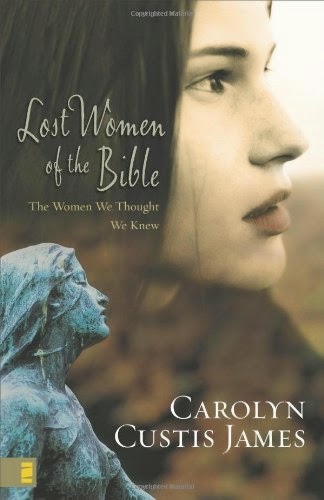
Lost Women of the Bible

Joel Spector, artist
Posted in Uncategorized | Leave a comment

Eve—A Forgotten Legacy

“The trouble with Eve is that in the rush to evacuate Eden, we picked up the wrong pieces of her to tell us who we are. . . If we want to recover Eve’s true legacy, we must begin where the Bible does—with her creation. We must retrace our steps to the Garden of Eden to retrieve the truth God revealed about Eve before the serpent showed up. God’s definition of the woman and her significant place in his purposes came out in the planning phase of creation when his blueprint for women was spread out on the table in heaven’s holy conference room.”

Joel Spector, artist
Posted in Uncategorized | Leave a comment

Something to ponder . . .

“Christianity is a doctrine not of the tongue, but of the life, and is not apprehended merely by the intellect and memory like other sciences, but it is revealed only when it possesses the whole soul and finds its seat and habitation in the innermost recesses of the heart.”

—John Calvin
Posted in Uncategorized | Leave a comment

21st Century Deborahs

This week I heard an inspiring presentation about Hope International—a microfinance ministry that through small loans is empowering people (the majority are women) to work their way out of the depths of poverty. The stories of transformation are remarkable.

One mother of five children from Congo said, “Before, on a ‘good’ day, I could usually feed my family once a day. Now I feed them three times a day, pay for my children to go to school, and am feeding my pastor’s family and a widowed neighbor too.”

“So what are their husband’s doing?” someone wanted to know.

Well, let’s see . . . the unemployment rate in Congo is 90%. They’re out of work, most of them, and have been for months. Probably they’re depressed. Maybe hitting the bottle. Some (not all) have abandoned their families.

So their wives turn inventive, entrepreneurial, resourceful. They shift into ezer-mode and with a small business loan begin to battle their way out of hunger, poverty and despair.

I was deeply moved by their stories. At the same time I wondered how wide of the mark the church’s message for women is for them. Does our message fuel them with courage or cause them to think they’re operating outside proper boundaries. Are they “exceptions” to the rule or are they hitting the bullseye of what God calls his ezers to do? It’s difficult to place these women in our well-developed grid and our intense debates over what God created women to do and what is off limits.

Deborah is another woman who simply doesn’t fit. I’m always perplexed that Deborah seems to be such an anomaly in Christian circles. She’s a perpetual topic of debate. Her position of authority and leadership—unquestioned by the Bible—is questioned by us. She is routinely downsized and redefined as “a punishment” on men who were shirking their responsibility for leadership.

In other words, Deborah is a “substitute” judge, an emergency measure, who if things were working properly, wouldn’t be a judge at all. In the process, her story and her significance as a role model for women today get pushed to the sidelines.

Deborah may have been a great woman, but “please don’ t try this at home.”

The Bible doesn’t talk about her like that. Strangely, there’s no hint in the Bible to justify the kind of treatment Deborah receives at our hands.

The book of Judges gives Deborah top billing. She comes in the early phase, where according to some Old Testament scholars the judges are strongest. We have more of her words than any other judge. And there are no negative editorial comments embedded in the text about Deborah being out of line in God’s eyes, hiding out in a winepress, or cavorting with the Philistines.

To the contrary, she is spotlighted as a person of great leadership and character, courageous faith, and remarkable gifting. People flock to her for advice, judgment, and wisdom. She calls Barak into battle and is so full of faith herself, believing God will do what he says against terrible odds, that she boldly joins Barak, bolsters his faith in the battle, and spurs him on to greatness (Hebrews 11:32). When all is said and done, she stands shoulder to shoulder with any other psalmist in the Bible. Her theologically rich lyrics have instructed God’s people for generations.

Wouldn’t the world be a better place with more strong women like that?

If we include Deborah in our pantheon of female role models, where she rightfully belongs, suddenly the parameters expand for what every woman should be doing to engage the kingdom battles before her. Just think how it would fuel the efforts of the women of Congo to identify with a woman like Deborah. How it would fuel our efforts? How could this change our daughters’ lives?

Until and unless we factor in Deborah to our discussions of what God calls his daughters to be and do, we remain very much in danger of believing and exporting an irrelevant and unbiblical message to women in the global church and of endangering women everywhere of being the steward in Jesus’ Parable of the Talents who must explain to the Lord why she buried his talents in the ground.

Posted in Uncategorized | 2 Comments

Lost Women of the Bible

Starting this Friday, June 19, Moody Radio’s Midday Connection is re-airing a 10-week series, where host Anita Lustrea, Nancy Kane (Associate Professor of Educational Ministries at Moody Bible Institute), and I go chapter by chapter through Lost Women of the Bible.

You can locate your local station and time here.

If you haven’t yet read the book yet, it’s time you did! This way you can read along with the disussion.

I should mention, this isn’t the same old “stories of women in the Bible” that we’ve heard all our lives. Readers tell me it’s like meeting these well-known women for the very first time. There’s a lot more to their stories than we realize. And when we dig deeper, we discover their stories have a surprising 21st Century relevance and a message for women that will preach in any era, circumstance, or culture.

This is also where you’ll learn about the ezer and the Blessed Alliance and why both concepts are so important to all of us—men as well as women.

Posted in Uncategorized | 3 Comments

Here comes the bride?

In a video message posted online, Pastor Mark Driscoll (Mars Hill Church Seattle) defends himself against his critics who find some of his remarks in the pulpit inappropriate. In defending himself, among other things, Driscoll talks about something he finds inappropriate—namely, associating the word “bride” to himself personally in relation to Jesus.

You can watch his full defense here.

The comments I’m referring to start about 2:45 minutes into the recording and relate to a sermon he preached on the Song of Songs.

“. . . we do love Jesus, but we don’t love Jesus as if we were his bride. . . . the bride imagery of the church doesn’t work real well for an individual application, especially for a man. . . . But taking that metaphor, for example, and applying it to an individual would mean that I am Jesus’ bride. That I am Jesus’ wife. To say the least, that conjures up very bizarre imagery that creates a very strange relationship with Jesus who is God become a man, but is now a man nonetheless, the God-man to be sure, but a man. . . . It’s false, it doesn’t make any sense. It doesn’t work. . . . because that’s not the kind of relationship that a heterosexual man should have with Jesus.

I would agree that the bride metaphor is corporate and also that there’s always a danger of taking a metaphor too far. At the same time, aren’t we skating on thin ice theologically and hermeneutically, not to mention falling into the “picking and choosing” habit, when we stiff-arm a biblical metaphor at the personal level just because it makes us uncomfortable? Isn’t Scripture supposed to make us uncomfortable?

More to the point, does Driscoll’s resistance expose a flawed view of male/female relationships, if it is off-putting at best and demeaning at worst for a man to think of himself as a bride or a wife, even though Scripture attaches those labels to him?

Doesn’t the “heterosexual man” need to know at the personal level he is beloved, pursued, embraced, and called out. Are there no low moments in his life when he needs to hear Jesus exclaiming “You are bone of my bones and flesh of my flesh!” or be reminded that the love bond between God and himself is “as strong as death, its jealousy unyielding as the grave”?

Is there something important for all of us to gain—including Pastor Driscoll—in contemplating what it means for us individually to be called the Bride of Christ?

What do you think?

Posted in Uncategorized | 14 Comments

Blessed Alliance: Making Music Together

Fran & Marlo Cowan (married 62 years!) playing an impromptu recital together and having fun in the atrium of the Mayo Clinic shortly before his 90th birthday.

When men and women forge a Blessed Alliance—in marriage or any other realm—the result is mutual flourishing! This Blessed Alliance will make you smile.

Posted in Uncategorized | 6 Comments

Ezer Story: Irena Sendler

Frank and I just got around to watching The Courageous Heart of Irena Sendler, a Hallmark Hall of Fame production of the life of Irena Sendler (1910-2008) that aired in April.

Sendler was a heroic member of the Polish Underground during WWII. She worked for the Social Welfare Department, and her profession gained her access to the Warsaw Ghetto where, at enormous risk to herself, she conducted a covert operation to smuggle Jewish children out of the Warsaw Ghetto to safety. Through her courage and inventiveness she saved the lives of 2500 children.

In 1943, the Gestapo arrested and tortured her. But she refused to divulge any information. The beatings broke her feet and legs, and she barely escaped execution. By her own account, she never forgot the sound of the cries of children as they were separated from their parents and she grieved to her dying day that she was unable to save more.

We may think of Irena as an exception to the rule, but her actions are well within the scope of an ezer’s calling and ought to expand our ideas of God’s calling on women’s lives. As image bearers, we have responsibility for what goes on in our world. As ezer’s we don’t have the luxury of sitting on the sidelines while our brothers are fighting kingdom battles without us.

Below is one of several video tributes to Irena.

Posted in Uncategorized | 2 Comments

Mother Pratt and Cheering Men

Several years ago, Frank and I, with a group of thirty mostly Presbyterian pastors and their spouses, were privileged to meet The Honorable Cynthia Pratt, Deputy Prime Minister of The Bahamas. That meeting left the entire group in no doubt that we had just encountered a truly extraordinary person.

Known affectionately to Bahamians as “Mother Pratt,” this impressive woman didn’t come by the title “Mother” because of her five children, although that seems the most obvious explanation. She earned the title “Mother” through her wisdom when, as an athlete on Bahamas’ National Softball team, she wisely and skillfully diffused a volatile situation that threatened to turn ugly and embarrassing for her country.

During our meeting with her, we stood like a church choir on the steps of the capitol building in Nassau listening respectfully as she spoke with pride of her people, her country, and the privilege of serving in government. Suddenly, she shifted into high gear, boldly identifying herself as a follower of Jesus Christ and voicing openly her passion for His Kingdom.

I mean, this woman was preaching the gospel!

What caught me completely off guard (more than hearing a government official testify publicly and fearlessly to her faith in Christ) was the thunderous chorus of heartfelt amen’s that erupted from the men in our group. It isn’t every day that a woman is cheered on by her Christian brothers like that. It’ll be a long time before I ever forget it. I can only imagine how much it must have meant to her.

This week, I attended the Florida Conference for Women, a gathering of several hundred women leaders in the Central Florida region, and I thought again of Mother Pratt. These women are remarkable, accomplished, high flyers in business, medicine, politics, finance, and education. Among those addressing the group were: Tory Johnson, Founder and CEO of Women for Hire and Good Morning America’s Career Guru, Kelly Corrigan, NY Times Bestselling author of The Middle Place, Florida’s CFO, Alex Sink (who subsequently announced her candidacy for Governor of Florida), and two local news anchors, Barbara West and Martie Salt. These strong, smart, gifted women have a lot in common with Mother Pratt.

By virtue of their obvious leadership skills and achievements, these women raise some important questions.

What happens when the Mother Pratt’s of this world show up on the church’s doorstep with their proven leadership skills and passion for the gospel, desiring to become part of the local body? Do we know what to do with them? Do they hear the cheering voices of their brothers, or does the cheering stop? And for that matter, what kind of cheering do the other women hear? Does the Bible’s message for women include today’s professional women? Does the church embrace these women or regard them with unease? Do we welcome, need, and make the most of the rich gifts these ezers bring, or should they check their gifts at the door of the church?

What do you think? And what do you see actually happening?

Posted in Uncategorized | 8 Comments

The Great Debate

Are you a complementarian or an egalitarian?

I cringe every time I hear that question. It feels like I am passing through an airport security checkpoint, and security guards are trying to determine if I pose a risk to the safety of the church.

Since the late 20th Century these two polarized groups have defined the evangelical landscape for women, and we are often pressured to declare where our loyalties lie. Taking a stand can be costly. Joining one side can cause estrangement from the other and friends to become foes.

Complementarians believe the Bible establishes male authority over women, making male leadership the biblical standard. Accordingly, God calls women to submit to male leadership and take up supportive roles to their husbands and to male leaders in the church. Egalitarians believe leadership is not determined by gender, but by the gifting of the Holy Spirit, and that God calls believers to submit to one another. At the heart of the debate is whether or not God has placed limits on what women can or cannot do in the home and in the church, although the discussion bleeds into other spheres of life.

What gives me heartburn about this debate is the fact that after years of careful study, highly respected evangelical scholars can’t agree. These are godly men and women who hold firmly to orthodox Christianity and staunchly defend the authority of Scripture. This stalemate alone ought to inject a strong measure of humility into the discussion. For many women it creates a boatload of uncertainty and anxiety: Are we over-using or under-using our gifts? Are we too independent, too competent, too strong?

Add to this the fact that personal circumstances often make it impossible to live consistently within one view or the other. What’s a woman to do if she doesn’t have a husband? What if a husband is unwilling or unable to lead? What about the single mom? Is she forced into a man’s role? Does a woman’s giftedness doom her to a perpetual state of frustration? Is she biblically obligated to challenge the local status quo or leave?

From a global perspective, Western women occupy a rather privileged social status. In many parts of the world, women are human property to be bought and sold in the sex trade. Islamic fundamentalists beat women in public when a gust of wind lifts the hem of their burka to expose ankles. They throw acid in the faces of young girls who dare to be educated. At the opposite extreme, radical feminists want to reorder society by redefining the concepts of femininity and masculinity. Males are viewed as oppressors, and abortion is a matter of civil rights.

Is the gospel message Christians are proclaiming nothing better than a “kinder, gentler” version of the way the world does things?

Not according to Jesus. His gospel takes men and women beyond these old debates to a radically new way of relating. He calls all of us away from grasping equality or authority to follow Him by pouring ourselves out for one another. He calls all of us to expend ourselves and our gifts in the global rescue effort He has launched. Our mission dwarfs our resources and demands a caliber of unity unlike anything the world has ever seen.

From the beginning, men and women have been God’s A-Team—a Blessed Alliance to advance His kingdom throughout the world. When He created male and female, Genesis says, “He blessed them.” Jesus’ deepest desire was for His followers to enjoy unparalleled oneness. Paul followed-up with the language of anatomy, describing us as one Body. What binds Jesus’ followers together is not our sameness, but our firm allegiance to Him and to His cause in the world.

Differences will always exist among Christians. But those very differences demonstrate the transforming power of the gospel—that Jesus is making a difference in our lives. How else can anyone explain how hopelessly diverse individuals can become one united Body?

So don’t expect a security checkpoint at Synergy conferences. We are not playing the debate game. Complementarians, egalitarians, and the undecided are all welcome. We have kingdom work to do, and we are forging strong relationships with each other and our brothers as we answer Jesus’ call on our lives.


Reprinted with permission. This article was originally published in the Synergy column for FullFill Magazine (Winter 2009). This edgy magazine takes women seriously with thoughtful articles by women leaders for “women of all seasons of life and leadership,” but men too will benefit from reading it. There’s even a “Male Box” column with contributors such as Dan Allender and Rob Bell. If you don’t already subscribe, you should check it out.

Posted in Uncategorized | 5 Comments