Whole lotta shakin’ goin’ on!

Image by Katrin B. from Pixabay

It always does my heart good when the book of Ruth makes the ground shake underneath someone else’s story too—especially when the quake hits while they’re reading Finding God in the Margins or  The Gospel of Ruth.

Which, of course, makes it worth repeating that the popular interpretation of the book of Ruth as a beautiful rags-to-riches Cinderella love story between Ruth and Boaz won’t produce that kind of life-changing seismic disturbance in anyone’s life. Asserting (as one scholar did recently) that the story concludes with Ruth “happily ensconced as a wife and mother, no longer having to work for a living but fully supported by her husband” not only excludes most readers from connecting this story to their own, it defuses the book of Ruth’s explosive impact on our lives.

All that changes when we view the book of Ruth within its ancient patriarchal context where women—stranded without husbands or sons—have no meaning, value, or security. Suddenly the book of Ruth becomes one of the Bible’s most brilliant undercover operations for the Kingdom of God and its potency returns to rock our stories in a wide variety of ways.

Here’s just one example:

The story centers on two marginalized widows: Naomi and her pagan daughter-in-law Ruth. When all the men in their family die, and Naomi is post-menopausal and Ruth is certifiably barren, it’s a foregone conclusion that the story is over.

Culturally speaking, these women don’t count.

Their plight becomes even more pitiable when the label “foreigner” gets attached to them. Naomi becomes a famine refugee, and Ruth an undocumented immigrant. But, when God says he “loves the foreigner,” he means exactly what he says.

Instead of allowing tragedy to bring down the curtain on the lives of these two marginalized women (as they and their cultures would automatically assume), God reaches into the margins and recruits both women as Kingdom agents—not just for local issues that threaten their family’s extinction, but for the whole world.

Hard to imagine a more subversive operation than that! It was so subversive, that these Kingdom operatives themselves never realized the cosmic impact of their sacrificial actions.

Battles Ruth fights to rescue Naomi’s family from annihilation just happen also to rescue the royal line of King David and ultimately of King Jesus. Who knew so much was at stake?! Nor was it any accident that the hesed[1] theology Naomi taught her son Obed—who passed it on through his son Jesse to David and ultimately to us[2]—was forged in the crucible of her own dark night of the soul.

Finding-God-in-the-Margins-V4

Naomi’s spiritual crisis centered on her belief that God not only had withdrawn his hesed-love from her, he had turned against her. In studying the book of Ruth, we learn along with Naomi that God’s hesed is unstoppable and that we should think twice before we count anyone out for Kingdom purposes—including ourselves.

But also this: that when refugees and immigrants approach our borders, the book of Ruth gives reason for us to be asking: What is God up to? What extraordinary gifts, what world-changing potential is he covertly sending us? How might welcoming foreigners into our communities (as Bethlehemites ultimately welcomed Ruth) make us and our country better than we can ever be without them?

God is more subversive than we imagine!

Like I said, the book of Ruth can make the ground shake. It shook underneath one reader when she read Finding God in the Margins: The Book of Ruth. Here’s her review.

My breath was taken away by the truths revealed in this book.

As a trauma survivor, where for all intents and purposes, it looked like my story was over, too, these words have been a balm to my decimated heart. They have caused me to hope that I might know the love of God despite the strewn wreckage.

As a female who has long struggled with (and because of) the distorted understandings of what the Bible teaches about the value of both women AND men, the lessons in this book have been freedom-granting.

And as a committed follower of Jesus Christ, the glory of God worked out in and through his people that is explained in this book has lifted my wounded soul to praise and magnify our scandalously loving God in a way that has been absent for far too long.

Thank you Carolyn Custis James for showing me that God loves at all, but even (especially?) the shattered lives of the deeply suffering in ways that are often obscured because of broken hearts. I desperately needed the message of the book of Ruth to be torn open wide so I could look inside! I will never read Ruth, or think about hesed the same.

Read Finding God in the Margins: The Book of Ruth and see if you don’t feel the ground shake underneath you too!


[1]“Hesed is a power word in the Bible and the most important word in the book of Ruth. . . . .It is a costly brand of love that involves going above and beyond what anyone has a right to ask or expect. It is the brand of love at work in the actions of Ruth, Boaz, and ultimately of Naomi too. . . . YHWH is the ultimate hesed giver. The confidence and hope of God’s people banks on the fact that YHWH is “abounding in love [hesed]” (Exod 34:6). . . . The book of Ruth puts God’s hesed on display. . . . God’s hesed love is indiscriminate, unearned, and persistent. YHWH’s hesed will reach Naomi through the selfless and relentless commitment of Ruth to fight for her, and Boaz will join Ruth in this effort. . . . What [Naomi] learns is indispensible to us—because so often we struggle to put suffering and God’s hesed together in our own stories.” Finding God in the Margins, (49, 51).

[2]King David echoes Naomi’s theology when he writes, “Surely goodness and hesed will follow me all the days of my life” (Psalm 23:6a).

Posted in Uncategorized | 1 Comment

Male Power and Privilege—Destructive or Subversive?

Finding-God-in-the-Margins-V4The much-anticipated Singapore Summit put male power and privilege on full display. It was a meeting between two men whose ascendance came from the privilege of birth, crushing their rivals (often by bullying and brutal means), and the power of office.

Post-summit, political experts are assessing whether the summit was a win-win or if the participants’ conviction prevailed—that life is a zero-sum game of winners and losers.

In a world suffused with patriarchal values, cultures everywhere bestow power and privilege on men and boys at birth. History tells the sordid story of how destructive patriarchy is for women, but also for men as well.

Now a powerful counter force is changing all of that. The Silence Breakers, #MeToo/#ChurchToo Twitter movements, and thousands of Southern Baptist women are holding men accountable for misusing their power and privilege by sexually abusing and mistreating women and for protecting men who do.

This counter movement has deep biblical roots embodied in the lives of men we talk about constantly, but evidently never stop to notice how they shed the restraints patriarchal masculinity imposes on men to embrace a whole new gospel way of being male.

Judah, Boaz, Barak, Joseph of Nazareth, and the Apostle Paul are worthy studies, but most especially Jesus.[1]

The excerpt below is from Finding God in the Margins: The Book of Ruth. It reveals the true subversive power of power and privilege. It is also a long overdue corrective on traditional characterizations of Boaz as a romantic figure that deprive him of the true credit he deserves.


The Manly Side of the Story

In 2013 esteemed newsman Tom Brokaw predicted that the twenty-first century will be known as “the Century of Women.”[2] In her grimly titled book The End of Men—and the Rise of Women, journalist Hanna Rosin confirms his thesis and examines the flip side of this development. Her research (which is surprisingly sympathetic to men) substantiates that current social, cultural, and economic changes are benefiting women and disadvantaging a lot of men. “For nearly as long as civilization has existed, patriarchy . . . has been the organizing principle, with few exceptions.”[3]

Now all that is changing.

Traditional roles are becoming more fluid, and definitions of what it means to be “a real man” are not as clear or attainable as in the past. A man’s previously secure status as the chief decider, breadwinner, and protector is eroding.

Men must compete with women for jobs. Jobs are disappearing as computers replace men and whole industries shut down or move overseas. Furthermore, a lot of men are working in jobs where their boss is a woman. As one man lamented,

Women live longer than men. They do better in this economy. More of ’em graduate from college. They go into space and do everything men do, and sometimes they do it a whole lot better. I mean, hell, get out of the way—these females are going to leave us males in the dust.[4]

It seems the pendulum that favored men for millennia has swung in favor of women. . . .

The Pivotal Moment

Much is made about the initial encounter between Ruth and Boaz in Boaz’s barley field. Without question this meeting is the pivotal moment in the story. But no one could know ahead of time that things will turn out well. Good stories have tension. One of the key questions posed by the presence of Boaz is, how will this impressive man use his power and privilege?

For starters, the enormous social and cultural disparity between them could not be more pronounced. They are polar opposites. He holds all the advantages. The disadvantages belong to Ruth. Throughout human history and right up to the present, the differences between them are the makings of some of the most horrific violations of human rights. Only consider the explosive combinations: male and female, rich and poor, young and old, Jew and gentile, native born and immigrant, powerful and powerless, valued and discarded. Anyone watching this nitroglycerin mixture would be expecting something terrible to happen. Especially when her request implies criticism of how he’s managing his field.

But Boaz’s response to her request to glean in territory that was off-limits to gleaners is a show-stopper. He was not offended, although obviously taken aback. Her perspective on Mosaic law was eye-opening to him. Not only does he listen and grant her request, but he exceeds it with evident determination that nothing must prevent her from succeeding. He even serves her a meal. How countercultural is that?!

We must not miss the earthshaking implications of his response. Boaz has just been introduced as a man who needs no improvement. In the eyes of the culture (and also of the narrator) he is golden. And yet, his exchanges with Ruth are eye-opening to him. He realizes what she is trying to do. Her perspective shed new light on a business he had been running for years. . . .

Boaz’s response raises a huge issue for Christians. One of the biggest obstacles to a deepening walk with God is resistance to rethink our beliefs, to listen to others, to learn, and to change. All through the Bible, God is repeatedly asking some of the people who walked with him the longest to be willing to be wrong and to learn and grow. Sometimes walking with God means learning truth that means rethinking your entire life. Abraham’s journey with God began in earnest when he was seventy-five—an age when people have a right to be settled in their ways. Abraham had to change, and with each change he grew deeper in his faith.

Boaz openly violates cultural expectations in his interactions with Ruth. Instead of showcasing patriarchal standards of masculinity, Boaz subverts them. He bucks the system. He is not held captive to dominant definitions of masculinity. He is free of such expectations and big enough to do the right thing, even when it costs him. In his interactions with this foreign newcomer, Boaz accepts her influence and in doing so discovers room to grow.

Boaz was a man ahead of his time. In the workplace today, equal pay for women remains an unmet goal. Boaz went beyond equality. So Ruth’s take-home pay was as much as fifteen to thirty times what a male harvester would pocket for a day of labor. Boaz pursued the spirit of God’s law—to seek justice for the poor and to feed them. . . .

Boaz and the Power of Power

Boaz’s self-appointed advocacy for Naomi on Ruth’s behalf demonstrates how radically out of step he is with his culture. At the male-dominated seat of government, Boaz gives women legal voice. He assumes Naomi has property rights and insists that purchasing her land is an urgent matter. If that wasn’t surprise enough, he bends the law to require the kinsman redeemer to fulfill the levirate law too in lieu of a blood brother.

He also bends the law emphatically toward women’s rights—a concept unheard of in ancient times but a pressing contemporary global issue today. And Boaz, a heavyweight among Bethlehem leaders, proves unstoppable. Not only does he push through everything Ruth requested, he depletes his own estate to rescue Elimelech, just as he vowed he would. The fact that not one man attempts to oppose him signifies just how powerful Boaz was.

Boaz shows how male power and privilege can become a powerful force for good. He voluntarily makes extraordinary sacrifices beyond what the law requires. But that’s what hesed[5] looks like.

His story also refutes the misguided adage that the rise of women comes at a cost for men. The rise of Ruth influenced Boaz to become a better man—one of the best men in all of Scripture.


For more on the book of Ruth, see Finding God in the Margins


Presentation1[1]Read Malestrom: Manhood Swept into the Currents of a Changing World, for more on these powerful, radically counter-cultural men. They embody God’s emancipating (pun intended) and transforming power in the lives of his sons.

[2]Tom Brokaw, “Welcome to the Century of Women,” April 29, 2013.

[3]Hannah Rosin, The End of Men—and the Rise of Women (New York: Riverhead, 2012),10.

[4]Ibid., 13.

[5]Hesed is a costly, voluntary, stubborn brand of love that involves going above and beyond what anyone has a right to ask or expect. God’s hesed is the bedrock of his people and the keyword in the book of Ruth. It is the brand of love at work in the actions of Ruth, Boaz, and ultimately of Naomi too.

Posted in Finding God in the Margins, Hesed, Malestrom, Power and Privilege | 7 Comments

They Came Out Swingin’!

Every writer owes a lot to people who take the time to read their work and become advocates afterwards. I’m especially indebted to two women whose reviews I’ve posted below.

I’m a big Sarah Bessey fan. In my endorsement of Jesus FeministI described her “not as a fire-breathing debater—but as a woman utterly captivated by Jesus who will stop at nothing to follow him.” That description spills out onto every page of her books, and now Finding God in the Margins is a beneficiary of her passion. If you’re not already acquainted with Sarah and with her work, you’ve been missing out!

I met Stacy Harp recently when I was a guest on her program. Having done my share of interviews, let me just say that some interviews are better than others. Some interviewers actually read the book and even get personally involved in the subject matter. When that happens, you forget you’re being interviewed. It feels more like a private conversation with a friend. Talking with Stacy was like that. She was fearless, funny, and focused on heart issues. She’s someone else you should know.


Unknown

Sarah Bessey

A quick book recommendation for you this Thursday, friends! If you’re looking for a book club or Bible study or even personal study companion for the summer, check out Carolyn Custis James’ latest Bible study, Finding God in the Margins: The Book of Ruth.

It is so good! So good! 👏👏👏

You know how I won’t shut up about how important it is to re-read and re-learn the stories of scripture through a feminist lens and the cultural context? well, this is that but as a traditional Bible study for all of us who never went to seminary.

AND it is deeply relevant content for our moment in time – the book of Ruth tackles everything… power and privilege, poverty, refugees, undocumented immigrants, injustice, women’s rights, and so on. Turns out Ruth is not actually a love story anymore than the story of Esther is a tale of a beauty pageant. Who knew?!? 😉 God chose two marginalized women cast aside by their patriarchal culture to reveal the Kingdom of God to us for right now – straight fire here.

(P.S. This isn’t a sponsored post or anything – I just wanted to pass along a recommendation since I get asked so often to recommend traditional format Bible studies from a non-traditional perspective and this is a great fit for that.) (Edited to add: Kindle edition is just $3.99!)

Happy Bible-studying this summer!


hqdefault

Stacy Harp

I had the tremendous honor of being able to interview Carolyn after I received the information about her book, Finding God in the Margins . I generally don’t write reviews for books because I consider my interviews with the author as my review, but in this case, I have to make an exception.

Carolyn is an amazing biblical scholar and has written a POWERFUL book about the marginalized women of Ruth and Naomi. I can relate to these women on so many levels, but in particular on the level of barrenness. As a middle-aged woman, in a Christian culture, we are often marginalized and forgotten within the body of Christ. I’m not sure the church does this on purpose or if it’s just stupidity, but it does happen.

Carolyn’s book really touched my heart from the beginning to the end, not only because she addresses these issues realistically but also biblically and within the proper historical context in which it is written.

Her description of Boaz is also amazing because there is a man of power who didn’t abuse it and who used it to bless instead of abuse. Our church culture today could stand to take a lesson from this book especially with all the egomaniacs out there masquerading as Christian leaders.

I highly recommend that all women and men buy this book and then study it. Carolyn offers thoughtful questions for reflection and study at the end of each chapter and this book is just over one hundred pages so anyone can read this with no problem. I know I will be reading mine over and over again as it has touched my heart in deep ways.

On page 97 we read this,

“From start to finish, the book of Ruth is ultimately YHWH’s story. The whole story shifts into high gear when Naomi gains a clearer understanding of YHWH precisely because she looked at the world through tears. From something as mundane as a load of winnowed barley (something that would have passed unnoticed in better days), Naomi detected to her astonishment hard evidence of YHWH’s unending hesed for her.”

Still waters run deep. If your heart has been broken over and over again, definitely pick this up and read it. You will not regret learning about God’s love for you in a fresh way through our spiritual mothers.


Finding-God-in-the-Margins-V4

Posted in Uncategorized | 3 Comments

Something to ponder . . .

n-t-wright-explains-why-the-apostle-paul-is-so-misunderstood-yet-so-extraordinary-interview“The present rule of the ascended Jesus Christ and the assurance of his final appearing in judgment should give us—which goodness knows we need today—some clarity and realism in our political discourse. Far too often Christians slide into a vaguely spiritualized version of one or other major political system or party

What would happen if we were to take seriously our stated belief that Jesus Christ is already the Lord of the world and that at his name, one day, every knee would bow?

You might suppose that this would merely inject a note of pietism and make us then avoid the real issues—or, indeed, to attempt a theocratic takeover bid. But to think in either of those ways would only show how deeply we have been conditioned by the Enlightenment split between religion and politics. What happens if we reintegrate them?

41IsZpJcj6L

As with specifically Christian work, so with political work done in Jesus’s name: confessing Jesus as the ascended and coming Lord frees us up from needing to pretend that this or that program or leader has the key to utopia (if only we would elect him or her). Equally, it frees up our corporate life from the despair that comes when we realize that once again our political systems let us down. The ascension and appearing of Jesus constitute a radical challenge to the entire thought structure of the Enlightenment (and of course several other movements). And since our present Western politics is very much the creation of the Enlightenment, we should think seriously about the ways in which, as thinking Christians, we can and should bring that challenge to bear. . . . People who believe that Jesus is already Lord and that he will appear again as judge of the world are called and equipped (to put it mildly) to think and act quite differently in the world from those who don’t.”

—Bishop N.T. Wright from Surprised by Hope (144, emphasis added)


Posted in Uncategorized | 2 Comments

You’re Here for a Reason

51Zgua60uoL

One of my greatest pleasures as a mom was reading to my daughter. Since she was our one and only, I read to her until we got into the classics. Each book was an adventure of imagination that we shared together. I wouldn’t trade the experience for anything.

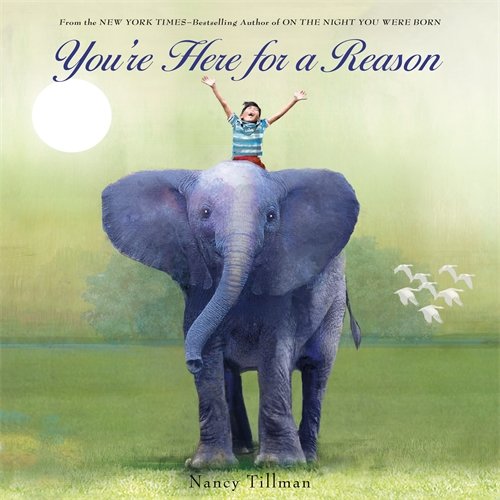
Having said that, I do regret that Nancy Tillman’s exquisite You’re here for a reason, wasn’t published until 2015. So we missed reading this one.

Although the book is designed for children, like the best of children’s literature, its message will strike a deep chord in any adult’s heart. The book is utterly imago dei. It affirms the deep God-given meaning of our lives and the ripple effect of our actions in the lives of others beyond what we will ever know.

You’re here for a reason, you certainly are.
The world would be different without you by far.

If not for your hands and your eyes and your feet,
the world, like a puzzle, would be incomplete.

Even the smallest of things that you do
blossom and multiply far beyond you.

A kindness, for instance, may triple for days . . .
or set things in motion in different ways.

IMG_2007What child or adult doesn’t need to hear that?
Tillman’s stated goal “has always been to give parents words to say what they feel about their children.” I’d say she succeeded with this one. Her artwork is breathtaking and her poetry profound.

My daughter now has two little ezers of her own, so she’ll be reading this book with them and no doubt absorbing the message for herself—just like I do each time I read it.

This book is a treasure for children and a never-too-late good word for grown-ups.

You’re here for a reason. It’s totally true.
You’re part of a world that is counting on you.


Posted in Uncategorized | 4 Comments

Buckle up Buckaroos!

Image by Cara Shelton from Pixabay

There is more to the Bible than you know.

The path to spiritual growth (so we are told) is to have our daily “quiet time”—a private time of Bible reading and prayer that gets us focused for the day. Some believe this daily practice will guarantee a prime parking spot when we arrive at work or are out running errands.

This serene portrayal of Bible reading left me totally unprepared for what happened when I started digging deeper into the Old Testament book of Ruth. No one warned me I might need a crash helmet. I’d always heard (even taught) that this brief biblical narrative was a beautiful love story where the wealthy, handsome Boaz rescues the lovely but impoverished Ruth from her dismal life of singleness.

A more accurate depiction of the book of Ruth is of a harmless looking backpack loaded with explosives. The Bible is a dangerous book—in explosive but life-giving ways. It’s not supposed to give us a reassuring pat on the back. It’s designed to disrupt and challenge our thinking, to raise hard, important questions, and to move us forward as truer followers of Jesus.

That won’t be a smooth or a painless process for anyone.

To unleash the Bible’s explosive powers, we must remind ourselves that we are not reading an American book. The Bible takes place within an ancient patriarchal culture. It is important to understand that patriarchy is not the Bible’s message; it is the cultural backdrop that sets off in the starkest relief the radical gospel nature of that message.

Patriarchy is a fallen social system that empowers men over women and a few men over most other men. It deprives females of legal rights, agency, and voice. A woman derives her value and security from men—father, husband, and sons.  In a patriarchal culture a woman’s duty in life is to produce sons for her husband to secure the family’s survival for another generation. Indeed, the gold standard for determining a woman’s value is to count her sons.

By that standard, the deaths of all the men in Naomi’s family (her husband and her sons) send a bereft Naomi and her barren daughter-in-law Ruth plummeting to the bottom of the social ladder. Count their sons. Culturally speaking, they are zeroes.

The deaths of the men shove Naomi and Ruth to the margins where their suffering and vulnerability intensify. Naomi is a famine refugee in Moab (today’s Jordan) with all of the trauma and social deprivation that entails. Today’s refugees shed fresh light on Naomi’s ordeal. Her lament against God defines the issues that the story will address. Convinced she’s lost God’s love, she mutters, “Don’t call me Naomi (pleasant). Call me Mara (bitter) . . . because the LORD has afflicted me.”

Today’s hostility against undocumented immigrants makes Ruth’s stubborn embrace of Naomi and her God breathtaking. Instead of returning to the safety and security of home and family, and well aware of the long road of poverty, vulnerability, abuse, and exploitation that awaits in Bethlehem, Ruth defiantly embraces Naomi and her God.

Culturally speaking she is sabotaging her life.

But this is where the whole story changes—for Ruth, Naomi, and Boaz. Ruth is YHWH’s child now and she will live as one, no matter what it costs.

Her border crossing into Israel comes off without a hitch. No barbed wire, drones, border guards, or extreme vetting. On Israelite soil, Ruth drops below zero. She is female, barren, poor, and now a gentile foreigner. Once in Bethlehem, she does is what locals always fear undocumented immigrants will do. She goes on welfare, becomes a common field worker—scavenging for scraps of grain to keep Naomi and herself alive.

This is where the explosions begin.

Ruth defies the silencing patriarchy imposes on women. She will not settle for bringing scraps to Naomi. She will fight to rescue Naomi’s family from dying out. From the margins and against overwhelming odds, Ruth becomes a gutsy risk taker.

Her encounters with Boaz are the stuff of gospel. The cultural disparity between them is pronounced and chilling. She is powerless, defenseless, on his turf, and challenging his interpretations of Mosaic Law. He’s a native born Israelite in perfect compliance with the law. Ruth lives on the hungry side of the law. The letter of the law says, “Let them glean.” The spirit of the law says, “Feed them.”

The book of Ruth gives us one of the most explosive displays of the kingdom of God touching down in human relationships. Ruth’s bold initiatives trigger an epidemic of true kingdom living. Lives are transformed. Sacrifices abound. The culture’s value system is overthrown. Boaz uses his advantages to empower Ruth and insure her initiatives on Naomi’s behalf succeed. Together they bring healing, hope, and blessing to Naomi. And God redeploys Naomi to raise Obed as her own son on the theology she learned in the school of suffering.

Finding-God-in-the-Margins-V4

In the end, a hungry widow is fed, a dying family is preserved for another generation, and God advances his purposes for the world on the shoulders of two women the world counted out.

Their story sends shockwaves through my story. Makes me think twice before counting anyone out when it comes to kingdom work. Has me asking myself, “If God called Ruth to take risks to benefit and bless others, why not me?”

Want to read more? Buckle up and read Finding God in the Margins.


This article was originally published at www.KeyLife.org, ministry of Steve Brown.

Posted in Uncategorized | 5 Comments

Men say the darnedest things . . . especially about women

517C-UTkNALWhen it comes to comparisons, Benjamin Franklin and Boaz the Bethlehemite have a lot in common.


Both occupy prominent spots in their country’s history. Both were powerful leaders in political matters and left their mark on human history. And both made unequivocally outrageous statements about women.

When it comes to their opinions regarding the fairer sex, however, the contrast between them couldn’t be more pronounced.

Benjamin comes off sounding like a Neanderthal, especially by today’s standards.

Boaz, on the other hand, was a man ahead of his time. His words and actions were radically counter-cultural, even by today’s standards. Probably no one was more surprised to hear what he said about women than Boaz himself.

The current #MeToo/#ChurchToo uprising puts both men’s words in the spotlight.

Benjamin Pontificates about Women

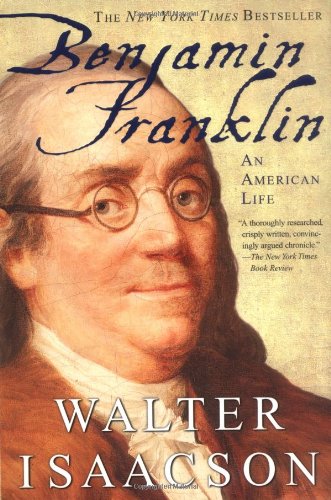
My historian husband Frank is currently reading Walter Isaacson’s Benjamin Franklin: An American Life. No matter what book he reads, he’s is always more than willing to share juicy morsels with me from his reading—especially quotes that have me rolling my eyes.

The latest was this priceless gem of advice for women from the famous Philadelphia patriot. Isaacson writes:

Among [Franklin’s] rules, avoid all thoughts of managing your husband, never deceive him or make him uneasy, accept that he “is a man not an angel,” “resolve every morning to be good-natured and cheerful,” remember the word “obey” in your marriage vows, do not dispute with him, and “deny yourself the trivial satisfaction of having your own will.” A woman’s power and happiness . . . “has no other foundation than her husband’s esteem and love.” Therefore, a wife should “share and soothe his cares, and with the utmost diligence conceal his infirmities.” And when it comes to sex: “Let the tenderness of your conjugal love be expressed with such decency, delicacy and prudence as that it may appear plainly and thoroughly distinct from the designing fondness of a harlot” (80).

That last bit makes me wonder how an upright decent man would be able to distinguish between his wife and “the designing fondness of a harlot.” But then Benjamin wasn’t exactly above reproach when it came to his relationships with women.

It also raises questions as to how freely otherwise respectable men mistreat and exploit prostitutes as though they were some lower form of humanity. The majority of prostitutes have been trafficked, sometimes as little girls, or reduced to prostitution as the only option available to provide for their families.

I think of Jericho’s Rahab whose embrace of Yahweh prompted her to commit treason by harboring Israelite spies and to risk her life to save her family. In Victor Hugo’s Les Misérables, Fantine is forced into prostitution to support her little daughter. Then there’s Dostoyevsky’s Sonya in Crime and Punishmentwhose self-sacrificing goodness caused my eyes to float in their own tears.

Following Franklin’s advice will never give a woman the kind of backbone required to stand up to abuse or injustice, to make choices for herself, or to cultivate the kind of strength, wisdom, and forthrightness a man truly needs from his wife and closest ally.

As the country mourns the loss of former First Lady Barbara Bush and 41’s fiercely committed ally, I am mindful of the wise counsel she gave one of his colleagues in the White House:  “Don’t hurt my husband. But don’t let him do something he shouldn’t.”

Boaz Breaks with Patriarchy in Bethlehem

The woman Boaz encountered violated the worldly-wise advice Ol’ Ben offered women, and it was a good for him that she did. Ruth’s power and satisfaction came from bucking the system to fight for Naomi and from challenging Boaz’s long-held convictions in earthshaking, life-changing ways. Everything she said made him uneasy and pushed him to think in new and creative ways of living faithfully before God.

Her reference point for the risks she took wasn’t any man’s “esteem and love,” but her fierce love for Naomi and her embrace of Naomi’s God. Ruth refused to accept the culture’s inadequate provision for her suffering mother-in-law. She embraced and boldly exercised her will despite her low status as an undocumented field worker, the patriarchal culture’s expectations for women, and the obvious risks involved.

In every encounter, Boaz was dumbfounded.

At his barley field, it is no secret that he is awed by her stunning choice to stick with Naomi despite the inevitable adversity involved. He prays in public that Yahweh will reward her richly for her actions.

At the threshing floor, Boaz is bowled over when Ruth presents him with her plan to rescue Naomi’s dying family that lacks the essential male heir. He calls her a woman hayil (3:11)—the same Hebrew word used to describe him as a “man of valor” (2:1).

Some Bible translations downsize hayil to “noble character,” “excellence,” “worthy,” or “virtuous” when it applies to a woman. But we have good reason to believe that “a woman of this caliber had all the attributes of her male counterpart.”[1]

Finding-God-in-the-Margins-V4

Boaz certainly wasn’t confused when he regarded her with such esteem. Within the context of the ancient male-centered patriarchal culture his remark is mind-blowing. It would be one thing to speak of Queen Esther or Mary of Nazareth with such superlative language. But Ruth? The social disparity between her and Boaz is about as extreme as it gets. He resides at the top of Bethlehem’s power pyramid. She lives at the bottom. As a female, an immigrant, a widow, a gentile from a pagan background, impoverished, barren, and with only a desolate older widow to call family—culturally speaking Ruth status is below zero. She lives in the margins.


Yet without a single alteration in her demographics, Boaz affirms her as his equal. It is radical. It is revolutionary. It is gospel. It couldn’t strike a sharper contrast with Ben Franklin’s view of a woman.

Men do say the darnedest things.


[1] R. Laird Harris, Gleason L. Archer Jr., Bruce K. Waltke, eds., Theological Word Book of the Old Testament (Chicago: Moody Bible Institute, 1980), 1:271–72.


Posted in Uncategorized | Leave a comment

Worthy: Finding Yourself in a World Expecting Someone Else

51ZH-s4p4XL-1I suspect women of all ages and the men who love them will be interested in this new book by George Fox University English professor, Melanie Springer Mock. To give you a taste of what’s inside, here’s the foreword I was privileged to write.

~ ~ ~ ~ ~ ~ ~ ~ ~ ~ ~ ~ ~ ~ ~ ~ ~ ~ ~ ~ ~ ~ ~

Every once in a while, a book lands on my desk that I wish I had read when I was in college. The book you now hold in your hands is one of those books.

I doubt that reading Melanie Spring Mock’s Worthy: Finding Yourself in a World Expecting Someone Else would have spared me from the deep personal struggles I experienced when my own story veered off the script I, as a woman, had inherited from my family, church, and culture. But it would have been worth a lot to have her company on the journey and to hear her voice of experience in the process.

This book is part memoir, part sage advice—a compelling mix of Mock’s own story and the kinds of struggles she’s encountered along the way that left her believing she didn’t measure up as a Christian, a woman, a mother, and a professor. Her story isn’t unique, which is why this book is such a gift. I suspect all readers will find themselves somewhere in the struggles she’s experienced.

I was only a few paragraphs into the book when I started seeing my own story in hers. Like Mock, I grew up in Oregon with the expectations that come with being a pastor’s kid. Like her story, mine also veered from the church’s “biblical” script for women when, post-college, instead of marriage and motherhood, I entered a long and unexpected stretch of singleness. Marriage didn’t recover that script. Instead, I became the family breadwinner in a career I loved while my husband completed his academic training. Like Mock, I too became a working mother, sharing the same sense of isolation and disapproval she describes as she juggled her twin loves: mom to two boys and college professor.

Mock is a lover of narratives and a wonderful storyteller herself. By weaving her own story in and through the issues she addresses, she draws us in to think more deeply about pressures and negative messages that hinder us from embracing our own uniqueness and the stories we are living. And Mock is right there in the struggles with us.

Early in the book, she writes, “I am not a biblical scholar or a theologian.” I understand what she means and why that might be good news to readers. But I reject her disclaimer. She may not be a professional theologian, but her down-to-earth theology is what gives this book the kind of relevance we need. This is theology at its best. It is both pastoral and personal. The brand of theology embedded in this book is deeply rooted in real life. It speaks into our own stories and engages the tough questions and self-doubts we all encounter. It gives us courage and hope when life unexpectedly detours into painful circumstances that leave us feeling lost, abandoned, and unworthy. It makes a difference when our feet hit the floor in the morning.

That’s what Mock so beautifully pulls off in this vulnerably honest book.

What prevents this book from being merely another attempt to dispel our insecurities and empower us to “live boldly for Jesus” is this: Mock lodges her assault against unworthiness with a truth that shatters the slightest suggestion that we or our lives don’t matter. The heart of her message is the fact that God created his daughters to be his image bearers. This is the ultimate antidote to any sense of unworthiness.

Because we are God’s image bearers, God—not our demographics, circumstances, or whatever chapter of our story we happen to be living—defines us. God has blessed us with the highest possible identity, meaning, and purpose, regardless of how others judge us or how our stories are playing out.

I still wish I’d read this book as a college student. Even now it is a saving grace, for those negative messages never stop. Yet no matter what season of life we’re in or how convinced we are that we are unworthy, those who read this book will end up standing strong on solid ground. And that alone makes it a worthy read for all of us!

Posted in Uncategorized | Leave a comment

The #MeToo Stories of the Bible We Tend to Ignore

Silence-Is-Not-Spiritual+(1)+super+small

The NYTimes recently resurfaced the video of pastor Andy Savage’s public apology at Highpoint Church in Memphis for sexually abusing Jules Woodson when he was her youth pastor. In it, he characterized his assault as a “sexual incident.”

The congregation gave him a standing ovation.

This latest version of the video, titled “I was Assaulted; He was Applauded,” included Woodson’s commentary. She was seventeen at the time of the assault.

The #MeToo movement gave Woodson the moral courage to voice her story even though the statute of limitations had expired. Her story is a vivid reminder that sexual abuse is not confined to secular settings. It happens inside the church. Sometimes sexual assault is inflicted by a trusted church leader. All too often other leaders compound the trauma by circling the wagons to cover-up and protect perpetrator and the ministry involved. Victims are often re-abused by being disbelieved, pressured to forgive, forget, and move on, or when leaders a victim turns to for help simply fail to act.

All this without involving law enforcement or professional counselors.

If there was ever any doubt about the church’s complicity in the #MeToo crisis, the damning flood of #ChurchToo tweets that followed on the heels of the #MeToo twitter storm exposed a serious internal church problem we can no longer ignore.

When the Church is Not a Safe Place

For many, former USA gymnast (now attorney) Rachael Denhollander has become the face of both #MeToo and #ChurchToo. Her #MeToo story made national news in the conviction of USA Gymnastics doctor, Larry Nassar. She was the first to accuse him publically and she gave the last impact statement at his trial.

She became embroiled in the #ChurchToo crisis when she challenge prominent evangelical leaders for a sexual abuse cover-up she described as “widely recognized as one of the worst, if not the worst, instances of evangelical cover-up of sexual abuse.”[1] The cover-up of abuse and the mistreatment she received for her advocacy for the victims led her to voice a conclusion many other women and girls in the church share.

“Church is one of the least safe places to acknowledge abuse because the way it is counseled is, more often than not, damaging to the victim. . . . It is with deep regret that I say the church is one of the worst places to go for help. That’s a hard thing to say, because I am a very conservative evangelical, but that is the truth. There are very, very few who have ever found true help in the church.”

#MeToo Stories in the Bible can help

What is tragically ironic about these current reports of sexual abuse within the church is the fact that the Bible is full of #MeToo stories. Not only should we have been the first to name them, we should be at the forefront of the effort to address and prevent sexual violence against women and girls. Yet somehow we’ve managed to sanitize, spin, or skip these biblical #MeToo stories or else we blame the women involved. They haven’t stirred up righteous indignation in us or caused us to wrestle with these texts.

Abraham and Sarah’s desperation for a son is one of the best-known stories in the Bible. Yet do we ever stop to notice the sexual abuse of Hagar? Not only was she a trafficked slave girl, when Sarah and Abraham compelled her to be a surrogate for Sarah to produce the desired male heir with Abraham, she discovered sex was part of the deal.

The dysfunction of Jacob’s family and the warring between his wives and among his sons give us some of the Bible’s most gripping drama. But have we ever wondered how those stories played out for slave girls Bilhah and Zilpah, whose mistresses (Leah and Rachel) offered them up to a willing Jacob. They commandeered these young girls’ bodies (without their permission) in the desperate quest for sons.

We also have the #MeToo stories of Esther, the Tamars, Bathsheba, and plenty of others.[2]

The Healing Power of the Bible’s #MeToo Stories

Finding-God-in-the-Margins-V4

These #MeToo stories give pastors the opportunity to raise awareness of the world’s tragic history of sexual abuse and violence against women and girls. It provides opportunities for pastors to acknowledge the trauma and pain that exists today among their own parishioners and to take intentional steps to make the church a place of safety, help, and healing.

These stories also compel us to get honest about the deeply flawed men in the Bible who we view in heroic terms. #MeToo is all about the abuse of power. The story of David and Bathsheba gives biblical warrant to confront those who violate the powers God entrusts for them to employ for the good and flourishing of others.

The Bible also gives us examples of remarkable men we can admire. One man in the Old Testament resisted the temptation that often leads to #MeToo stories and broke decisively with the fallen patriarchal culture’s elevation of men over women.

Meetings between Ruth and Boaz—in his barley field and at threshing floor—present situations that could have turned out badly for Ruth. The power differential between the two of them was chilling. She is young, female, impoverished, widowed, and an undocumented immigrant who became a common field laborer. She is the epitome of utter vulnerability. He, on the other hand, is male, Jewish in his native land, the descendant of one of Israel’s leading families, and a powerful landowner. He had the power to abuse Ruth get away with it.

Ruth’s decision to glean is a matter of survival. It exposes her to greater risk because it requires venturing out alone in a foreign culture. The risks intensifies at the threshing floor when she approaches Boaz in the dead of night.

But this is where Ruth’s story turns out differently, for she will encounter a man who lives before the face of God. That changes everything.

What happened is instructive for the church.

Instead of exploiting his advantages, in every situation Boaz uses his male power and privilege sacrificially to empower Ruth and insure her initiatives on Naomi’s behalf succeed. In the barley field, he intervenes and tells his male harvesters not to touch her. At the threshing floor, when she approaches him under cover of darkness and no one is looking, he shields her from false accusations and guarantees that her proposal to rescue Naomi’s family will happen.

In the end, a hungry widow is fed, a dying family is preserved for another generation, Ruth flourishes in the full embrace of the community of God’s people, and God advances his purposes for the world through their actions. Let us not forget that the family line they fight to preserve is the royal line of King David and ultimately of Jesus. And we are given a powerful example of gospel masculinity that reflects Jesus and his kingdom—a masculinity that brings blessing instead of trauma and flourishing instead of deep wounds.

It’s the #MeToo story that didn’t happen. And when Christian men, like Boaz, embrace their true calling as God’s sons, the #MeToo and #ChurchToo stories will stop.


This article was also published by ChurchLeaders.com

See also Finding God in the Margins


[1] Christianity Today interview: “My Larry Nassar Testimony Went Viral. But There’s More to the Gospel Than Forgiveness”

[2] Sandra Glahn, ed., Vindicating the Vixens: Revisiting Sexualized, Vilified, and Marginalized Women of the Bible

General

Posted in #ChurchToo, #MeToo, Finding God in the Margins | 4 Comments

“And ain’t I a woman?”

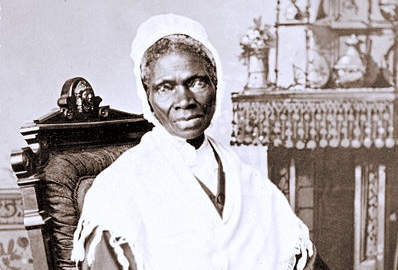
429px-Sojourner_truth_c1870

by Frank A. James III in honor of Women’s History Month

February and March are important months of remembrance. In February we honor African Americans and in March we honor women who have played important roles in history. I would like to combine these two remembrances and introduce you to a great African American woman and a six-foot tall fire-breathing abolitionist, women’s rights activist and Christian evangelist: Isabella Baumfree (c. 1797–1883).

Born into slavery around 1797 (the birth dates of most slaves are uncertain), Isabella was one of the ten (perhaps as many as twelve) children born to James and Elizabeth Baumfree both of whom had been kidnapped by slave traders and sold to the Hardenbergh family of New York. In 1806, nine-year-old Isabella was sold at an auction with a flock of sheep for $100 to a sadistic master who beat her without mercy. She was bought and sold several times before ending up in the household of John Dumont.

Around 1815, Isabella made the mistake of falling in love with a slave named Robert from a neighboring farm. Robert’s owner however, forbade their relationship. Robert was savagely beaten when he was caught visiting Isabella, and she never saw him again. She eventually married an older slave named Thomas with whom she had five surviving children.

Late in 1826, Isabella made one of the most painful decisions of her life—she escaped to freedom with her infant daughter, Sophia, but had to leave her older children behind. She found her way to the Quaker family of Isaac and Maria Van Wagenen, who took her and her baby in. Isaac then purchased the run-away slave and her daughter for $20. Although she was safe, her other children were not. She learned that her five-year old son Peter had been sold to an owner in Alabama. With the help of the Van Wagenens, she took the issue to court and in 1828, after months of legal proceedings, she got her son back. Isabella became the first black women to go to court against a white man and win the case. That same year (1828) the state of New York mandated that all slaves be emancipated and her family was reunited.

It was during her time with the Van Wagenens that Isabella became a devout Christian. She gave herself the name Sojourner Truth in 1843 after she became convinced that God had called her to “testify to the hope that was in her.” She moved to New York City, worked as a domestic and became a street-corner preacher. Although illiterate she nevertheless acquired a wide knowledge of the Bible and emerged as one of the leading advocates for women’s suffrage.

In the years that followed Sojourner Truth combined evangelism with advocacy for the rights of former slaves and women. Some years later, when speaking in Boston, Massachusetts, she recounted how her mother told her to pray to God that she might have good masters. She told how her various masters beat her for not understanding English and how she would question God why he made such evil masters. She admitted to the audience that she had once hated white people, but she said after she met Jesus, she was filled with love.

She was not always welcomed by her audiences. Once she stepped onto a stage and was met with loud hissing to which she boldly responded: “You may hiss as much as you please, but women will get their rights anyway. You can’t stop us, neither.” She then launched into the biblical story of Esther arguing that just as women in scripture, women today are fighting for their rights.

In May 1851, she was invited to speak at the Ohio Women’s Rights Convention in Akron, Ohio where she delivered her most famous extemporaneous speech on women’s rights, later titled “And Ain’t I a Woman.” Her speech demanded equal rights for all women as well as for all African-Americans. Different versions of her speech have been recorded, but the standard text is what follows.

Well, children, where there is so much racket there must be something out of kilter. I think that ‘twixt the negroes of the South and the women at the North, all talking about rights, the white men will be in a fix pretty soon. But what’s all this here talking about?

That man over there says that women need to be helped into carriages, and lifted over ditches, and to have the best place everywhere. Nobody ever helps me into carriages, or over mud-puddles, or gives me any best place! And ain’t I a woman? Look at me! Look at my arm! I have ploughed and planted, and gathered into barns, and no man could head me! And ain’t I a woman? I could work as much and eat as much as a man – when I could get it – and bear the lash as well! And ain’t I a woman? I have borne thirteen children, and seen most all sold off to slavery, and when I cried out with my mother’s grief, none but Jesus heard me! And ain’t I a woman?

Then they talk about this thing in the head; what’s this they call it? [member of audience whispers, “intellect”] That’s it, honey. What’s that got to do with women’s rights or negroes’ rights? If my cup won’t hold but a pint, and yours holds a quart, wouldn’t you be mean not to let me have my little half measure full?

Then that little man in black there, he says women can’t have as much rights as men, ’cause Christ wasn’t a woman! Where did your Christ come from? Where did your Christ come from? From God and a woman! Man had nothing to do with Him.

If the first woman God ever made was strong enough to turn the world upside down all alone, these women together ought to be able to turn it back, and get it right side up again! And now they is asking to do it, the men better let them.

Obliged to you for hearing me, and now old Sojourner ain’t got nothing more to say.

After an extraordinary life, Sojourner Truth died at her Battle Creek, Michigan home on November 26, 1883. Her funeral was the largest that town had ever seen.

Today we can answer unequivocally her question: “Ain’t I a Women?” Yes, yes indeed.


Posted in Uncategorized | 3 Comments