A Woman on a Mission from God

When I wrote my first book, I was on a mission from God!

I had already learned the hard way that I didn’t know enough about God—even though I’d grown up in the church where my father was the pastor and I had earned a seminary degree.

As an adult, again and again to my utter dismay, I encountered the expectation that as a woman I was supposed to live off a regurgitated spiritual diet, depending on others to feed me, tell me who God is, what his plans were for me, and what I should believe.

When I perused the offerings in the women’s section of the Christian bookstore and listened to the “talks” I heard at women’s events—I felt like I was being patted on the head and told not to worry my pretty little head about such weighty matters.

Theology is for men.

One of my seminary professors actually said to me: “Women aren’t wired to be theologians.” Somehow, male genetics contain a spiritual link to the divine which most females lack.

[Tweet “As a woman I was supposed to live off a regurgitated spiritual diet.”]

The Danger of Thinking “Theology is for Men”

This kind of thinking is not only deeply flawed, it’s actually dangerous. For starters, it lets women off the hook by excusing us from pursuing a deeper knowledge of God. That leaves us ill-equipped for the struggles we inevitably face in this fallen world. It also distorts relationships between men and women. Relationships supposedly tilt out of balance if a woman knows more about God than a man knows. It is tragic for men who, instead of seeing a woman’s theology as a desirable asset, perceive it as a threat. It’s tragic for women because it leads us to hold back and become less than God calls us to be.

[Tweet “It is tragic to perceive a woman’s theology as a threat.”]

So, when I wrote When Life and Beliefs Collide, my mission was clear. Aiming primarily at women (although I was more than happy for men to read too), I wanted to challenge women to think deeply about God and to see themselves as theologians.

As I said in my book, “The moment the word why crosses our lips, we are doing theology.”

We need to ask God the deep questions of life. More than that, we have responsibility to think deeply about God. Did God really create women to be dependent on men? Are women really to subsist on a regurgitated spiritual diet? Do males really have a special genetic link to God that elevates them spiritually over women? And perhaps the most important question of all: are any of us really reading our Bibles honestly?

The dreaded T-word and the Kingdom

As the first millennium became the second, I proposed a book to a publisher on “the importance of theology for women,” only to face an extra hurdle to the usual obstacles writers face. “Women won’t read a book about theology,” I was told. ” “Don’t use the dreaded T-word. It will scare them off.”

With a rejection letter in hand, what’s a ezer to do? As my husband said, “If it’s important, it’s worth fighting for.”

In 2001, When Life and Beliefs Collide: How Knowing God Makes a Difference, rolled off the presses. My mission was to argue that every woman is a theologian. To put a fine point on it, I also made the case that the first great New Testament theologian was a woman!

But the mission I was passionately committed to didn’t stop with simply encouraging women to use their minds to go deeper in their relationship with God.

Theology is never an end in itself.

I would argue that we don’t understand theology if it doesn’t mobilize us for Jesus’ kingdom. Christian faith is an active faith. It is never enough merely to love God with our minds. We’re called to love him with all our being—heart, soul, strength, and mind.

It means we join God’s mission in the world. As his image bearers, what happens in God’s world is our business.

[Tweet “I would argue that we don’t understand theology if it doesn’t mobilize us for Jesus’ kingdom.”]

Freedom Challenge ezers are climbing mountains to raise awareness and funding to combat sex trafficking. In Massachusetts, they’re raising money through Hope for Our Sisters to fund fistula repair surgeries (hundreds so far!) that are giving women and girls back their lives. At Gathering for Hope, among their many projects, they’re donating sanitary napkins to ensure girls in Africa won’t miss school when they have their periods. Women’s ministries in various churches are volunteering for and supporting NGO’s in their communities. Teen-ezers are creatively fund raising to support vital causes to address human suffering. In growing numbers, young women are pursuing law school and seminary degrees to invest themselves in the Kingdom of Jesus.

[Tweet “As his image bearers, what happens in God’s world is our business.”]

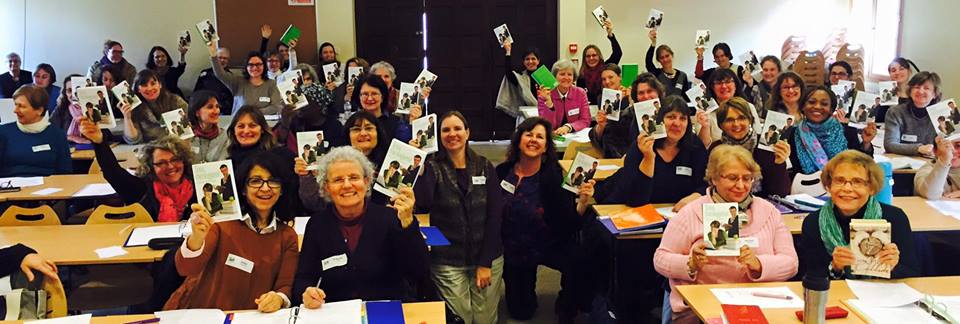
Saturday morning, it did my heart good to wake up to the very good news that my book is still being read. Women are still learning the truth about themselves and taking seriously their responsibility to become better theologians and to live out their theology.

At a Lifesprings International gathering in France (a ministry I’ve been privileged to participate in) women are reading Tous théologiens ! (We are all Theologians! the French translation of When Life and Beliefs Collide). They sent photo evidence to prove it.

Who knows what will come from this?!

Just shows a woman on a mission from God can be a very good thing!

8d7e0-ma-logo-horizontal-300x225      Originally published at www.MissioAlliance.org/author/carolyncustisjames

Posted in Activism, Theology | 2 Comments

The Lost Women of the Bible are Coming to Pennsylvania!

Coming to Souderton, PA to be exact. 

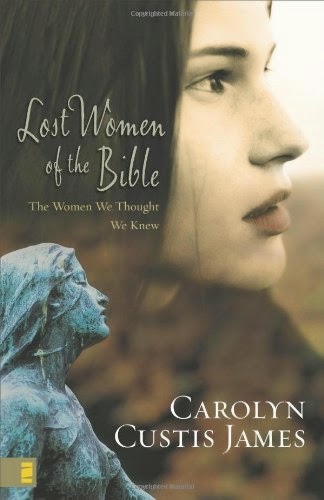
Beginning January 26, I will be teaching a 10 week class on my book, Lost Women of the Bible: The Women We Thought We Knew. The class will be held in Souderton, PA at Calvary Church as part of the Winter-Spring Women’s Bible Studies

Who are the lost women of the Bible? 

They aren’t the so-called bad girls of the Bible. Nor are they marginal characters in the Bible. The lost women are among the most familiar figures in the Bible—Eve, Sarah, Hagar, Tamar, Esther, Mary of Nazareth, and others. But they get lost anywayin their own stories and in their walk with God.  

Sadly, we’ve lost them too because we look at them through American eyes. That diminishes their significance and inevitably obscures the strong role models they become when they find their center in God and step up to face the battles he calls them to engage.   

Learning more about their world and digging deeper into their stories unleashes the power of their stories in new, life-changing ways.  

We need these women’s stories because we get lost in our stories too. The life of faith isn’t easy. There are bends in the road we didn’t see coming and battles God calls us to engage. The lost women have made this journey before us. They are wise guides who offer us the hope and strength we need as we answer God’s calling on our lives and walk with him in a complicated, messy, and very broken world. 


If you live anywhere near Souderton, I hope you’ll consider coming and joining in a robust discussion as we reclaim the lost women of the Bible. 

Tuesdays, January 26-April 19
9:15-11:15am

No Charge

Calvary Church
820 Route 113
Souderton, Pennsylvania 18964


The Women of Calvary Church 
welcome any interested women to attend!
For more information and to register, go here.  


Posted in Uncategorized | Leave a comment

Watching Spotlight Through Protestant Eyes

The cast of Spotlight. Credit: Open Road Films

Like everyone else, I make the same old New Year’s resolutions—eat better, exercise more, get more rest. And like everyone else, I forget about them soon thereafter. Nice try, but no banana. This year, I stumbled into a New Year’s resolution that put all of my other resolutions to shame.

I went with my cousin to see the movie SpotlightSpotlight is the true story of The Boston Globe’s Pulitzer Prize-winning investigative wing’s report on the sexual abuse of children by priests within the Boston Archdiocese.

The Spotlight Team (played by Michael Keaton, Mark Ruffalo, Rachel McAdams, and Brian d’Arcy James) began their investigation based on reports of pedophilia perpetrated by one priest, John Geoghan, and a lawyer’s allegation that the Boston Archbishop, Cardinal Law, knew children were being abused and did nothing to stop it. According to Spotlight’s damning report,

For decades, within the US Catholic Church, sexual misbehavior by priests was shrouded in secrecy—at every level. Abusive priests—Geoghan among them—often instructed traumatized youngsters to say nothing about what had been done to them. Parents who learned of the abuse, often wracked by shame, guilt, and denial, tried to forget what the church had done. The few who complained were invariably urged to keep silent. And pastors and bishops, meanwhile, viewed the abuse as a sin for which priests could repent rather than as a compulsion they might be unable to control.
“The Church Allowed Abuse by Priests for Years” (1/6/2002)

What began as an investigation into one priest’s predatory activities ultimately escalated to reveal a widespread epidemic of multiple priests sexually abusing children. Spotlight’s investigation of one priest expanded to 13, then mushroomed to a mind-boggling 87 priests and over 1000 victims in Boston alone. Instead of facing legal prosecution and prison sentences, offending priests were relocated by church officials to other parishes where the sexual abuse of children continued. The investigation surfaced a church-wide crisis that stretched well beyond Boston to other cities nationally and beyond.

What was most disturbing of all about Spotlight for me was the fact that, as I watched through Protestant eyes, the story ceased to be simply about the Catholic Church. I couldn’t escape connecting what I was seeing with what is and has been happening within Protestant Evangelicalism. As Protestants, we have no right to feel smug or shake our heads over the terrible disgrace this scandal brought on the Catholic Church. We have deep abuse problems of our own.

Law Professor and former child abuse prosecutor Boz Tchividjian made that precise point. “Spotlight: It’s not just a Catholic problem.” He backed his assertion with a report from three companies that insure most Protestant churches. The report indicated “approximately 260 reports a year of minors being sexually abused by church leaders and members”Protestant church leaders and members!  That figure exceeds the 228 a year “credible accusations” of child sexual abuse reported by the Catholic Church. Boz went on to say, “Both numbers are much higher due to underreporting and the manner in which such information is collected and determined . . . In reality, the likelihood is that more children are sexually abused in Protestant churches than in Catholic churches” (emphases mine).

Over the past few years reports have surfaced on the Internet, revealing instances of child sexual abuse within major leading protestant evangelical churches and ministry organizations, accompanied by leadership efforts to cover-up or gloss over these atrocities to protect the careers and reputations of perpetrators and religious institutions. Case in point: “New charges allege religious leader, who has ties to the Duggars, sexually abused women.”

Stated bluntly by The New York Times reviewer A.O. Scott, the film’s major concern “is the way power operates in the absence of accountability. . . . Challenging deeply entrenched, widely respected authority can be very scary.”

That statement shifts the spotlight onto what is happening within the Protestant fold and our responsibility to deal with abuses that go unchallenged or covered up here.

Abuse situations easily tend to become hurdles to get past, rather than reasons for us to investigate our own systemic abuse problems and come up with strategies for addressing and preventing abuse. Protecting colleagues, maintaining the status quo, or expressing relief when the statute of limitations runs out and moves an offending colleague beyond the reach of the law leaves a trail of wreckage in all directions.

Life-long wounds and PTSD suffered by victims are exacerbated when their stories are doubted and discounted or they are pressured to forgive and disappear in silence. That trend is currently being reversed as numerous abuse survivors have found their voices and are going public online, courageously telling their stories on survivor websites to a wider listening Internet audience. But these young abuse victims aren’t the only ones who are damaged when church leaders circle the wagons.

Perpetrators of abuse aren’t confronted and dealt with both legally and spiritually in ways that bring a guillotine end to their abusive actions, lead them out of what must be a hellish darkness, and establish immovable boundaries to protect them from themselves. Don’t the souls of these abusers need and require that kind of uncompromising but redemptive intervention?

Enablers who protect them suffer self-inflicted damage by violating in egregious ways their calling to shepherd and care for those who are weakest and most vulnerable among us. Ultimately, the whole church suffers because the church of Jesus Christ is no longer a safe place for any of us if it is not a safe place for all.

As the New Year begins, what could be more important or healthy than for the Evangelical Protestant church to turn the spotlight on ourselves, repent, and get serious about addressing abuse within our ranks. This important film gives us a powerful way to begin that conversation by creating awareness of an urgent problem we must address.

Consider adding a few more items to your 2016 New Year’s ministry resolutions.

Face the facts: May I be so bold as to suggest that every pastor, every ministry leader and team member, every elder, every deacon, every Sunday School teacher, every seminary professor and student make it a point to see this film and then to weigh the implications for their own ministry community.

Abuse problems don’t just exist somewhere else “out there.” The abuse of power is among us in a variety of forms. Hopefully, learning more about the presence of sexual abuse will create awareness of the wide range of other forms of abuse that thrive unchecked among us. Just maybe it will even compel us to ask hard questions and to reexamine honestly how our theology and preaching may be part of the problem—fostering, even sanctifying the abuse of power of some over others.

Know your audience: According to statistics, 1 in 4 women and 1 in 6 men have been sexually abused as children. This statistic doesn’t stop at the threshold of the church, but marches right on in. Even if the abuse didn’t come at the hands of someone in the church, the survivors are among us. Those who minister in the name of Jesus bear a profound and primary responsibility to care for the young, the weak, the vulnerable, and wounded among us. Every alleged or proven incident within the church, every ignored or mishandled abuse situation resounds with unbearable pain and creates enormous distrust in the hearts of those represented by these appalling statistics.

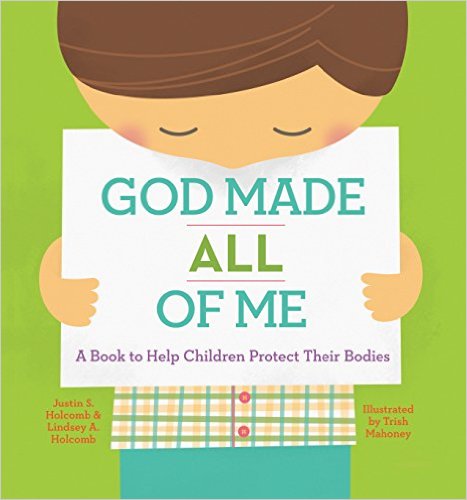
Mobilize everyone to protect our children: Late last year, Justin and Lindsey Holcomb released a new book—God Made All of Me: A Book to Help Children Protect their Bodies. This important tool is

designed to help parents engage their children in preventing sexual abuse.

Seek professional help: Sometimes with the best of intentions, our attempts to address these complex situations backfire, and we do more harm than good. Church leaders can’t be expected to be experts on every problem they encounter. Expert help is required and thankfully also available—from law enforcement, sexual abuse experts, and trained trauma counselors.

Read Boz Tchividjian’s post, “Spotlight: It’s Not Just A Catholic Problem” and check out resources and training his organization GRACE and The Global Trauma Recovery Institute offer.

My New Year’s Resolution for 2016:  Let’s make 2016 the year we begin to heal those who have been abused and eradicate the forces of abuse that are wounding the Body of Christ. Let this be the year the Church becomes a sanctuary—truly a safe place for all of us.


Published as a Leading Voice for Missio Alliance. 
To read the full article, go to http://www.missioalliance.org/watching-spotlight-protestant-eyes/


  Republished by HuffingtonPost/Religion


Posted in Uncategorized | 3 Comments

Moving into another New Year

2015 had a wildly crazy beginning to which thankfully 2016’s quiet, restful beginning has no resemblance.

In the early days of 2015, Frank and I had just vacated the Hobbit Hole and were living in a jungle of unopened boxes from our move. Somehow we managed to locate enough of our Christmas decorations to pull off a reasonable Christmas celebration, while carrying on with work and publishing deadlines.

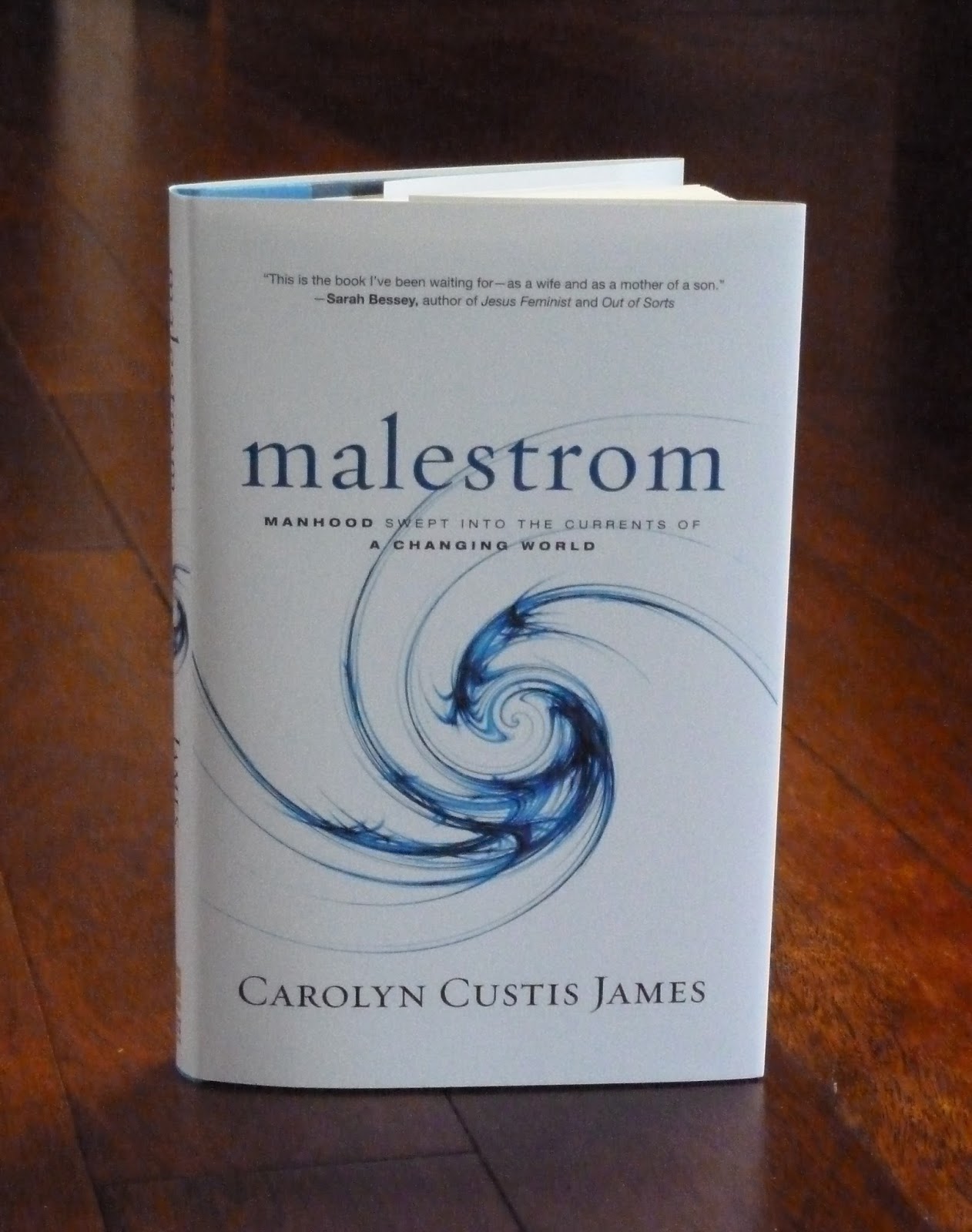
That work included finalizing my manuscript for Malestrom: Manhood Swept into the Currents of a Changing World—the book that compelled me to consider the serious global issues facing men and boys in the new millennium. Malestrom is a frank discussion of how patriarchy is harmful to men and boys. It causes them to loose sight of God’s vision for them as his sons. The destructive consequences show up in the lives of individualsthe men and boys we know and love, but are also linked to violence, terrorism, and wars on the global stage that we hear about from the media every day. This is without a doubt one the most pressing issues facing the church in the 21st Century. 

Malestrom was released in June at the Missio Alliance Conference in Alexandria, Virginia. 


As the year ended, Malestrom was honored with Christianity Today’s Best Book of 2016 in the Her.meneutics Category and was named as one of Missio Alliance’s Top 10 Books of 2015

If you haven’t read it yet, I hope it’s on your Books to Read in 2016 list.

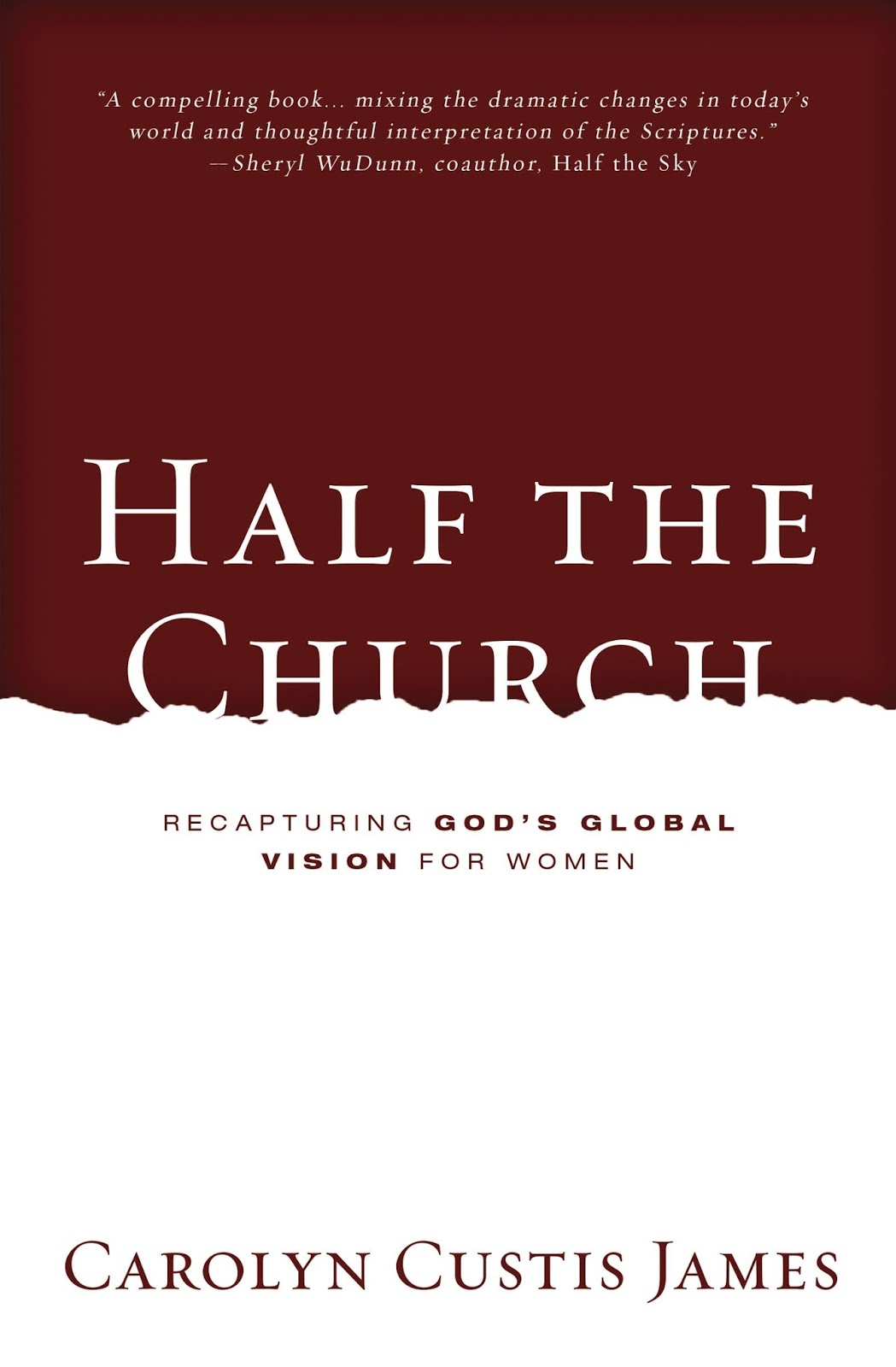
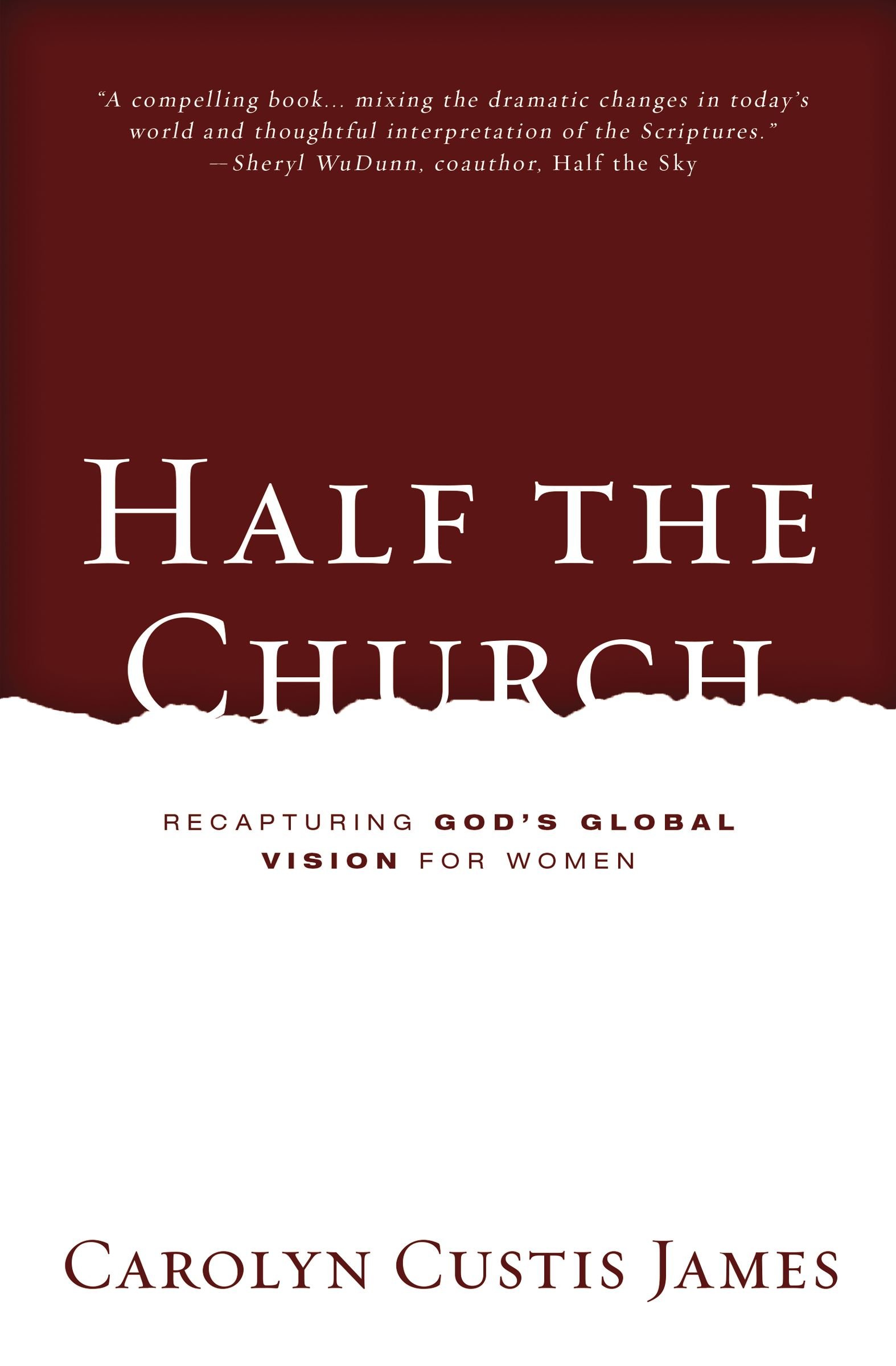
At the same time as Malestrom’s release, Half the Church got a facelift—literally. Much as I loved the original jacket, it didn’t capture the wide reaching, ethnically and culturally diverse audience that Half the Church is targeting. So I am really pleased with the change!

The June Missio conference also marked the first time the Synergy Women’s Network was an official part of the Missio Alliance. A bunch of us were there. Several led seminars. Plans are now underway for a 2016 event that focuses on women. “She Leads” will be in Chicago, October 22. More info will be coming later, especially on the Missio Alliance website. For now, save the date on your calendar!

More good news came when Missio Alliance invited me to become one of their six “Leading Voices” on the Missio Writing Team. This involves a transition that is currently a work in process where I’ll be posting my blogs on a webpage designated for me on the Missio website. You can find it here.  My introductory post is here.

For the moment, I’m blogging on both sites. However, if you are currently subscribed to WhitbyForum (meaning you receive an email alert whenever I post a blog on WhitbyForum) you can subscribe to Missio (you can subscribe at the bottom of the MA page) or follow me on FB to stay informed. Missio is doing a lot of interesting things, so subscribing is a good idea in any case. 

Another busy year lies ahead. (Did I mention that we still have boxes to unpack?) I’m praying 2016 will be a year of growing deeper as we learn to walk with God into a future which is always unknown to us, but never to him, and that each of us will do with heart and soul whatever God is calling us to do. I hope you will pray that for me.

Happy New Year!

Posted in Uncategorized | Leave a comment

The Perfect Christmas Man-Gift

If you really love the man in your life, help him escape the malestrom. Put a copy of this paradigm busting book under the tree for him. He’ll love you for it!

Malestrom: Manhood Swept into the Currents of a Changing World

To quote Sarah Bessey,

“This is the book I’ve been waiting for—as a wife, as a mother of a son, as a woman committed to the blessed alliance God intended between men and women. This book will be healing and restorative for so many. It’s a beautiful invitation to manhood in the Kingdom of God.”


Posted in Uncategorized | Leave a comment

Anita Lustrea Re-Launched!

Anita Lustrea is not going away! 

After Moody Radio’s disappointing cancellation of Midday Connection, she’s launching an online podcast on October 5 that promises to be worth following.

This will be good news for a lot of former Midday Connection listeners and hopefully a expanding new audience.

All best wishes to Anita in this new venture! 

Here’s the press release:

“Anita Lustrea Faith Conversations” Podcast Launches October 5Anita Lustrea, Former Moody Radio Host, Announces New Weekly Program Chicago, IL –

For more than 15 years, Anita Lustrea hosted Moody Radio’s award-winning “Midday Connection” talk show and earned the loyalty of listeners across the U.S. who tuned in for authentic conversations on faith. The radio program concludes September 30, but Anita’s conversations with Christian thought leaders will continue online. Beginning October 5, Anita Lustrea will host and publish a new podcast, “Anita Lustrea Faith Conversations,” on a weekly basis. Anita and guests will explore how to care for our souls as we live out our faith and respond to life’s challenges. Listeners can follow the podcast at www.AnitaLustrea.com and via iTunes.

 “I am overjoyed to continue hosting faith conversations in this new format,” Anita comments. “Podcasting allows listeners to access the show on their own schedule, so I hope our ‘Midday Connection’ listeners will join me as we welcome new listeners, both men and women. I’m expanding the breadth of our discussions, and we’ll welcome a wider range of guests. My hope is that listeners feel encouraged and challenged to thoughtfully live out their faith.” 

“Anita Lustrea Faith Conversations” will publish new podcasts each Monday beginning October 5, with plans to publish new episodes twice weekly in 2016.

Guests confirmed for 2015 include author/speaker Beth Booram, speaker/author Nancy Ortberg, songwriter/author Andrew Peterson, author/speaker Elisa Morgan, author/blogger Ann Spangler and author/speaker/podcaster Lisa Anderson. Early sponsors of the podcast include Northern Seminary, InterVarsity Press and Tyndale House Publishers.

Anita Lustrea is a speaker, author, podcaster and spiritual director. She is the host of a new podcast, “Anita Lustrea Faith Conversations,” and the freshly appointed Director of Alumni and Church Relations at Northern Seminary in Lombard, IL. Anita spent 31 years with Moody Radio, co-hosting the weekday “Midday Connection” radio program for the past 16 years. She is the author of What Women Tell Me: Finding Freedom from the Secrets We Keep and co-author of four other books: Shades of Mercy; Tending the Soul: 90 Days of Spiritual Nourishment; Daily Seeds from Women Who Walk in Faith; Come to Our Table: A Midday Connection Cookbook. Anita and husband Mike Murphy, a pastor, live in the Chicago suburbs and are the proud parents of John, Anita’s PhD student son.

Posted in Uncategorized | 3 Comments

Rethinking Gender Roles

Author, William Paul Young

“Didn’t we settle this a long time ago?!”

The heated outburst came from an alarmed conservative Presbyterian pastor who, with a larger group of pastors, had gathered to discuss gender and the church. He was objecting to the need to reexamine something as basic as what it means to be male or female and attempting to shut the whole discussion down.

For some evangelicals, rethinking gender roles is terribly disconcerting. It seems to threaten the very foundations of Christian orthodoxy.

Yet the issue isn’t going away. To the contrary, more and more Christian women and men are realizing that the church’s current discussion of gender is inadequate for the realities and contingencies we face in a fallen world. It tends to narrow what is properly a global discussion to focus on a predominately white, western, prosperous, educated, heterosexual demographic. It fails to affirm the diversity of human lives within that demographic or to acknowledge that the experiences of people of different economics, ethnicities, cultures, circumstances, or eras are not all the same. It doesn’t free us to embrace our circumstances, disappointments, gifting, and opportunities and to do wholeheartedly whatever God is calling us to do. The result is a set of conclusions presumed to be biblical that are simply unworkable for countless lives.

 We need to be asking new and deeper questions—beyond roles and rules and who leads and who follows. Probably no discussion is more urgent in the twenty-first century than the question of what it means to live as male and female in God’s world. The stakes are high in our willingness to engage—for women and for men, as well as for the mission of the church.
That pastor’s protest was an early warning that the questions I was raising in my ministry and writings were going to encounter resistance.


So I was not a little surprised to discover an ally in author Paul Young, best known for his NYTimes bestseller The ShackIn a bold article entitled, “Why We Need to Rethink Gender Roles,” Young introduces his latest novel, Eve, by venturing into this perilous zone.

Young begins by rejecting the categories that for decades have dominated the church’s discussion over male/female roles. He argues that these warring camps—complementarian and egalitarian—employ “the language of power, of either/or, of polarity and division, of categorization and conscription” and that winning this kind of debate is actually “among the largest of losses.”

 He believes we’ve been asking the wrong question.

“We need to start with a different one, beyond what it means to be a man or a woman. 

What does it mean to be human?”

This by no means obliterates or blurs the differences between men and women as some fear.  He writes,

“. . . men and women are different. Obviously. But so is one woman from another woman or one man from another. The distinctions between the average man and woman are small compared to the spectrum that exists in either femininity or masculinity. . . . I believe the entire conversation has to be challenged and re-framed . . .”

Although I have yet to read Young’s latest novel, I hope his thesis gains traction with readers. A lot is riding our willingness to engage an issue that profoundly impacts every one of us—including the protesting pastor.

Failure to re-open the discussion—to ask the new hard and unsettling questions and move the discussion into the global arena—is for the church to abdicate her prophetic voice in a world that is searching for answers and where other voices are speaking powerfully into that void.


This is the challenge I’m raising in my work—most recently for men and boys in Malestrom: Manhood Swept into the Currents of a Changing World and prior to that for women and girls in Half the Church: Recapturing God’s Global Vision for Women.  

Young isn’t overstating things or talking fiction when he warns that this is where we “must go if we have hope to survive together as a human race.” 


Posted in Uncategorized | 2 Comments

Midday Disconnected

Clockwise from top: Anita Lustrea, Caryn Dahlstrand Rivadeneira,
Melinda Correa Schmidt, and Lori Neff

Yesterday, a stunned Midday Connection radio audience learned that Moody Radio has cancelled this popular broadcast. Moody Radio Vice President Colin Lambert made the announcement. He spoke of a “change of seasons” and “the need to address seismic shifts in our culture.”

I find that explanation a bit strange, given the fact that Midday has been doing that very thing—thoughtfully, even fearlessly, engaging a wide range of seismic cultural changes and issues that impact their listeners. It will be interesting to see what lands in this programming slot.

As someone who has been privileged on numerous occasions to be interviewed by Anita and Melinda, both in studio and by phone, I appreciate the depth of their interviews and am personally grateful for the excellent work they’ve all done. (The latest was July 8 on Malestrom.) Over time, we’ve developed good friendships, so I share the deep sense of loss that loyal listeners are feeling.

Melinda and Caryn departed in June. After ten years together, Anita and Lori will wrap things up next Friday (September 18). They’ll be talking about their departure in today’s broadcast.

Yesterday Anita posted this on FaceBook:

As you can well imagine the past three and a half months have been very emotional. In May we found out Midday was ending. In June both Caryn Dahlstrand Rivadeneira and Melinda Correa Schmidt left. They just weren’t colleagues they were dear friends. Now Lori Neff and I are bidding adieu. 

A week from tomorrow [Sept 18] will be our final goodbye to the Midday Connection family. And it was a family. We laughed together. We cried together. We wrestled with tough issues together. There were those who didn’t care for our style nor our substance but they were in the minority. The others of you cared deeply about what we were trying to do and build to the glory of God. 

All of us will embark on a new leg on our journey soon. Friend us on Facebook so you can journey with us. Right now, though, I just want to say thank you for the outpouring of love and affection. I can’t tell you what it means to know that we helped make a difference in your lives. Please know you’ve made a difference in ours. Keep all of us in your prayers. 

Please tune in tomorrow [Sept 11] for a very special final Millrose Club program!

Knowing what I do of these four incredible women, I feel confident in saying, “We haven’t heard the last of them!” And that is only a good thing. 

Follow them on FaceBook to find out what comes next.


Update:  On the September 11 broadcast, both Anita and Lori announced that, after leaving Midday Connection, they will each be doing their own podcasts.  

Posted in Uncategorized | 23 Comments

It’s another Ezer!

At 7:00pm Monday, August 24, Avery Elizabeth James-Rodrigeuz made her grand entrance into the world—all 8 lbs 1 oz of her! 

Of course, Frank and I were there in Orlando (in the August heat!) to celebrate, help out, and find our hearts completely captured once again by another baby girl. 


Avery landed in occupied territory—preceded by her one-year-old “big” sister Arden, who is in “Gentleness Training” and catching on. Arden’s radar is already tuned in to her baby sister. When Avery cries, Arden hears and points like a tiny traffic cop signaling for someone to go. 

Mother and babies are doing fine. Alli is already diving back into her studies. She and Tony are a great parenting team—and need to be with two wee ones and work and classes. 

It’s great to be back home again, although it was tough to leave them all. Classes have started at BTS for Frank. Writing projects and speaking engagements are on my agenda. 

Hard to believe Fall is here already!

Posted in Uncategorized | Leave a comment

Future of Faith in America: Evangelicalism


This article was first published on Patheos.com as part of their Public Square on the Future of American Evangelicalism. Patheos asked a variety of Evangelical leaders to discuss what they think that future will be. This is my response. It is republished here with permission.


Generational Divide in American Evangelicalism
Millennials will win in the end

Nineteenth-century critic, satirist, and novelist, Jean-Baptiste Alphonse Karr, may have captured the essence of contemporary American Evangelicalism in his famous epigram: “The more things change, the more they stay the same.”

American evangelicals are encountering change at an ever-accelerating pace. What was unimaginable a mere decade ago is happening now. The SCOTUS ruling to legalize same-sex marriage illustrates how dramatically the American cultural landscape is changing. Advances for women and girls inspired Tom Brokaw to predict that the 21st century will become known as the “Century of Women.” Postmodernism has created significant distrust of traditional evangelical values. Globalization reminds us we are not the center of the universe and have much to learn from others. Christianity is now sharing space on American soil with Islam and Buddhism.

Complicating everything is a generational divide between evangelical stalwarts resisting change and Millennials who live out their faith by engaging change and finding their voices on the internet.

The more things change, the more they stay the same.

American Evangelicalism is no monolith (and never has been). Evangelicals do not share the same values, politics, or even the same understanding of Jesus’ Gospel. Whatever one may say about American Evangelicalism must be severely nuanced. The old Bebbington Quadrilateral that has historically defined evangelicalism (authority of scripture, salvation through the cross of Jesus, conversion, evangelism) probably needs renovation.

With these caveats, here are some of my expectations for the immediate future of American Evangelicalism.

The traditional American evangelical church may continue to decline, but will find fresh expressions. In May 2015, a Pew Research Center survey reported the decline of Christians in America, and the increase of adults who do not identify with any organized religion (“Nones”). A major exodus is taking place in the church as Millennials — born and raised in the evangelical church — are heading for the exit.

Many departing Millennials will tell you they still love Jesus, but not the church. They can’t reconcile Jesus’ teachings in the Sermon on the Mount — his care for the oppressed, the disenfranchised, the poor, and the sick — with the infighting, abuse, and hypocrisy they’ve witnessed in the church. They don’t connect Christianity with right-wing politics. They’re passionate about social justice — poverty, women’s rights, human trafficking, immigration, HIV/AIDS, and ending the death penalty. They are committed to an embodied faith. So they are leaving a moribund church, but they live out their faith in demonstrable ways. Although the majority of disenchanted evangelicals are Millennials, they increasingly will be joined by some of their elders.

The generational breach over LGBT acceptance will press evangelicals to find ways to disagree gracefully. Demographic studies show that younger Christians are accepting of their homosexual friends. For Millennials, the issue is about loyalty and friendship. Theological hair-splitting and proof-texting hold little value for evangelicals under the age of thirty-five. They won’t abandon their gay friends. When Bible-thumping pastors rage against homosexuality, Millennials will simply let their feet do the talking.

Ultimately, American evangelicals will face a more rigorous challenge when same-sex marriage involves someone they love — a son or daughter, brother or sister. How will Christians respond when a same-sex married couple with children moves in next door or arrives as a family at church? I suspect relationships will ultimately prevail.

Debate over the role of women will continue in the church, but become increasingly irrelevant. For women, moving between the public sector and the church is an exercise in cultural schizophrenia. While traditional and progressive evangelicals continue lobbing proof texts at one another, many women have stopped listening and will be charting their own course. Practical realities will lead growing numbers of Christian couples to decide the stay-at-home dad and breadwinning mom works best for their family. Women desiring ordination for ministry know which denominations or churches to join.

New voices within Evangelicalism are questioning whether the Bible really teaches patriarchy. Practical necessity, societal changes, and hermeneutical developments will generate growing advocacy for cultivating stronger partnerships between men and women.

Despite the travails of the evangelical American church, hope prevails. Whatever struggles plague the American evangelical church, this much we all know: God has taken it upon himself to sort out the mess we’re in. Jesus’ kingdom has launched. His Holy Spirit is still in the business of changing us into people who truly follow Jesus and become agents of his love and grace to a hurting world. And at some point in time Jesus will come and, in the words of N.T. Wright from Simply Christian, he will “put everything to rights.”

Things will change and they will not stay the same. 


To read other perspectives in this Patheos series, go to:  Evangelicalism: The Future of Faith in America

Posted in Uncategorized | 2 Comments