Join the Movement to Stop Sex Trafficking


Friday, January 10, 1pm/ET, Half the Sky Movement is hosting a Google Hangout on #humantrafficking with a stellar linepup of panelists including:

The church should be on the forefront of this humanitarian crisis. It is how we live out the gospel in this fallen world. Many Christians are actively involved. More of us need to get informed and do whatever we can to advance this anti-trafficking effort. There’s something everyone of us can do.

I suspect this should be a special priority for men who believe they have a God-given mandate to protect and provide for women. Surely that mandate extends beyond the immediate family.

To register for this important event, go here: http://bit.ly/1cNChdw.

Posted in Uncategorized | Leave a comment

Beware of Labels

This Pantene ad is causing quite a stir by exposing the problem of gender labels in a brief one-minute video that has gone viral. So far over 20 million views and counting.

Clearly the ad’s message hits a nerve. There’s no getting around the double standard that, as the video illustrates, labels a male executive as “boss” and a female executive as “bossy” when they’re doing the same thing. The ad adds fuel to the flame when it depicts a family man burning the midnight oil as “dedicated,” but the mom working late as “selfish.”

Blogger response has been mixed. Some applaud the ads for drawing attention to a problem that is still very real. Others are critical—saying such things as this kind of thinking is “playing the victim” and that “we got over this a long time ago.” Another objected that the concluding message “Be Strong and Shine” falls short and “resonates with a wider cultural trend in which feminist empowerment has been conflated with individual gain within a patriarchal system, not a collective effort to end patriarchy once and for all.”

The subject of gender labeling came up in “Success and Likability” which was part of my blog series a few months ago on Sheryl Sandberg’s book, Lean In. It isn’t just a problem in the secular working environment. It is all too common in Christian circles too. What is more—and will no doubt come as a surprise to many—gender labels can and do impact biblical intepretation.

Currently, I’m working on my next book which focuses on men. Part of that project involves revisiting the narrative of Deborah, Barak, and Jael.

As the story goes, God has made Deborah a prophetess and judge who is leading Israel. As a prophetess, she summons her military general, Barak, to lead 10,000 Israelites volunteers in battle against their Canaanite oppressors—the evil King Jaban and his henchman, Sisera. Israel has faced enemies before, but this time Deborah and Barak are out-manned and out-gunned by Sisera, an intimidating and vicious enemy who has “cruelly oppressed” the Israelites for 20 long years and is armed to the teeth with the latest military technology—900 iron chariots.

Barak hesitates to go into battle against such an overpowering foe. In the final analysis, he declares that he won’t go unless Deborah goes too. As a result, Barak forfeits the ultimate victory as God hands Sisera over to a woman—Jael. She assassinates Sisera with a deceptive outlay of Ancient Near Eastern hospitality, a hammer, and a tent peg which she deftly drives through the sleeping general’s skull.

Gender labels fly in the commentaries and stick to all three major characters.

Interpreters diminish Deborah by labeling her a “punishment” on the men who are failing to lead. They argue that if the men (especially Barak) had only acted like “real men,” God would not have been stuck with defaulting to a woman. One commentary even criticized her for “singing too much about herself,” although I’ve never heard anyone lodge that criticism against King David.

Barak is called “spineless” and a “coward” for exhibiting “childish behavior” and “over-dependence” on Deborah. Jael is labeled “treacherous,” “subversive to her husband” (which admittedly is true, but she was subversive for the glory of God!), and a “violator of traditional hospitality.” She’s even suspected of sexually enticing Sisera into her tent.

Sadly, the labels have informed our views of Deborah, Barak, and Jael and leave us drawing some rather superficial and misguided conclusions. Those labels never appear in the Bible, but come instead from gender biases superimposed on the text. To the contrary, scripture maintains an exceedingly high view of all three individuals and of their conduct in this story.

Deborah comes off as one of the strongest and profoundly theological of Israel’s judges. She is compared to Moses (who settled disputes among the people) and Samuel (who was a judge who also didn’t lead the charge in battle). Barak is named in Hebrews 11 as a great man of faith and praised for defeating Sisera’s iron-clad army. Both Deborah and Barak join in singing of Jael as though she was the Virgin Mary. “Most blessed of women be Jael” (Judges 5:24).

I love digging into this text. It’s richer and deeper than I’ve ever heard it taught, and I’ll have plenty more to say when I finish the full chapter. But whether the labels surface in a television commercial gone viral, the workplace, the church, or in the interpretation of holy scripture, we all need to be on guard of being distracted from seeing what is really there and giving credit where credit is due.

Posted in Uncategorized | 8 Comments

The Manly Side of Christmas

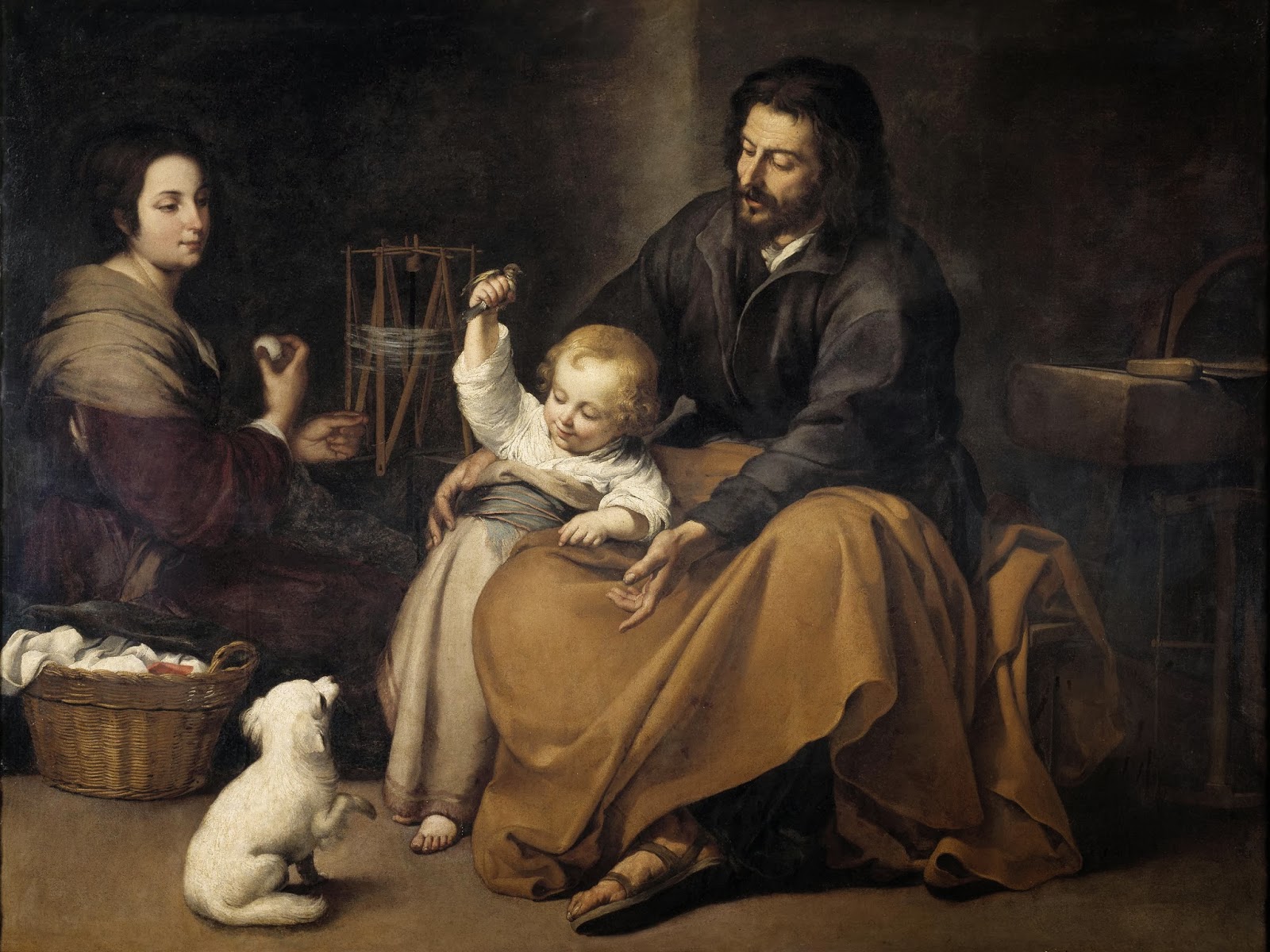
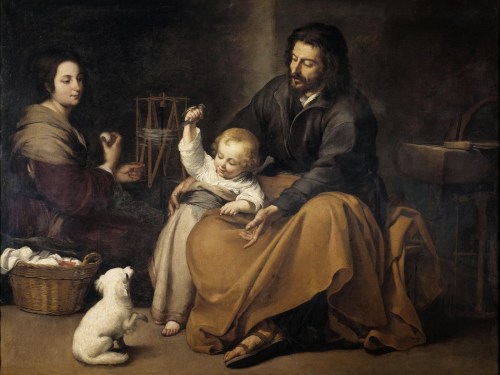
Bartolome Esteban Murillo, c.1650

This year’s search for the “Sexiest Man Alive” catapulted singer-songwriter Adam Levine to the cover of People Magazine. Online ads for the issue tantalized readers with a photo line-up of shirtless runner-up candidates with 6-packs on display along with this enticing invitation: “Sneak a peek at what Hollywood’s hottest guys have been hiding under their shirts.”

Women aren’t the only ones who are objectified.

Men are objectified when they are subjected to a false value system that invites comparisons and creates a pecking order that doesn’t reflect their true value at all. In our culture, men are defined primarily by their work, the number of zeros in their salary, the size of their portfolio, or their academic pedigree. In many settings, true “manliness” is measured by their exercise of leadership (especially with respect to women).

These values (which all too often the church not only embraces, but actually promotes) put men on shaky ground. All it takes is an economic crash, a job loss, home foreclosure, health crisis, collapsing marriage, or some other unexpected event for a man to lose himself along with his identity as a man.

It is precisely at this point that Joseph of Nazareth has something to teach us.

Joseph’s story plays out in the margins of the Christmas story. Little more than a sidebar, he has the dubious distinction of being eclipsed by his wife and her daring “Yes!” to God’s call on her life. It is as if we unconsciously celebrate Joseph’s manly humiliation every year on Christmas cards and in pageants, carols, and sermons.

I’ve never heard anyone point to Joseph as an icon of biblical manhood. And yet, if the Gospel according to Matthew were packaged like People Magazine, Joseph of Nazareth’s face would grace the cover, for Joseph is the lead story in Matthew’s Gospel—and not for chiseled abs.

Often overlooked is the fact that Joseph embodies a brand of manhood that is alien in our fallen world where power, wealth, social status, and even physique are the gold standards for ranking men. Mary may give us a breathtaking example of the courage and self-sacrifice required of a girl who follows Jesus. But Joseph is in every respect her match. He embraces a radical gospel brand of manhood that dismantles the cultural and religious systems—both then and now—that falsely define what it means to be a man.

Borrowing from Dr. Martin Luther King’s famous “I have a dream” speech, one might say that Joseph’s manhood is judged “by the content of [his] character.”

One of the most significant statements in the Christmas story comes when Matthew tells us that “Joseph was a righteous (or “just”) man.” We take this to mean that Joseph was a good man, especially knowing how everything turns out. And with that, the profoundly serious implications of Matthew’s statement go right past us.

In Joseph’s day the Pharisees governed the prevailing definition of “righteousness.” Their brand of righteousness was in fact self-righteousness that did not always bode well for others. For them righteousness was an exacting external standard that produced pride and justified intense scrutiny of others with the inevitable concomitant of harsh punishment on any violation. Just recall how the Pharisees dragged the woman caught in adultery to Jesus with every intention of stoning her to death.

Mary too was thought to be an adulteress.

There is only one way a young girl gets pregnant and it is not because of some preposterous fairytale of divine intervention. If Joseph’s righteousness conformed to the Pharisees’ definition, Mary might very well have become the victim of an honor killing. And cultural definitions of manhood would compel Joseph to vindicate his honor.

Yet, while still believing the worst about her, instead of seeking to make her pay for betraying him, Joseph secretly plans to shield Mary from public humiliation (or worse) by divorcing her privately.

Joseph’s contemporaries would consider this the worst sort of spinelessness—a classic case of wimping out. But Joseph’s righteousness was “not of this world.” For Joseph, true righteousness transcended cultural expectations of how a man should live vis-à-vis his wife, and this one counter-cultural choice with regard to Mary was merely the beginning.

For Joseph, true righteousness even went beyond mere gender roles. Joseph was not a milquetoast male. He was a man who defiantly sought first the kingdom of God. It was more important for Joseph to serve God than to preserve his manliness in the eyes of others. True righteousness meant that Joseph will set aside his own agenda to ensure his wife can successfully do what God is calling her to do.

As I wrote in Half the Church, Joseph “shuts down his carpenter shop, gets behind Mary’s calling, and adapts himself to his wife and God’s calling on her life.”

Even according to today’s egalitarian standards, this is radical.

The Christmas story is embedded in God’s Greater Story. This is where the fiercest of all battles is joined. Everything hangs by a slender thread as an unwed virgin conceives a child and a deeply broken man faces the biggest decision of his life. But this is also where we start to see the kingdom of heaven touch down on earth as Joseph rejects the religious status quo to embrace heaven’s radical righteous ethos.

Muscles Joseph flexes in this story weren’t for photo ops or creating a marketable celebrity image. Nor was he flexing his manhood over Mary—expecting her to build her story around his, as his culture would demand. Instead, he invests his strength on her behalf and the mission God has entrusted to her. He is fiercely committed to doing whatever God asks of him—no matter what it costs him, no matter how upside down it makes his life look in the eyes of others, no matter how it overthrows his own agenda, no matter how it violates his culture’s opinions of what it takes to “be a man.” In the process, Joseph takes manhood to a whole new gospel level and foreshadows the brand of righteousness Jesus brings.

Joseph joins Mary’s covert operation to do everything he can to promote her success in answering God’s call to bring forth the Savior they both need. It’s time we brought Joseph out of the shadows and started giving him and his story the attention he deserves.


Published on the Huffington Post:  http://huff.to/1edi2o2

Posted in Uncategorized | 12 Comments

The Untold Story of Bethlehem

The Bethlehem story began centuries before the travel-weary couple from Nazareth arrived and the young wife delivered her first child. The road to Bethlehem is well traveled. Others who have made that journey belong on Christmas cards too—right alongside the holy family.

This lesson will explore the parallels between two Bethlehem families whose stories bear striking similarities, whose sacrifices foretold the coming of a kingdom that is “not of this world, and who together lead us into a different way of gospel living on the after-side of Christmas.


For those in the Massachusetts North Shore area, I’ll be teaching “The Untold Story of Bethlehem” in Adult Education this Sunday, December 21, at 10:15 a.m.

149 Asbury Street 
South Hamilton MA 01982

Be sure to stay afterwards for the 11:00am worship service. The music (under the leadership of Jack Russell) is breathtakingly beautiful and worshipful. And Patrick Gray delivers some of the best most thought-provoking preaching I’ve heard in years!

Posted in Uncategorized | Leave a comment

Boston Strong!

It isn’t a good idea. I know that. And doctors frown on it. But I did it anyway.

I diagnosed myself.

I won’t bore you with the symptoms, but I’m suffering from Red Sox withdrawal.

Yankee fans will not understand, but trust me, this is serious.

It all started four years ago when Frank and I moved to Massachusetts. I’ve always loved baseball. But somehow this time it was different. Of course the famous “James’ World Series Charm” was on the line. We’ve lived in three other U.S. cities since we married, and in all three places the local team won the World Series while we were there.

We were 3 for 3 and primed for a Boston championship.

As the 2013 baseball season escalated, and we geared up for a move to Pennsylvania, I knew the clock was ticking. It was impossible not to track the games—on TV when at home, at Fenway once (when Frank indulged his wife), and on my iPhone NESN app when other options failed. Once we realized our move to Pennsylvania would be happening in stages (due to a slow real estate market in our neck of the woods), and my dispensational childhood fears of being “left behind” became reality, nightly Red Sox games became a saving grace.

So when the Sox won the American League Pennant and were heading to the World Series, I laughed out loud when one of the local sports announcers said, “This championship has been four years in the making!”

Four years! Little did he know.

Who would imagine such a season? It was a complete reversal of the disastrous 2012 season and was profoundly marked by the tragedy of the Boston Marathon bombings and a team suddenly inspired, not merely by desire to win the World Series, but to play a part in restoring normalcy and inspiring confidence to a shattered Boston. It was an unforgettable year, and as much as I enjoyed the big win, I hated to see it all end.

They say a tendency to addiction is hereditary. I believe it. My addiction to Red Sox baseball can be traced on both sides of my family tree. My paternal grandfather and my maternal grandmother were baseball addicts—to the Cincinnati Reds and the Los Angeles Dodgers respectively. One of my three brothers—a die-hard Rangers fan—has a collection of baseball trophies that proves some members of the family have a bigger problem with this than others.

But to look on the bright side, there’s a lot to be said about this year’s Red Sox, and some of these will preach!

  • Big—really big—beards are in! One journalist called it “a bizarre bonding exercise that has come to define the team and its season.” It made some of the Red Sox look like gnomes, and some of those beards were pretty pathetic. But who can complain? The more and longer the beards grew, the better the team played.

[I’m hoping Frank doesn’t take this too seriously. I love his beard, but things could easily get out of control. I’m just sayin’.]

  • Spitting is in too. Baseball players may have given up chewing tobacco, but they can’t seem to curb the habit of spitting. By the end of the game, the dugout must look like the bottom of a bird cage. I wish someone would explain this to me. Does this only happen during games? Or do these guys also spit at home? Why does this problem seem only to happen to baseball players?
  • The ninth inning walk-off-win isn’t fun at all when the opposing team is celebrating. [I learned this the hard way.]
  • Adult male fans behave badly when a baseball lands in the stands anywhere near them. It sets a terrible example for kids to see grown men selfishly shoving and pushing like that.
  • Catchers paint their fingernails bright yellow to make it easier for pitchers to read their signs. [Someone needs to tell them neon pink might work even better.]
  • Every at bat is a potential game changer. Which may explain why players refuse to quit when they’re in a slump—even when their own fans are booing. Who knows? This may be the at bat when everything will change.
  • Teamwork is everything. No doubt the beards helped, but this year’s Red Sox took teamwork to a whole new level. On this team, every player counted and was expected by his teammates to give the game no less than 100%. Some Red Sox players sat in the dugout for the entire World Series. But every one of them contributed to getting the Sox there in the first place.
  • The manly way to express approval is to yank another man’s beard . . . hard. This seems incomprehensible to me. I suspect some players will struggle with neck injuries when they retire. Still, real men seem to like this. [I wonder if “Act Like a Man” conferences have picked up on this yet?]
  • It’s a badge of honor to be wearing a dirty uniform at the end of the game. Second baseman, 5’7″ Dustin Pedroia, always had dirt on his uniform, usually from the first inning. That just how hard he always played.
  • The Frank and Carolyn baseball charm is alive and well! We’re 4 for 4 and counting. I know some Phillies fans who are excited about this. I’m not making any promises and I’m really struggling with the expectation that I’ll be shifting my baseball loyalties.

I’m telling you, this addiction stuff is pretty serious.

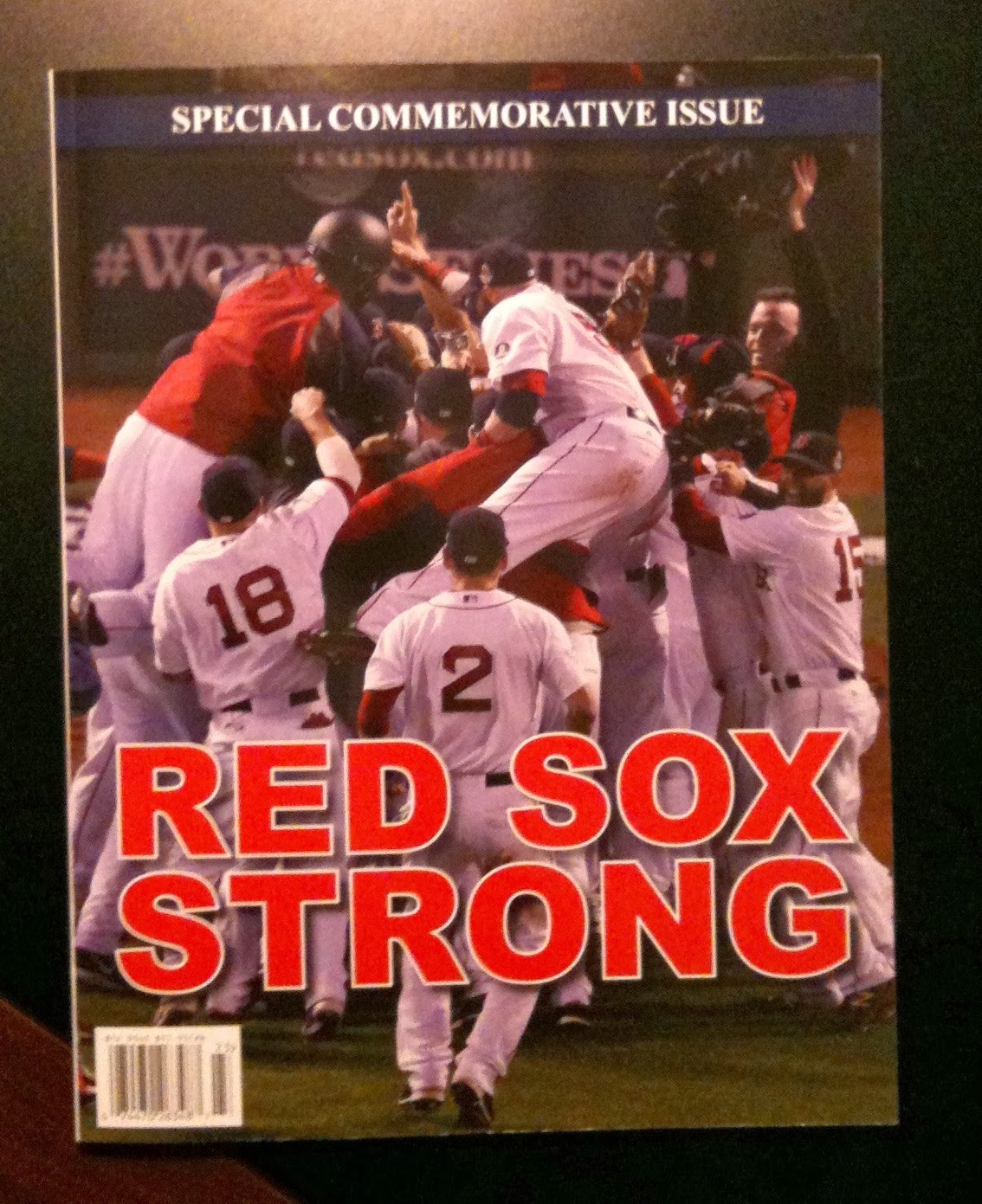
So, to help myself cope with withdrawal, I went out and bought myself a copy of the 2013 World Series Special Commemorative Issue—Red Sox Strong which is loaded with pictures, stats, quotes, and the history of this year’s world champion Red Sox. It was the closest I could come to a nicotine patch.

I’m feeling better already.

Posted in Uncategorized | 3 Comments

An Ezer-Warrior battles for Kids & Hope in North Philly

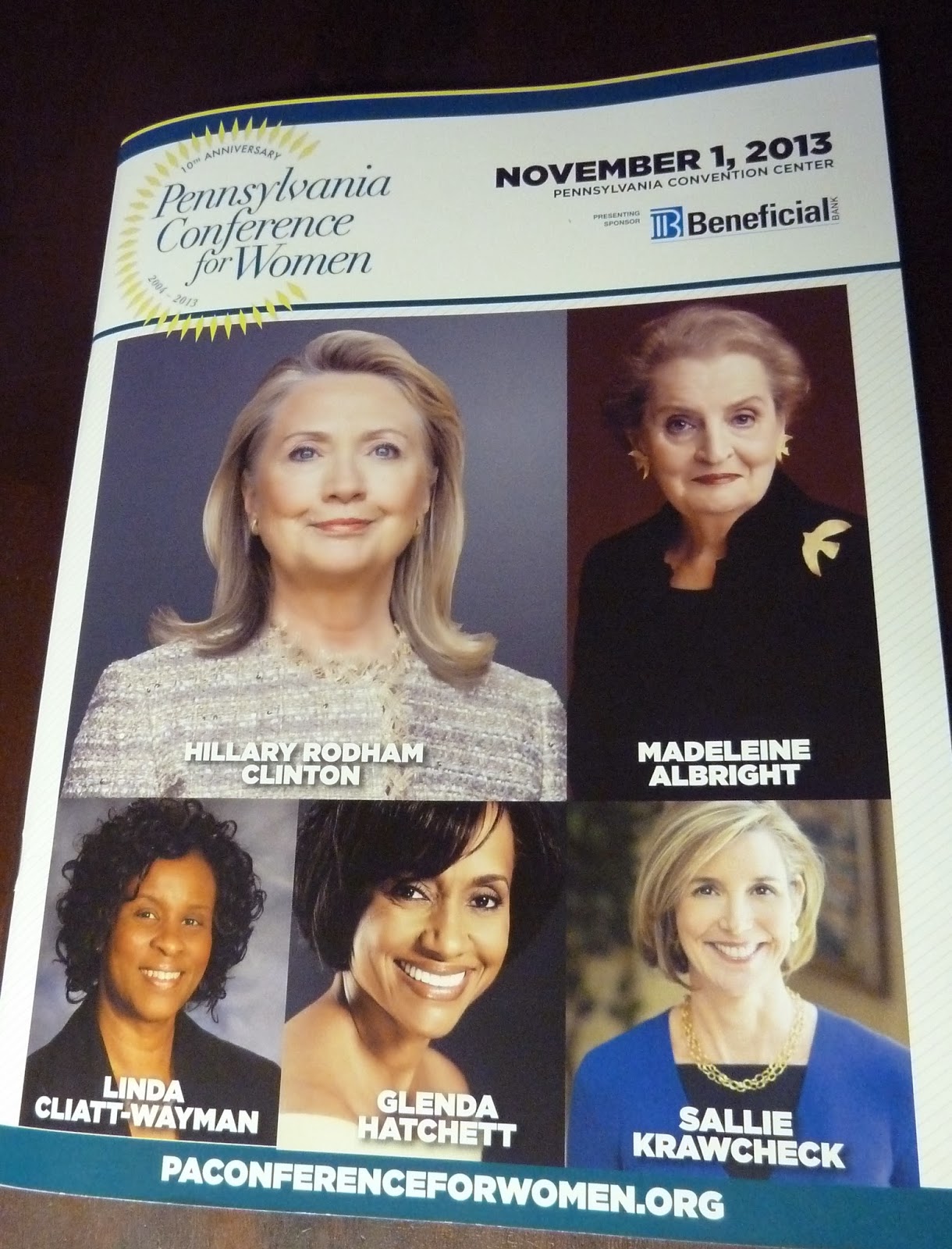
Educator/ezer-warrior Linda Cliatt-Wayman rocked the gathering of 7000+ professional women at the 2013 Pennsylvania Conference for Women when she spoke about her God-given mission as principal of North Philadelphia’s Strawberry Mansion High School.

This is another biblical-like story of a person seeing a desperate need for leadership in battle, looking around for someone qualified to answer that call, and suddenly realizing God is calling her—with her five smooth stones and sling or her small lunch of bread and fish.

Cliatt-Wayman is another incredible example of the faith, strength, and determination God intends for his daughters to possess in answering his call no matter where he stations us. Every time this particular ezer goes to work, she walks knowingly into danger. But she wouldn’t be anywhere else if she had the choice. And her heart is on the line every day as she battles for and loves her students. You can see it as she speaks.

What an extraordinary way to live!

Those of us who heard her that day, will not soon forget the stirring passion of her words and her commitment to breathe hope into their lives. Talk about an ezer-warrior!

She also puts front and center the questions I raised in my post, “7000 Strong and Counting!” Only she puts a real face and a real story on those questions.

Will the church roll out the welcome mat when a woman like Principal Cliatt-Wayman crosses the threshold or will she become invisible insofar as her professional life is concerned? Does the church perceive her as a threat or as an asset? Do we segregate her secular occupation from what it means to “serve God”? Or are the contributions she’s making in a North Philadelphia high school—breaking up fights, urging kids to attend school and do their homework, weeping when there isn’t money to reserve a place in college, telling them she loves them—is that strategic kingdom work? How do we all lose if we don’t engage her to learn from her experience and to champion her efforts?

And here’s one more:  How does it impact her efforts on Monday if she heads back to Strawberry Mansion with (or without) the solid backing and vested interest of her brothers and sisters in Christ?

Posted in Uncategorized | 3 Comments

7000 Strong and Counting!

A couple of weeks ago I quoted Atinuke Diver (aka Tinu) the Boston attorney of Talking Taboo fame in my post about Elizabeth Knox’s great new book, Faith Powered Profession.

Tinu got wind of it, contacted me, and before I knew it we were engrossed in conversation over lunch about a lot of things including the taboo topic she raised about life in the evangelical community for the professional business woman and how the church is more interested in her “marital status and reproductive system” than her profession.

In a recent interview (“Praying for Boston”) Tinu described what she and other professional women experience as “the church’s deafening silence—and at times outright rejection or animosity—toward any professional ambition and calling beyond the realm of ministry or church service.”

Tinu (whose Nigerian parents migrated to Boston where she was born) earned her law degree at UNC and is an attorney for the John A. Volpe National Transportation Systems Center. (As a side note, I was thankful to learn a scheduled flight out of Boston prompted her to leave the 2013 Boston Marathon finish line before the bombs went off.)

Our meeting came on the heels of another event that happened a few days earlier where I was seated at another table with women from Biblical Seminary—this time in a convention hall packed with 7000+ professional women for the 2013 Pennsylvania Conference for Women in Philadelphia.

We heard world and business leaders, educators, entrepreneurs, and activists—powerful plenary speakers—smart, gifted,educated, experienced, successful, and yes, passionately ambitious women. It was incredible!

That gathering reminded me of words I wrote in Half the Church as I described the 21st Century landscape for women:

“At one end of the spectrum, women have broken through the glass ceiling to secure posts of leadership, power, and achievement that rival their male counterparts. Women have arrived and in growing numbers are succeeding in the highest echelons of government, business, religion, education, sports, and the entertainment industry. It is a new day for women. Those who enjoy the benefits of education, wealth, and freedom are blessed with a lavish smorgasbord of exciting options. Parents today are telling their daughters, “You can be anything you want to be.”

Astonishing proof of that was right before me.

But that reality raises serious questions that the church has yet to address and nothing made that more pressing in my mind than being with those women—the 7000 in Philly and the one in Boston.

Will the church roll out the welcome mat when women like the 7000 who are successful leaders in secular careers cross the threshold or will Tinu’s experience keep repeating itself? Does the church perceive these women as a threat or as an asset? Do we segregate secular occupations from what it means to “serve God,” or are the contributions they’re making in the workplace—the actual work they do there—strategic kingdom work? What benefits do we all forfeit when we don’t engage these leaders (both women and men) in the corporate world to learn from their experience and champion their efforts?

For every Christian woman who enters the workplace, there is a new opportunity for gospel living to infiltrate the secular realm. As one NYTimes writer—a non-Christian—insightfully observed,

“It is an explosive concept, with the potential for unleashing creative Christian energy in many areas of endeavor—ordinary lay-women and men, indistinguishable from their colleagues and neighbors, going about their normal occupations, who nevertheless ‘catch fire’ with the Gospel and change the world.”

What are your thoughts? Does your church engage and value the professional woman?

Posted in Uncategorized | 5 Comments

Something to ponder …

“A hurting person is in a storm. They are cold, wet, shivering, and scared. Preaching, platitudes, and advice will not get them out of the storm. Don’t tell a person in a storm that it’s a sunny day. There will likely come a day when the clouds part, but it is not today. It’s not your job to pull them out of the storm. It’s your job to get wet with them.”

Posted in Uncategorized | 5 Comments

Wild and Wonderful Monday!

Monday started out with a blog post putting Elizabeth Knox and her new book Faith Powered Profession on the radar of WhitbyForum readers. The need for such a book was underscored immediately by emails I received from women who have been searching for such a book. One woman reported continuing “to hear from Christian professional women that they really don’t fit in at church.”

They are going to love what Elizabeth has to say.

Further support for putting the topic Christian women in the workplace on the table came from a Her.meneutics post, “A Casting Call for Leading Ladies,” in which Donna Hill, Vice President of Student Affairs at College of the Ouachitas, laments the lack of books addressing professional Christian women.  

“Since Christian women can and do hold leadership positions in secular organizations, the church should work to equip these women with biblical guidance on godly leadership principles. That doesn’t seem to be happening. Certainly, general Christian leadership books and classes are helpful, and I’m indebted to a handful of authors and teachers (all male) who have helped me navigate the leadership maze. But where are the women teaching women?”

I hope this means Elizabeth Knox’s entry into this void will reach a lot of readers and that there will be more books to come. 

Midday brought lunch and deep conversation with gifted photographer, writer, pastor, and new Redbud friend Dorothy Greco. It was the kind of conversation that goes deep fast and stays there and that will pick up where we left off the next time we meet.

Dorothy is another person who belongs on our radar. 

This upbeat tweet from Gail Dudley was waiting when I came home. She’s referencing FullFill’s current issue (full of great articles on Forgiveness) and my article, “Ezer-Warrior’s Won’t Back Down.”

Gail is Synergy’s interim CEO and another someone you should know.

Then this encouraging email from an ezer-mom who passes my books on to her daughter.

“I have to share with you a funny story about my daughter. She is in college and studying linguistics. She wants to be a Bible translator for Wycliffe. The man she is currently dating would like to serve alongside her, but more in a deacon/servant role. Such as working in construction, security, etc. with Wycliffe. My daughter’s pastor and wife are having a hard time figuring out how headship will work if my daughter has the primary job assignment. She told the man she is dating that her pastor and others in her church need them some Carolyn Custis James books.”

Topping it all off, the day was bracketed by two heart-stopping Red Sox victories, putting them within one game of winning the 2013 World Series and on their way back to Fenway Park.

Most people think I’m still in Massachusetts because our house hasn’t sold. That’s only half of the story.

The James Charm is on the line. As Frank explained recently to a friend,

“Well, I made it to Philly—although Carolyn has remained behind to sell the house and cheer the Red Sox to a world series victory. She is convinced she has the magic. One should not doubt her on this. Wherever we have lived the team has won—Dodgers, Phillies and Marlins! She is 3 for 3 and expecting to be 4 for 4 very soon.”

Go RedSox!

Posted in Uncategorized | 6 Comments

Faith Powered Profession

A lot of women will relate to Boston attorney Atinuke O. Diver’s frustration over the “the church’s ambivalence” toward her professional life. In Talking Taboo she explains.

“Though I spend most of my days working in a setting not centered on my home, husband, children, or place of worship, the church speaks to me primarily about my marital status and reproductive system.”

Author Elizabeth Knox addresses that reality and a whole lot more with her new bookFaith Powered Profession. Here’s what I wrote after reading this ground-breaking work:

“Christian women professionals comprise one of the fasting growing—yet most often ignored—demographics of women in the church. In this visionary work, Elizabeth Knox dismantles the notion that work done in the business sector has secondary or derivative value, asserting that the work has kingdom value for its own sake.”

Elizabeth works in the Defense Field in Washington, DC where she lives with her husband and son. You can read her blog: Elizabeth Knox Online or follow her on Twitter: @eknox_online.

After reading her book, I was eager to introduce her and this important resource to WhitbyForum readers. Elizabeth graciously agreed to an blog interview, and I’m sure will respond to any questions or comments you might have.

So here goes …

Elizabeth, you’ve written a book for Christian women who are in the workplace. Why do you think a book like this is needed?

I wrote Faith Powered Profession because I was trying to figure out how to have a productive career and a vibrant faith at the same time, but I was having a lot of trouble. I found myself wondering if my job even mattered to God, struggling with ethical choices at work, and feeling unsure about how to have healthy professional relationships with my male colleagues. Does my occupation even count as “service” to God? I knew a few of my friends were wrestling with the same issues, yet we couldn’t find a book or resource that addressed them. I started a small group Bible study at my church to see if there were more women interested in these topics, and about eight of us met weekly for three months to discuss these issues. The more I talked to other working women, the more I realized we all had similar questions. I started writing so that other women would now have the resource I had been looking for a few years ago.

Sheryl Sandberg’s book, Lean In, hit a nerve with a lot of professional women and exposed ways in which women hold themselves back. What obstacles do Christian women uniquely face that Sandberg didn’t cover?

I felt that Sandberg’s book was approachable and thoughtfully written. While she doesn’t speak for every woman, and her experiences are certainly unique, I do believe that Christian women face an amplified version of her assertion that professional women hold themselves back. Why do we do this? Who, or what, are we allowing to hold us back? We often develop our self-image from the important people and influencers around us. And as Christians, we need to understand that the church we attend, and the larger Church around us, has a huge influence on how we see ourselves. Churches tend to emphasize the maternal or heart-related gifts that women have, oftentimes to the detriment of celebrating their professional and intellectual strengths. So not only do Christian women have to overcome the hesitations and fears of every woman in the mainstream culture, but they likely have additional hesitations and fears because of their religious communities. We can look to the Bible to see that this type of thinking isn’t grounded in truth. The Bible can actually be the source of our ability to walk confidently in the gifts God has given us.

How does your book take the Sandberg Lean In conversation further?

I think it’s beneficial to include faith in the professional conversation. According to research conducted by the Barna group in 2009, 88% of adults agreed either strongly or somewhat strongly that their religious faith is very important in their life. For many of us, we don’t just want to confine our faith to Sundays; we want it to be a part of our whole week, our whole lives. A lot of women I know – Christian and otherwise – are motivated by a sense of calling to their field. They pray about their jobs and they seek guidance from their spiritual community. We can take the Lean In conversation further when we recognize that faith is an important driver for many women – influencing their decisions on which jobs to take and their actions once they are there.

In Christian circles there’s a dichotomy between serving God in some form of ministry and “other” occupations. Why is this a false dichotomy, and how do you cast a different kingdom vision for what women do in the workplace?

Many churches promote a view that certain people are called to “full-time ministry.” The rest of us can support those who are called with our paychecks and prayer. This attitude seems to suggest that we aren’t the ones on the frontlines living for God, as if our work isn’t as important because it’s not “full-time ministry.” Sermon illustrations often reinforce this by telling stories of people who are giving their whole lives to Christ, highlighting the “full-time missionaries” and rarely profiling those who are trying every day to live out God’s call in the professional world. To me, this communicates that full-time ministry service should be the goal of all Christians. What if you can wholeheartedly serve God in a secular profession just as you can in full-time ministry? What if there is no divide between “sacred” work and “secular” work? There’s no question the Church needs hard-working, talented people willing to live for Christ. But they are equally needed in the boardroom—and the police station, grocery store, non-profit organization, county government, classroom, on stage, and so on.

Work serves three important purposes:

  • Professional work allows us to be salt and light to the world around us by actually being IN the world. Work is a form of mission. 
  • We usually think of worship as singing, but worship is the act of taking any gifts you’ve been given and using them to glorify Christ. Work is a form of worship. 
  • Whether we’re scientists or home repair specialists, the work we’re doing is important because we are contributing to the welfare and livelihood of society. Our economies support individuals, families, governments, and even churches! Work is a form of seeking the peace and prosperity of the city to which you were called (Jeremiah 29:7). 

What do you mean by a “Faith Powered Profession”?  

The working title was Women in the World – it came from John 17, the idea that we are called to be “in the world but not of the world.” But that’s the name of an already established foundation, and it requires some extra explaining. The current title communicates the message of the book in a few words: I want women to have their faith in Christ be the power behind their personal and professional decisions, to be the engine of their careers.

How can the church do a better job of getting behind professional women? 

I think biggest way the church can get behind professional women is to recognize and use their professional gifts. I actually wrote about that in a post at The High Calling here: “Where are all the strong professional women in your church?”

What’s the next step?

The next step in continuing these conversations is to involve everyone. Not just women, but men and children, too. Just like struggles with race don’t belong only to people of color, struggles women face in being recognized as image bearers of God belong to the whole church. So we should all be participating in these conversations. There are several books that cover the importance of celebrating all the gifts women have been given. I recommend the following to help continue these conversations:

Posted in Uncategorized | 4 Comments