Everyone Wins!

This morning, Michele Howe’s review of The Gospel of Ruth (which she posted on FaceBook) jump-started my day! It is so gratifying to an author when a reviewer truly gets what their book is about.

Michele gets it!

So I asked her permission (and she graciously gave it) to re-post it here on WhitbyForum.

I don’t mind saying that, if you haven’t read this book yet, you are missing out. When I first heard what scholars were unearthing in this powerful story, I couldn’t stand it that this message hadn’t reached the pews.

Finally (!) with The Gospel of Ruth that has happened, and women, like Michele, and not a few men are reading it.

What I’ve learned from Ruth, Naomi, and Boaz has been a game-changer for me. It presents a total paradigm shift.

Naomi’s story is a gift to those who suffer loss and will be finding Christmas difficult this year. Ruth’s story gives backbone to those who are up against the odds and short on courage when facing battles God places in our path. And Boaz stands tall among men and deserves to be admired for all the right reasons. The trio give us one of the best examples of the Blessed Alliance that we have in Scripture. The ancient book of Ruth demonstrates it’s a win-win when both men and women are strong together for God’s purposes.

If you haven’t read this book yet, add it to your Christmas wish list.

If you’re not convinced yet, and reading Michele’s review doesn’t finish the job, my wonderful unbiased husband Frank has gone public on FaceBook with this astonishing offer:

Ladies and Gentlemen; Brothers and Sisters; Boys and Girls, Elect and Non-Elect, please take a moment to read the review of Carolyn Custis James’ marvelous book “The Gospel of Ruth” by Michelle Howe. I am recommending Michele for Sainthood for her wonderful review AND I am recommending that everyone else purchase The Gospel of Ruth for Christmas. If you purchase The Gospel of Ruth and “Half the Church,” I will recommend YOU for Sainthood too.

Go Frank!

So here’s Michele’s review:


Everyone wins when courage fills a woman’s soul 

Michele Howe

When it comes to helping others, some people stop at nothing.

—Unknown

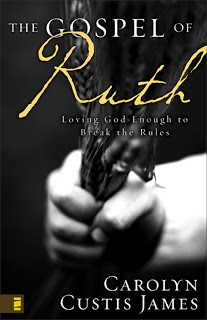
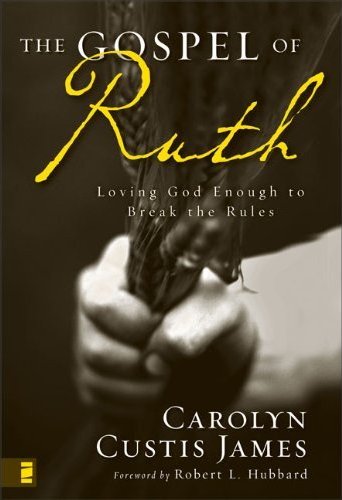
Not every book photo accurately depicts what’s to be found inside the cover of the text. In this case, it does.

If you’re peering closely at this photo, let me explain.

This black and white cover photo reveals a woman holding tightly to stalks of wheat. Her fist grasping the grain with all her might. And the book designer couldn’t have chosen a better way to introduce readers to this topic.

This photo depicts:

Strength.
Resolve.
Commitment.
Perseverance.
Sacrifice.

Author Carolyn Custis James wrote The Gospel of Ruth: Loving God Enough to Break the Rules, in 2008. I was one of the happy reviewers that devoured this text (and have reread it about a dozen times since.)

If I had a short list of favorite books…this one would be on it.

I’ve long wanted to write about the message of this book because I think it’s so important for women (and men) to grasp.

But, like anything (or anyone) I hold in high esteem…there’s a little niggling fear that I won’t do the work (message) justice.

Finally, I decided I can’t do it justice…but at the least, I can tell other people about the book so they can read it for themselves.

As a reviewer, I’m always reading something. Always.

But in the twenty-some years working as a reviewer, I’d say there are about twenty books I keep handy (and keep referring to)…this is one of them.

Whenever I travel, I always have a bag full of books at my side…and this book makes the cut every time.

So enough of that….why should you read this book?

Because James does something I’ve rarely seen other authors do…find a way to communicate the value of relationship (partnership) between strong women and strong men.

Almost always we see either/or….either a strong woman leads and every man in her vicinity quakes in fear.

Or…we see a strong man and every woman in his vicinity quakes in fear.

Not here.

James reveals how both women and men can be strong, work together, and accomplish much.

Not exactly the typical screenplay of today where it’s almost always one sex dominating the other.

I love it!

Women and men sharing equally in whatever task they’re called to…and in a world as dangerous as ours…we need our girls to grow up to be strong women for their sake and society’s.

I know I can’t do this message justice…so I’m stopping here…ending with one of my favorite quotes from James’ book where she describes the two main characters’ relationship with each other.

In the end, there is deep respect, mutual submission, and a powerful partnership that rocks their community (for good.)

Like the title of this post starts off….everyone wins…who reads this book…
Posted in Uncategorized | 2 Comments

All I ever do is wait . . .

4485CC6C-813A-49CE-9AFF-743357DCADD7

One of the last things I heard my father say when we were losing him to lung cancer last summer was, “All I ever do is wait.”

Waiting for someone to answer the call button . . . waiting for the next meal . . . waiting for someone in the family to arrive . . . endless waiting . . .

In January, his ceaselessly active life of ministry came to an abrupt standstill when a round of pneumonia gave cancer the upper hand. Overnight, instead of taking care of everyone else as pastors do, he needed round-the-clock full-time care himself.

How many times do I recall walking into his little room at the skilled nursing facility in the morning carrying two Starbucks mochas so we could sit and sip and talk together. Always, there he sat. Quiet . . .  still . . . patiently waiting . . . for whatever was going to happen next.

What I wouldn’t give to walk into that room and find him sitting there one more time.

Advent is a time of waiting. And sometimes—with the brokenness and missing loved ones that make Christmas so hard to celebrate—we wait for Jesus to come with a longing we can hardly bear.

Dietrich Bonhoffer knew the meaning of the word “wait.” He spent two Christmases waiting in a German prison cell.  Christmas in prison profoundly intensified his understanding of and need for Christmas. And with his powerful pen, he wrote words that take us deeper into the meaning of the season that is now upon us and help us wait too. In that deeper place, we join a long line of fellow believers who spent their lives and themselves waiting for Jesus’ coming and who, along with us, are waiting still.

Life in a prison cell may well be compared to Advent. One waits, hopes, and does this, that, or the other—things that are really of no consequence—the door is shut, and can only be opened from the outside.

Celebrating Advent means being able to wait. Waiting is an art that our impatient age has forgotten. It wants to break open the ripe fruit when it has hardly finished planting the shoot. But all too often the greedy eyes are only deceived; the fruit that seemed so precious is still green on the inside, and disrespectful hands ungratefully toss aside what has so disappointed them. Whoever does not know the austere blessedness of waiting—that is, of hopefully doing without—will never experience the full blessing of fulfillment.  . . . For the greatest, most profound, tenderest things in the world, we must wait. It happens not here in a storm but according to the divine laws of sprouting, growing, and becoming. 

The Advent season is a season of waiting, but our whole life is an Advent season, that is, a season of waiting for the last Advent, for the time when there will be a new heaven and a new earth.  

 To his family, he wrote these words of encouragement,

“We can, and should also, celebrate Christmas despite the ruins around us. . . . I think of you as you now sit together with the children and with all the Advent decorations—as in earlier years you did with us. We must do all this, even more intensively because we do not know how much longer we have.”

Now, whenever I’m in Portland, I visit my dad’s grave . . . where the waiting continues.

“Even so, come Lord Jesus!”


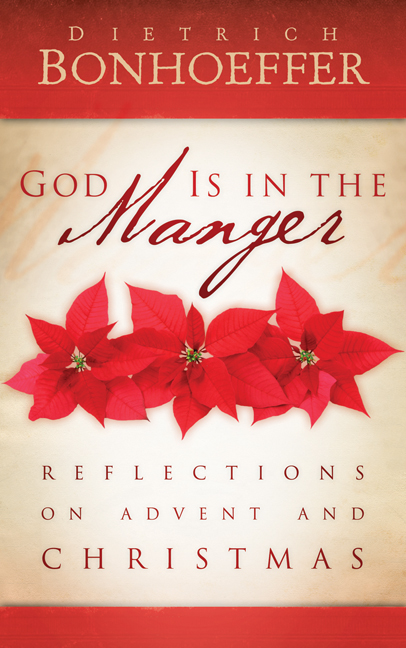
Bonhoeffer quotations are from God is in the Manger: Reflections on Advent and Christmas.

Image by Devanath from Pixabay

Posted in Uncategorized | 3 Comments

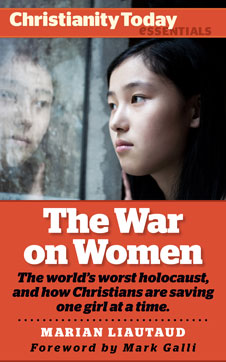
The War on Women


Congratulations to Marian Liautaud on the release of her new eBook—the result of hours and hours of research, interviews, and writing. 

Here’s my endorsement. I hope you’ll get and read this important book!

“The War Against Women opens our eyes to a global holocaust of epic proportions happening today in the slaughter of millions of little girls. Far from being simply an effort to inform, this powerful, well-written, disturbing book must propel us to action. May it never be said that our generation turned a blind eye when confronted with suffering and atrocities taking place in God’s world, but that we rose up to end this unspeakable evil.

—Carolyn Custis James
Posted in Uncategorized | Leave a comment

God is in the Manger

“Be brave for my sake, dearest Maria, even if this letter is your only token of my love this Christmas-tide. We shall both experience a few dark hours—why should we disguise that from each other? We shall ponder the incomprehensibility of our lot and be assailed by the question of why, over and above the darkness already enshrouding humanity, we should be subjected to the bitter anguish of a separation whose purpose we fail to understand. . . .  And then, just when everything is bearing down on us to such an extent that we can scarcely withstand it, the Christmas message comes to tell us that all our ideas are wrong, and that what we take to be evil and dark is really good and light because it comes from God. Our eyes are at fault, that is all. God is in the manger, wealth in poverty, light in darkness, succor in abandonment. No evil can befall us; whatever men may do to us, they cannot but serve the God who is secretly revealed as love and rules the world and our lives.”

Dietrich Bonhoeffer
Letter to fiancée Maria von Wedemeyer
From prison, December 13, 1943

Every once in a while, I stumble across a treasure. Bonhoeffer’s God is in the Manger: Reflections on Advent and Christmas is the latest. From inside a prison cell, the meaning of and need for Christmas intensifies. If reading some of the samples on Amazon wasn’t enough to convince me to add it to my Christmas wish list, Scot McKnight’s amazing endorsement below persuaded me. You might want to add it to yours.


These Advent and Christmas reflections of Bonhoeffer flew from his prison cell, flung open the doors of hope, and sailed heavenward as heart-wrenching prayers, prayers from a condemned man, prayers from a hopeful man, prayers from a man who embodied what it means to pray ‘May your kingdom come.’ This will be my advent and Christmas book.”
Scot McKnight, Karl A. Olssen Professor of Religious Studies,
North Park University,
author of The Blue Parakeet,
Synergy2010 Plenary Speaker
Posted in Uncategorized | Leave a comment

Let’s End Violence Against Women

Some important days on the calendar need to be upgraded from annual to every day events. Within the past four days we’ve observed two. 

Last Thursday was Thanksgiving Day in the U.S.A. Families were gathering and people were making mental lists of reasons to be thankful, when, as many observed, we should be making lists like that every day.

Today, November 25, has been set aside by the United Nations as International Day for the Elimination of Violence Against Women. I’m grateful for a day like this, but sickened at the thought that tomorrow violence against women will drop below the public radar while in every culture and in many homes around the world it continues unabated, leaving millions of women and girls at risk and powerless to stop it.

Seems every day we hear another shocking story of violence against women and girls taking place in some corner of the world. 

  • In the Democratic Republic of Congo rape against women remains an actively employed weapon of war with victims numbering annually around 400,000. 
  • In India husbands and in-laws violently abuse wives for not being submissive enough, not producing sons, or when her family can’t come up with the latest dowry demands. Recently a young Indian wife was beheaded by her mother-in-law and another relative for refusing to prostitute herself. 
  • In both India and China, female infanticide is rampant, causing gender ratios to become dangerously out of balance and depriving both countries of one of their most precious natural resourcesthe giftedness and contributions those girls might have made some day. 
  • Pakistan is notorious for honor killingsaround 1,000 annually.

Chalk it up to living a sheltered life (a reason for me to be thankful), but I didn’t realize violence against women was a serious local problem until I encountered it among close friends and extended family. I got a chilling sense of just how serious when I was in the dressing room of a women’s clinic where a help-line notice was posted with tear-off tags containing a phone number to put in your shoe. Most of the tags had been torn off by previous patients. 

But here’s the pill that’s most difficult to swallow: Violence against women is a problem in the church. Verbal, physical, and sexual abuse and the widespread use of pornography. No matter how sure we may be that “It isn’t a problem in our church,” the issue needs to be raised. Women need to know the church stands against these abuses and is a safe place for them. They need to know that the church offers safe haven for them if they’re in trouble. And perpetrators need to know that, while the church will not tolerate these kinds of abuses from them and will stand between them and their victims and involve law enforcement where crimes are committed, it will not abandon them. The gospel offers hope and redemption for perpetrators too.

A friend told me of efforts she made to sound the alarm in her church, only to be put off by church leaders until a woman showed up for church with obvious signs of abuse. It took that kind of physical evidence to mobilize the church to establish a zero-tolerance policy that moves the victim of abuse to safety and deals with the criminal behavior of the perpetrator. 

Another friend went to the church for help because her husband was both verbally and physically abusive, only to be told to work harder to be submissive to him and to be sent back into harms way. 

I’m thankful when the calendar sets aside a day for special focus on thanking God for the blessings he lavishes on us. I’m thankful too for a day that jars the global conscience by highlighting the rampant and brutal violence against women and brings this often closeted subject out in the open. 

Let us be jarred into action!

 Here are two resources to help us become better informed. You can Google to find more:

Justin Holcomb’s post, A Hard Look at Violence Against Women

World Pulse’s 16 Days of Activism Against Gender Violence

So who will raise the issue in the church? 
What resources are available to help churches awaken to the problem within and to guide them through establishing a zero-tolerance policy?

Note to FB friendsPlease post your replies and resources here, as well as on FB.

Posted in Uncategorized | 1 Comment

Happy St. Hilda’s Day!

Hilda of Whitby (c. 614–680)

I couldn’t let this day pass without paying tribute to St. Hilda, truly a remarkable woman who deserves to be remembered. According to the calendar of the Church of England, todayNovember 19is St. Hilda’s Day!

The 7th Century double monasteryfunded, founded, built, and led by St. Hildais WhitbyForum’s namesake.

For those who don’t know about double monasteries, they were double because they housed both monks and nuns who lived separately, but worshiped and served God together, usually under the leadership of an abbess.

So when Frank and I were brainstorming names for this website with our close friends, Park and Susan Anders, my historian husband pulled Whitby Abbey out of his mental storehouse of historical information and WhitbyForum was birthedalong with the WhitbyForum vision: “Men and women serving God together.”

Hilda of Whitby was abbess of the most famous double monastery in England.  As a grandniece of King Edwin of Northumbria, she was born to the life of a noblewoman. She became a Christian at 13 when she was baptised along with others in King Edwin’s household.

Her teacher and mentor was no less than Saint Aiden, the Christian bishop/missionary described as “the Apostle of the English,” who was credited with restoring Christianity to Northumbria, the territory where Whitby Abbey was built.

Hilda became part of the Gallic tradition where noble females became heads of double monasteries. Under her extraordinary leadership, Whitby Abbey became renown as a great center of learningespecially the study of sacred scripture. The Abbey gained a reputation for providing clergy, monks and nuns with a rigorous and thorough religious education, that also included the arts and sciences. The Abbey became known as one of the best seminaries for learning in its day. Whitby Abbey became a school for bishops, producing five during Hilda’s tenure.

In 664, she hosted at her Abbey the Synod of Whitby, bringing together representatives from the Celtic and Roman churches to resolve their ecclesiastical differences.

The Venerable Bede, a well-known Northumbrian monk, preserved St. Hilda’s remarkable history. His writings portray a woman of great energy who was a skilled administrator and teacher. Her reputation for wisdom was so significant that kings and princes sought her advice.

Her concern for ordinary people is reflected in the story of Cædmon, one of the monastery’s herdsmen who was inspired in a dream to sing verses in praise of God. She recognized his gift and encouraged him to develop it. He eventually composed the first hymns in the English language.The contemporary Christian band―Caedmon’s Call
―draws their name from this story.

She inspired deep affection among those who knew her.  To quote the Venerable Bede, “All who knew her called her mother because of her outstanding devotion and grace”.

History reminds us that godly men have always learned from women and benefited from their wisdom. We have much to celebrate today!

Happy St. Hilda’s Day!

Posted in Uncategorized | Leave a comment

Luther Again …


“I wonder whether Peter, Paul, Moses and all the saints, fully and thoroughly understood a single word of God that they had nothing more to learn from it, for the understanding of God is beyond measure …. Who understands in all of its ramifications even the opening words ‘Our Father who art in heaven’?”

                 ―Martin Luther, 1531

[Luther’s Works, ed., Jaroslav Pelikan and Helmut T. Lehman, 55 vols. (St. Louis: Concordia; Philadelphia: Fortress, 1955-1976),  54: 9

Surely, Luther’s words are incentive enough for us to keep us digging deeper into Scripture. This perspective fosters a spirit of humility and expectation as we study the Bible, for we have barely scratched the surface of what there is to know about God. And we have always before us the exciting prospect of discovering something new.
Posted in Uncategorized | Leave a comment

Coming in February!

This is a heads up about a great new book coming out in February. I just finished reading it and can’t wait for it to be available to others.

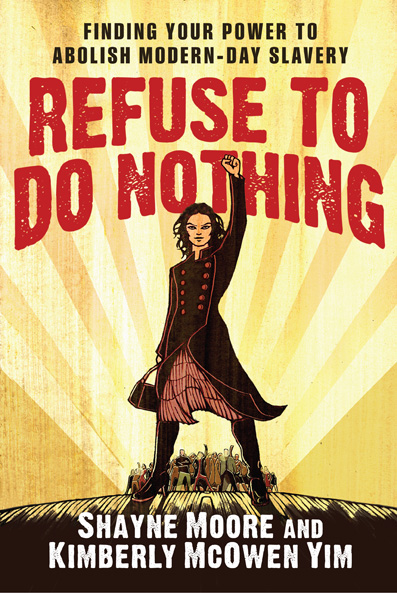
Refuse to Do Nothing―co-authored by Shayne Moore and Kimberly McOwen Yim―is the answer to a question I hear all the time from people whose eyes are opened to the brutality of human trafficking:  “What can I do?” 

This well-researched, compelling book not only helps readers understand all the variations of human trafficking, it offers all sorts of resources and ideas to get started. You will love the stories, the authors’ honesty about their struggles to face the issues and their fears and get involved, and the hopeful message of what God might do if we all all pitch in and do our part.

The message of the book is clear―We can all do something!

The book is scheduled for release in February, but you can order it now―Refuse to Do Nothing!

Posted in Uncategorized | Leave a comment

A Calling of My Own

My story―“A Calling of My Own”―is the final post in Ed Cyzewski’s “Women in Ministry Series.” 

While you’re visiting his blog, check out the other stories.  The series really gives insight into the kinds of struggles women face and their deep commitment to steward the gifts God has entrusted to them. 

Posted in Uncategorized | Leave a comment

A Year of Biblical Womanhood

It may take a village to raise a child. But it only takes one bold out-of-the box woman asking honest questions and sitting on her roof to raise a ruckus.

Rachel Held Evans did exactly that when she “vowed to spend one year of [her] life in pursuit of true biblical womanhood” and then, of course, to blog voraciously and ultimately write a book about her experiment, A Year of Biblical Womanhood. Who knew her experiment would prompt the rise of “Vaginagate,” the banning of her book from LifeWay Christian Bookstores, or the kinds of name calling and disdain coming at her from fellow Christians? Who knew the ruckus would go viral and draw so much media attention including, but hardly limited to The Huffington Post, Christianity Today, The Daily Beast, NPR, NBC’s “Today Show” and “The View.”

It’s every publicist’s dream!

Before saying anything about the book, I want to give a shout out to Rachel’s husband Dan, who backed her all the way, despite the fact that the whole thing (excepting the home cooked meals) made him uncomfortable. After all, he never bargained for a wife who would call him “Master,” or camp out on the front lawn during her period, or let her hair get “big.” When the year was up and she suggested thinking of things for which to be thankful, Dan’s first words expressed his relief that the experiment had ended. Let me take this opportunity to recommend Dan for sainthood.

The book itself is a pleasure to read. Rachel is a compelling writer and an insightful thinker. She delivers on her guarantee that “you will laugh out loud at least once while reading.” For me, it happened more than once. But do not be lulled into thinking her purpose is merely to entertain. In this case, humor is not an end in itself, but an effective vehicle for placing serious but well-worn issues on the table in a fresh new way.

Rachel’s project highlights two complex issues facing today’s Christian church. The first concerns women―specifically, what is the Bible’s message for women regarding how we are to live as women in ways that are pleasing to God? The second is hermeneutics: how we understand, interpret, and apply the ancient text of the Bible to our lives today.

Questions Rachel is raising about women are not theoretical, nor is she simply asking for herself. Countless women are struggling with messages coming from the church that define appropriate behavior, roles, and parameters for ministry that pertain to the “biblical” woman. Women are facing these questions in their daily personal choices.

In some segments of the church the expression “biblical womanhood” is used to define women almost exclusively in terms of marriage and motherhood which are often regarded as “a woman’s highest calling.” Throw in the adjective “biblical,” and the specific assertions linked to that word carry enormous freight for any woman who cares about what God asks of her. Rachel speaks for a host of Christian women of all ages whose lives don’t and won’t fit the church’s status quo and who are searching earnestly for answers, leaving the church in growing numbers, or resolving never to darken a church door. So the stakes are high both in what Rachel communicates and also in how the church responds.

Rachel set out to put those “biblical” conclusions to the test by taking literally every command in the Bible that addresses women. This raises all kinds of questions.

How do we take the Bible’s ancient writings and apply them to our lives in 21st century America―a world vastly different from the world inhabited by the writers and original readers? How do we make sense of the message coming to us from the church that stresses certain texts addressed to women (e.g., silence and submission), minimizes others (e.g., women prophesying, teaching and leading both women and men) and marginalizes biblical narratives of strong godly women? Women like Deborah, Ruth, Abigail, Esther, the Marys of Nazareth, Bethany and Magdela, etc., persistently and boldly color outside the lines and are held up as examples which the Apostle Paul tells us are “meant for our instruction.”

Such questions ultimately point to hermeneutics. The challenge of “correctly handling the word of truth” has always been a serious issue among Christians―never more so than when someone points out inconsistencies, weaknesses, or just the plain unworkability of interpretations. For example, if being a biblical woman means being a wife and mother, then does that mean that countless women who are single or childless are somehow less than biblical?

It’s an easy dodge (not to mention a huge missed opportunity) when critics discredit Rachel and shove her work aside by accusing her of “mocking the Bible” or “using a faulty hermeneutic,” instead of thoughtfully engaging the issues she is raising.

Some challenge her inclusion of Old Testament texts and Jewish traditions as passé in the New Testament era. But as recent as the 16th century, none other than John Calvin employed the Old Testament regulation that compelled a single woman who had been raped to marry her rapist, so long as her father approved. And shouldn’t we be alarmed by the dangerous trajectory of some interpretations of submission and male headship when it opens the door for tolerance of some levels of domestic abuse? Case in point: a founder and leading spokesman for the Complementarian movement counsels (here) that if a woman’s husband is “hurting her” to endure “verbal abuse for a season” and “being smacked one night” before going to the church for help. No mention of calling the police. Shouldn’t we be asking serious questions? Isn’t it the better part of wisdom to investigate concerns that Rachel is raising, rather than discrediting her for “feminist influences”?

Besides, does any critic imagine that by discrediting one book, they’ve shielded readers from all the others books that they might read? Criticism has its place. But don’t we also need to weigh and respectfully engage the issues and demonstrate to a watching world (oh yes, they’re watching!) the kind of grace we’re supposed to be offering one another? What if our goal was to deal honestly with such crucial issues and in the process help readers become better thinkers?

Any thinking person who reads Rachel’s book (or her blogs for that matter) knows it’s no secret that she has honestly wrestled with the Bible, as anyone should do who reads the Bible honestly. But instead of throwing the Bible out, her commitment to Scripture has intensified. If you doubt it, read her post, “I love the Bible.”

Any thinking person who reads Rachel’s book knows that while she is engaging Scripture, she is also an eager learner. Her research, experiences and encounters with others have left her a changed person. She has grown through the process, distilling deep lessons and extracting life-lessons from what she learned.

Any thinking person who reads Rachel’s book has observed solid evidence of a strong, vibrant marriage at work and a woman who deeply respects her husband. One of the surprising results of Rachel’s project is that among the takeaways for her is a renewed resolve to honor Saint Dan.

This is a fierce and fearless book.

It is fierce because, despite the lightheartedness, Rachel knows the stakes are high and cares passionately about how she lives as a follower of Jesus! Failing to encounter the Bible anew with today’s questions and to face honestly the disconnect between what we are being told the Bible is saying and what we encounter in real life, sells us short and leaves us living small lives. It also causes our Christian brothers to look for less in their Christian sisters in the home, the church and the workplace.

It is fearless because Rachel dares to announce to an oblivious Western church: “The emperor has no clothes!” She calls us to engage in honest conversation about problems that impact us all.

At its core, “A Year of Biblical Womanhood” asserts that although the contemporary world has moved beyond the patriarchal culture in which the Bible was written, God’s Word is still meaningful and still speaks wisdom for today―proving its relevance and richness again to each new generation.

Read the book. Ponder the issues. Engage the conversation!

Note:  This review was originally published on www.huffingtonpost.com/religion 

Here are some additional resources that might interest you:


The Blue Parakeet
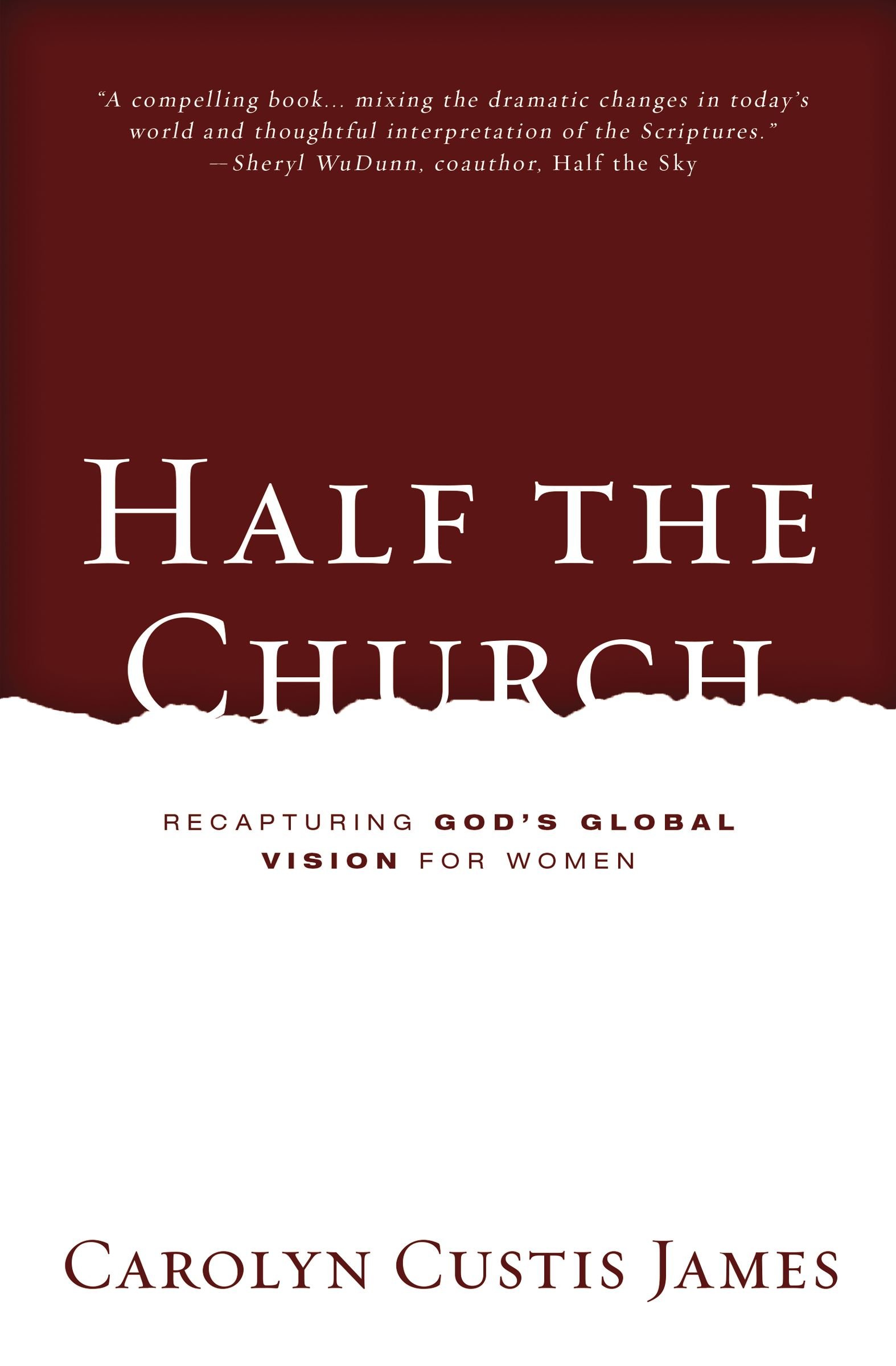
Half the Church
Misreading Scripture with Western Eyes (see Scot McKnight’s Review here)

Posted in Uncategorized | 3 Comments