Marriage to Frank James came with a catch that I didn’t realize until it was too late.
Early on, he mentioned he loves country music. But the full extent of that love didn’t sink in until the wedding was over and we were driving from Portland, Oregon to our first apartment in Ambler, Pennsylvania. That’s when I learned the truth about his passion for country music and worse, that this man can find a country music radio station anywhere.
Pick any state from Oregon to Pennsylvania. Even in the remotest parts of the country—even in Oxford, England—Frank can find one. Let me just say, for someone trained in classical music (which he jokingly called “cartoon music”), that cross-country road trip put my wedding vows to an early test.
Fast forward to 2019. We’ve managed to negotiate our musical differences. Frank enjoys classical music as much as anyone, and I’ve even come to like some country music, although I must admit a sense of relief when the Tammy Wynette concert we were planning to attend got canceled.
I have my limits.
That said, recently I proved my undying love for Frank by accepting his invitation to a Steve Earle concert here in Sellersville PA. Admittedly, I actually liked a couple of his songs. But the takeaway for me came during one of the interludes when Earle spoke about his autistic son and the school he sponsors (The Keswell School) in New York City that provides one-on-one teacher/student education for autistic children. He said, “The cure to cancer could be locked up inside one of these kids.”
As a cancer survivor, that statement makes me shudder.
It leaves me wondering what other cures, innovations, creative solutions, and advances remain locked up because we give up on certain individuals, allow the natural consequences of poverty to take their course, fail to educate and provide opportunity for others, and simply lack the necessary curiosity to imagine what gifts God has entrusted to others?
What are we losing?
The ancient book of Ruth continues to hover over me—even showed up at a Steve Earle concert. The question Earle was asking is one the Ruth narrative raises.
When Naomi, a former famine refugee, returned home to Bethlehem with her immigrant daughter-in-law Ruth, no one in the receiving community imagined the good that was coming. In the eyes of the local culture the two women only brought deficiencies.
Both were widows. Neither possessed the qualities that mattered in a potential wife or that gave a woman status and security. The men in the family were all dead, and neither woman was fertile. Naomi was post-menopausal; Ruth was certifiably barren. According to the patriarchal culture’s gold standard for measuring a woman’s value—by counting her sons—both women scored a zero. Both were below the poverty level. They would be a drain on society, dependent on the Israelite welfare system (a.k.a. Gleaning Law) for survival.
No one in Bethlehem could have imagined how much was riding on the shoulders of these two “zeroes.” No one envisioned potential or promise when the pair arrived in Bethlehem. No one expected a day would come when the nation—indeed the whole world—would stand in their debt. No one, not even the two women themselves, would have dreamed that YHWH was powerfully at work through these two so-called “cultural nobodies” or that national and cosmic matters were at stake in their willingness to take bold risks and make costly sacrifices to address local family matters.
And yet, the purposes of God for the nation and for the world moved forward through their actions. The baby the marriage of Boaz and “barren” Ruth produced, the son Naomi raised as her own, became the grandfather of Israel’s King David and the forefather of Israel’s royal line that in hindsight we know ultimately produced King Jesus.
If the book of Ruth has taught me anything, it is to be careful before assuming I know through whom or how God is doing big things in today’s world. The likelihood is high that it isn’t someone I would ever suspect. Steve Earle underscored that when he spoke expectantly of unlocking the potential of autistic kids. It raises the question: What gifts and potential for good, what cures, innovations, and advancements remain locked up inside people we instinctively count out because they’re too young, too old, too poor, too washed up, too unemployed, too uneducated, too different, too “other”?
Shouldn’t the story of Ruth and Naomi and Steve Earle’s passion to unlock the gifts and potential in autistic children give us second thoughts when someone new crosses our border? Shouldn’t we as Christians possess a different perspective when we look at someone our culture (or we ourselves) are inclined to count out?
I am still no fan of country music. But I’m beginning to think an occasional country music concert might do me a lot of good. (Don’t tell Frank.)
In the aftermath of my mother’s death last week, I came across this tender thought:
“Remember, you’re the only person who knows what her heart sounds like from the inside.”
In the case of my mother, I’m not “the only person.” There are four of us. And while it is true that there are many different routes to motherhood, I love the thought that, before I saw the light of day, the first sound I was hearing was the steady beat of my mother’s heart.
This past Monday, her 95-year-old loving heart stopped beating. Mama’s passing—like the slowly setting sun—took place over time with a gradual litany of losses. First she lost her mobility, then her hearing, sight, and memory until, on January 7, that steady heartbeat went silent.
Grief stretches out over years of decline. She felt those losses too. But death drives grief home with a finality that cannot be denied. Memories of conversations with my mother are treasures that live on.
She got off to a tenuous start, weighing only three pounds when she was born on July 16, 1923 in Lafayette, Louisiana. My grandmother journaled, “I had eclampsia and lost consciousness before we reached the hospital. She was three days old before I was aware, and she was in the incubator.”
When she was seven, her mother decided it was time to have “the talk” and asked a couple of close friends to pray. When she explained the gospel, my mother responded by asking, “Is there any other way?” Grandmother told her, “You can be perfect.” My mother replied, “I think I’ll try that way.”
She spent the next morning in her bedroom putting a mosaic together, then skipped off happily to a birthday party. When she returned, mosaic tiles were scattered all over her bedroom floor. The culprit was her younger brother. She wanted to murder him! She went straight to her mother and said, “I need Jesus!”
When she was ten, the family moved from Louisiana to Harrisburg, Arkansas when my grandfather purchased part-ownership of what would eventually become the Mouton Rice Mill
At sixteen she displayed an uncharacteristic level of fearlessness and a willingness to press the limits of what her heart could stand (or her parents would permit). She said “Yes!” to a young friend/military pilot’s invitation to take a spin in his plane. He flew loops! She didn’t tell her parents about it until afterwards.
My grandmother nurtured my mother’s love of Jesus and her hunger to study the Bible by investing countless hours teaching Mama and her best friend Elizabeth from Bible study material drawn from the Moody Bible Institute correspondence course. Both girls were also deeply involved in the Southern Baptist Church Women’s Missionary Union program for young girls. Together at thirteen both achieved the program’s highest award in the state of Arkansas.
She became an accomplished young pianist, giving numerous recitals and a performance on Memphis radio. Her love of music inspired her determination to insure music lessons for all four of her children.
Her call to ministry came early. Her childhood friend Elizabeth raised the bar for a rich spiritual depth of friendship that she didn’t encounter in the young men she knew, so she didn’t expect to marry. Instead, she planned to be a missionary and dreamed of studying at House Beautiful (part of Southern Seminary in Louisville, Kentucky until 1998). Southern Baptist Convention leadership created House Beautiful to remedy the fact that they were sending women missionaries without providing biblical and theological training.
College came first. Her parents shipped her off to Baylor University, where her freshman year she met my father. That changed everything. His calling was the pastorate, and her story took a different direction. Looking back, they often said they “fell in love over the Scriptures.” Both had a hunger to learn and grow that never diminished over 69 years of marriage.
Trust me, they were happy!
Her heart always belonged to my dad. At nineteen, she dropped out of college to marry him. She would follow him anywhere and did. Their years of ministry together took them to California, Texas, Vancouver, British Columbia, and mostly Portland, Oregon. In his later years he told me, “She’s my ezer.”
Her college education may have been cut short, but she more than made up for it as an avid reader. The writings of Amy Carmichael, Irish missionary to South India, had an especially profound influence on her.
Along with supporting my father’s ministry and managing the home front, she also had ministries of her own: an after school Bible club with neighborhood children, years teaching Sunday School for high school girls, women’s ministries, and hours privately mentoring young women. Beyond the members of her family, she has left an indelible spiritual impression on the lives of countless women who consider her their spiritual mother. Even in assisted living, God opened doors of ministry to her.
Who knew that fragile little heart would beat so strong and steady for 95 years? Who knew so many others would come to depend on her or that her influence would radiate well beyond the inner circle of her family?
Grief at the loss of my mother has, like her decline, come in stages. I’ve already had moments—plenty of them—when I feel the urge to tell her something or ask a question and I can’t. Now, as I contemplate that last goodbye, solace and hope mingle with heartache when I read the psalmist’s prayer:
“My heart, therefore, is glad, and my spirit rejoices; my body also shall rest in hope.For you will not abandon me to the grave.” (Psalm 16:9-10)
The story isn’t over. My mother’s heart will beat again.
The Adoration of the Magi, Edward Burne-Jones (1890)
A careful reading of the Gospels reveals that the birth of Jesus takes place amid dark political machinations. Despite generations of Christian efforts to make the story suitable for children in cheerful Christmas pageants, Christmas has a menacing subtext of poverty, marginalization, the threat of an honor killing, angel warnings, bold escapes from danger, a ruthless tyrant, and the actual killing of countless baby boys.
Epiphany marks the final episode of the Christmas story: the magi’s visit to the Christ child. By the time we reach this day on the calendar, the holidays are over, kids are back in school, and with a sense of relief we’re packing up Christmas decorations and settling back into our normal routine.
Taking one last look back at events surrounding Jesus’ birth seems almost anticlimactic.
Yet to close the books for another year’s round of Christmas celebrations is to miss the point. Especially within the context of a world in constant turmoil—where wars, injustice, oppression, and evil seem always to prevail, and powerful despots hold the upper hand and command the headlines—we need this final chapter of the Christmas story more than ever.
A Cosmic Confrontation
Far from being a welcome distraction from all of the divisiveness and turmoil of today’s politics, the birth of Jesus triggered cosmic events that are still playing out and that directly engage today’s political realm.
All four Gospels begin with bold subversive political statements that would be regarded as revolutionary in any country. Matthew establishes Jesus’ legal right to the throne of King David. Mark declares, “The kingdom of God has come near; repent and believe the good news” (1:15). Luke records the angel Gabriel’s words to Mary about the son she would birth: “He will be great and will be called the Son of the Most High. The Lord God will give him the throne of his father David, and he will reign over Jacob’s descendants forever; his kingdom will never end” (1:32). The Apostle John casts a global vision of King Jesus who is the light that invades the darkness (1:1-5).
This cosmic battle intensifies and things turn deadly when the magi arrive in Jerusalem, determined to find “the one born king of the Jews.” Matthew is the only Gospel writer to record their story (2:1-23). The fact that they are Gentiles explodes the boundaries of this new King’s realm beyond the borders of Israel.
A Ruthless Tyrant
The reigning king of Israel was Herod the Great whose paranoia and ruthlessness inspired Caesar Augustus to say, “I would rather be Herod the Great’s pig than his son.” Herod, who was part Jewish (meaning pork was off the menu), had a bad habit of murdering his rivals, including his own wife and sons.
When word of the magi’s mission reached Herod, it set of loud alarms. He asked the Jewish religious leaders where the true Messiah was to be born. They pointed him to Bethlehem (Micah 5:2).
To get a sense of the terrible threat this posed, imagine how Crown Prince Mohammed bin Salman would react (and the subsequent bloodshed) if an impressive delegation of wealthy dignitaries and experts showed up in Riyadh asking, “Where is the one born King of Saudia Arabia?”
Herod’s order to slaughter Bethlehem’s little boys age two and under in hopes of assassinating Jesus displayed, not just his willingness, but his determination to kill Israel’s true Messiah.
Where Thrones Shake
The birth of Jesus was not good news for King Herod. As Dietrich Bonhoeffer powerfully reminds us, neither is it good news for perpetrators of injustice and abuse, for power mongers, or for ruthless tyrants at any point in history.
“For the great and powerful of this world, there are only two places in which their courage fails them, of which they are afraid deep down in their souls, from which they shy away. These are the manger and the cross of Jesus Christ. No powerful person dares to approach the manger, and this even includes King Herod. For this is where thrones shake, the mighty fall, the prominent perish, because God is with the lowly. Here the rich come to nothing, because God is with the poor and hungry, but the rich and satisfied he sends away empty. Before Mary, the maid, before the manger of Christ, before God in lowliness, the powerful come to naught; they have no right, no hope; they are judged. . . . Who among us will celebrate Christmas correctly? Whoever finally lays down all power, all honor, all reputation, all vanity, all arrogance, all individualism beside the manger; whoever remains lowly and lets God alone be high; whoever looks at the child in the manger and sees the glory of God precisely in his lowliness.”[1]
Epiphany demands a new kind of politics. The Lord’s Prayer itself is a public declaration of political allegiance to a different Kingdom. Eugene Peterson (whose passing is our profound loss and heaven’s gain) agreed.
“Prayer is subversive activity. It involves a more or less act of defiance against any claim by the current regime. . . . [As we pray,] slowly but surely, not culture, not family, not government, not job, not even the tyrannous self can stand against the quiet power and creative influence of God’s sovereignty. Every natural tie of family and race, every willed commitment to person and nation is finally subordinated to the rule of God.”[2]
We live in the already-not-yet, between Jesus’ two advents. Epiphany compels us to wait and watch and . . . in the meantime to participate as active agents of King Jesus and his kingdom.
“There might be nothing more radical and politically important than the notion that we are both anticipating the coming kingdom of God and offering glimpses of it today. This posture of ‘waiting and hastening’ (2 Pet 3:12) is a necessary stalwart against both political idolatry and political apathy. Instead of using the coming reign of Christ to justify political inaction, exploitation of the natural world, and indifference toward material suffering, Advent reminds us that we still have a job to do. While the master of the home is away, the expectation of his return motivates our participation in the redemption of the world. At the same time, the Advent reminder that we live between two advents keeps us from putting our hope and salvation in earthly political systems, for our true King is coming again and possesses the real power to make all things right.”[3]
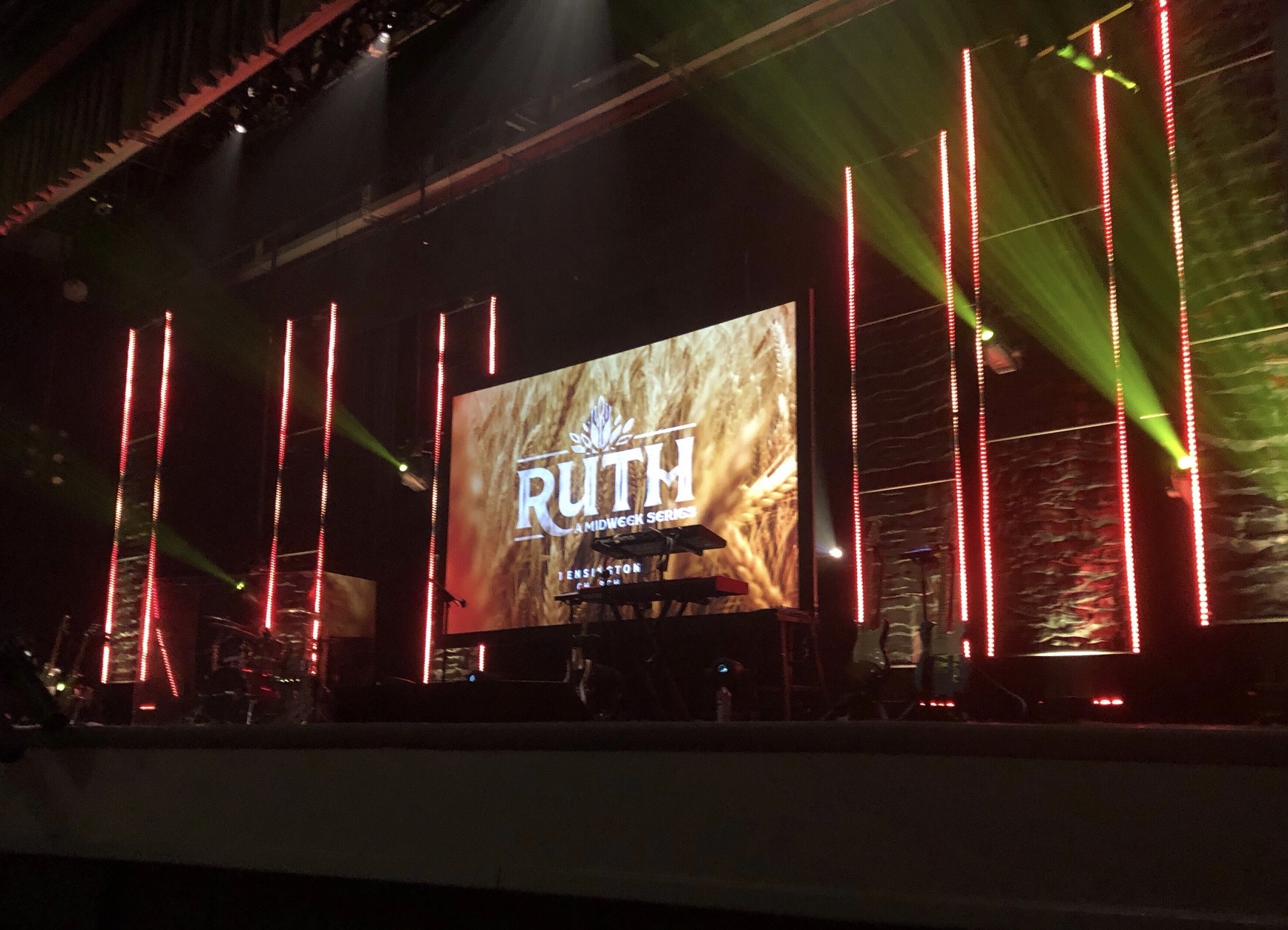
Nothing pleases me more than seeing Ruth’s name in lights—especially when I know it is the ezer-warrior version of Ruth (rather than the Cinderella version) who is getting the attention.
Ruth was in the spotlight again last week at Kensington Church in Troy, Michigan and will be now for several weeks as they engage a Bible study series on the book of Ruth. The backstory of how she got there in the first place was an unexpected encouragement for me.
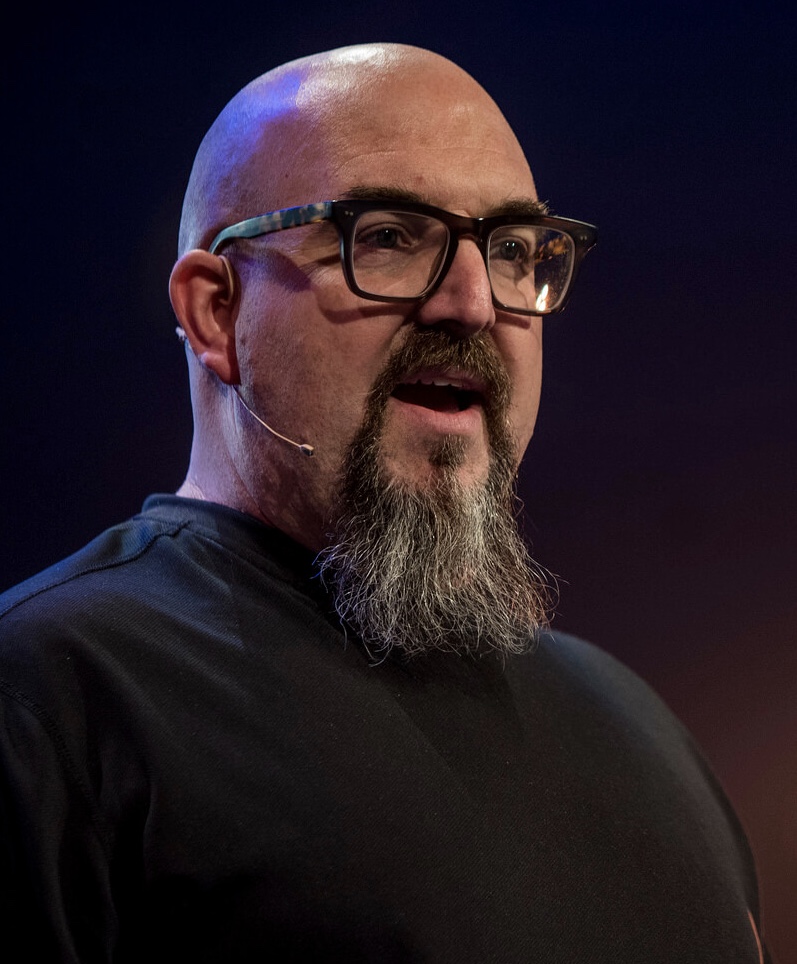
He said all three books had a profound impact on him and spoke a lot about the chapter in Malestrom on Boaz, “The Power of Power.” Boaz led Pastor Danny to my other books and also to invite me to speak at the kick-off for Kensington’s church-wide study of the book of Ruth.
If you haven’t read that chapter or my other books on Ruth, Boaz embodies a redemptive view of male power and privilege. His encounters with Ruth the Moabitess—in his barley field and at the threshing floor—are the epitome of power and powerlessness. The power differential between them is extreme. Yet not once in the entire story does Boaz surrender his male power and privilege. Instead, he employs his male power and privilege fully to empower Ruth so that her initiatives succeed on behalf of Naomi and Naomi’s family.
The book of Ruth is both a powerful man-story and a courageous ezer-warrior story.
The example of Boaz couldn’t be more relevant and transformative in our current #MeToo world, and the men I met at Kensington Church/Troy get that. Male power and privilege can inflict horror and life-long scars on those less powerful. Or they can be a force for good, for the healing, flourishing, and empowering of others. The version of male power and privilege that Boaz projects doesn’t come at a loss for men either, even though he makes enormous sacrifices. In the end, he stand taller—taller I’m convinced—than any other male figure in the Old Testament. He is a leader in the recovery of the masculinity God entrusted to his sons in the beginning.
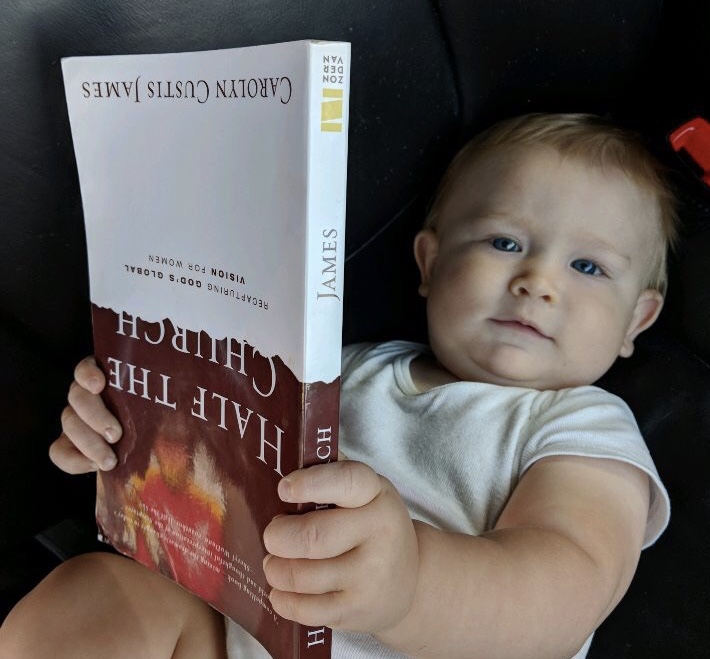
By the time I arrived in Troy, members of the church leadership team were reading Malestromand Half the Church, a church-wide study of Ruth was starting, and the church leadership team was already engaged in discussions about relationships between men and women—a.k.a. The Blessed Alliance—and how that impacts their leadership.
And if all of this was not encouraging enough, hope exploded when I met Theo—grandson of Steve Andrews, the Kensington Network’s Lead Pastor and Co-Founder. Who knows how promising the future can be if the little men of Troy catch this vision early!?
No one has to twist my arm to get me to talk about the Old Testament book of Ruth.
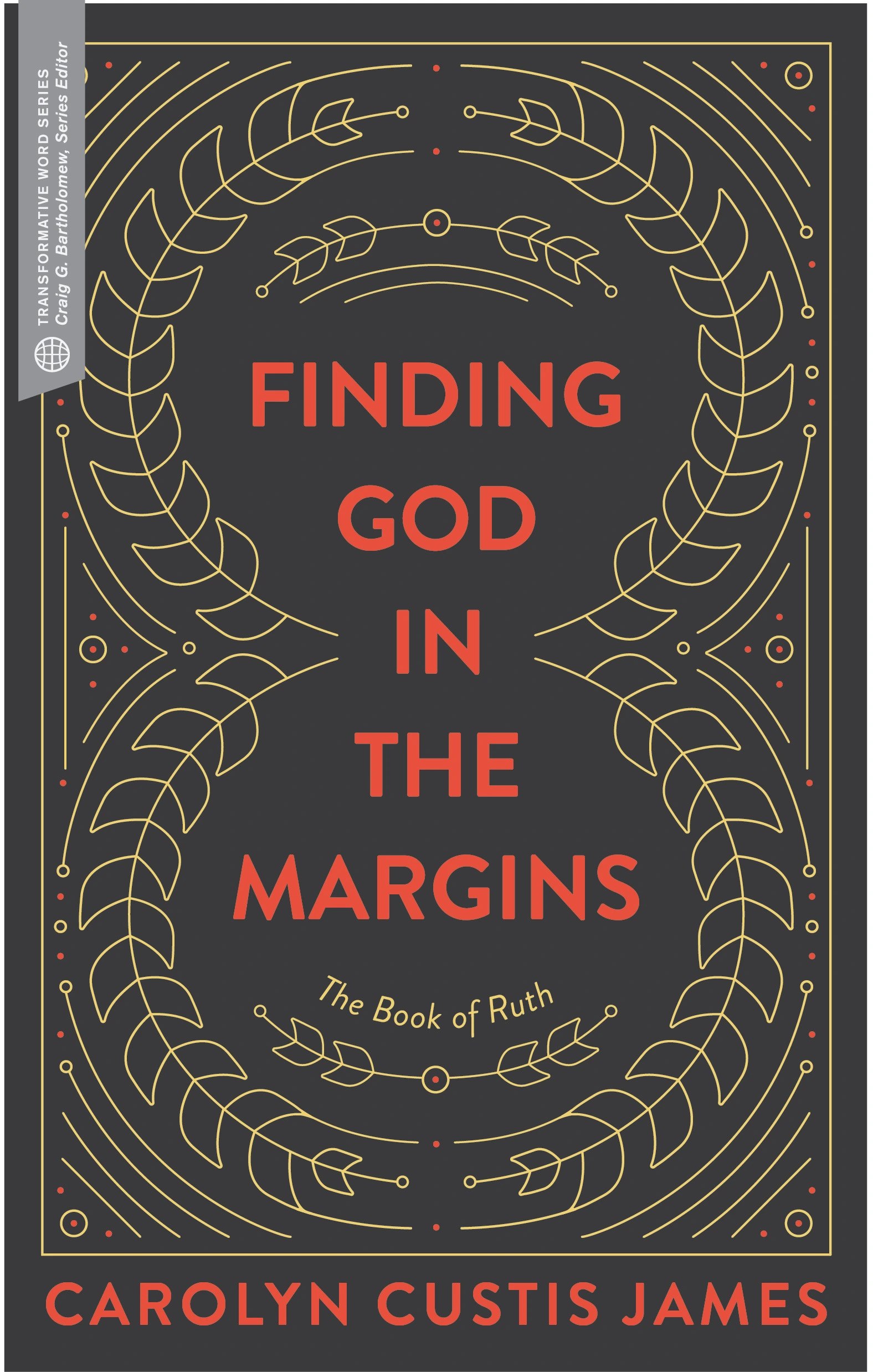
It has been a total game-changer for me. I live in the book of Ruth. Hardly a day goes by when I’m not pondering this story. After publishing two books on the subject (The Gospel of Ruth and Finding God in the Margins), I still haven’t exhausted everything this book has to say to us.
Who knew the message of this small book could be so 21st Century relevant and so utterly earthshaking.
Needless to say, I was thrilled to be invited to help kick-off the Midweek Series on Ruth at Kensington Church/Troy Campus. Like I said, no one has to twist my arm.
If you’re in the area, I hope I’ll see you there!
Kensington Church
1825 E Square Lake Rd
Troy, Michigan Wednesday, October 10
7:00pm
The brave little climber in this photo is my four-year-old grand-ezer. She’s the same little ezer who, this past summer at a pool here in Philly, stood in line with kids twice her size and—armed with her floaties—jumped off the diving board into the deep end. Anyone watching her tackle that rock wall or jumping off that diving board would have heard her parents cheering her on.
And yes, she made it to the top!
A New Day for Girls
Today little girls are finally hearing, “You can be anything you want to be!” That message is long overdue, but doesn’t yet have the global reach so desperately needed in today’s world.
It is one of life’s mysteries that the church hasn’t led the charge—challenging girls to push the limits of their abilities and opportunities. The Bible is a storehouse of powerful narratives of women (many of them young girls) who courageously answered God’s call, often risking their lives, to step up and lead in a variety of situations. Their bold actions take place within the ancient patriarchal culture, which effectively places an exclamation point beside their stories. Yet instead of giving these narrative texts the same weight we give to any other biblical text that references women, the language of “silence” and “submission” has become the dominant message for women and girls.
Strong women like Tamar, Rahab, Deborah, Jael, Priscilla, and Junia have always posed problems for interpreters because biblical writers clearly admired these women and held them up as outstanding examples of godliness even though their conduct broke with accepted convention. They were daring, took the initiative, and courageously exercised leadership, even in their interactions with men. To resolve the conflict this poses, biblical interpreters . . . reclassify them as ‘exceptions,’ thereby removing their portraits from the gallery of acceptable role models for Christian women. —Lost Women of the Bible
Considering the enormity of the mission God has entrusted to his image bearers, the church cannot afford to bench half of our vital human resources. This creates a major quandary for women, for we have responsibility before God for the gifts, privileges, and opportunities he has entrusted to us. It’s hard to imagine burying our gifts and folding our hands when so much kingdom work needs to be done. Furthermore, in this #MeToo/#ChurchToo world, we need these Lost Women of the Bibleto teach us to be strong and courageous.
For those who fear a female uprising, let us be clear. This is the best possible kind of uprising, and it is long overdue. These biblical stories and the impact they are having on women’s lives are good news for the church and beyond. Narratives of strong women and girls in the Bible aren’t fomenting a gender war or encouraging women to elbow their way to the top of the power pyramid. The strengths and gifts God entrusts to his daughters (and to his sons) are never ends in themselves. They are a God-given trust—a stewardship—gifts designed to empower, bless, and bring goodness, flourishing, and justice to others. These indispensible female role models exert themselves in radically counter-cultural daring gospel ways for the sake of others and for God’s kingdom. The world is a better place because of their courage. And their stories challenge us—women and girls today—to do the same.
Recovering the Bible’s Message for Women
For nearly twenty years, I’ve been committed to recovering the stories of women in the Bible—for my own sake as much as for other women.
Through the women of the Bible, God puts real everyday faith on display for the world to see. Their stories portray in vivid tones the resolute ‘risk it all’ brand of courage that faith in such a God produces. —Lost Women of the Bible
These ancient stories have been utterly life changing for me, and it is gratifying to hear women from around the world say these strong female role models are changing their lives too.
Like the wheelchair bound woman in her 70s—a former missionary, then a pastor’s wife, now divorced and alone—who was completely convinced her climbing days (metaphorically speaking) were over. When a young friend of mine told her Eve’s story and explained the meaning of ezer—that this calling begins at birth and lasts for a lifetime—the spark of life returned to her with force. “I have a mission!” she exclaimed.
Then, because this news was too good to keep to her herself and because she wished she’d known it all along, she urged, “Go tell the girls!”
That’s exactly what is happening.
“Go tell the girls!”
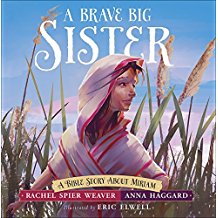
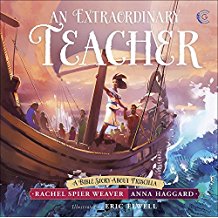
Authors Rachel Spier Weaver and Anna Haggard, along with illustrator Eric Elwell, have launched the Called and Courageous Girls book series for girls ages 3 to 7. These beautifully illustrated books present the courageous stories of women in the Bible in ways that little girls can truly relate to and own for themselves. We owe these two authors a tremendous debt of gratitude for taking these powerful stories to this young audience before negative messages for girls begin to take root.
In the words of Sarah Bessey, author and mother of young girls,
“If you’ve ever wondered where the women of Scripture are in the children’s book section, this book is your bright and bold and gorgeous answer.”
To give you a taste of what’s inside and get the blood pumping through your veins, here’s the trailer.
What I wouldn’t give to have had these books when I was reading books to my daughter. What I wouldn’t give to have read these books myself when I was little.
Truly A New Day for Girls!
As I watched my courageous little four-year-old ezerreach for that next rock—her little three-year-old sister watching from below with every intention of climbing that wall too—I thought my heart would burst with hope. How good to see her discover that she can do more than she imagined. How incredible for her to inspire her little sister to reach for new heights too.
I thank God for the Called and Courageous Girls book series and for the expansive vision and aspirations these stories are instilling in the hearts and minds of little girls God created to love and serve him with all their hearts, souls, strengths, and minds.
Truly this is a new day for girls, and because of that it is a new day for all of us! Who knows how this will change their stories and how their courageous stories will change the world for others!
Topic: “Minding Your Own Business as a Jesus Follower”
Speaker:Carolyn Custis James
Anyone seeking biblical guidance for how to follow Jesus into the workplace would probably never consider the Old Testament book of Ruth as a crucial place to start. Traditional interpretations of Ruth as a beautiful romance obscure its profound relevance to multiple dimensions of twenty-first century life, including the workplace.
Women who follow Jesus into the workplace will find great benefit in joining this important organizations.
Thursday, September 27, 8:00-9:00AM
American Bible Society 101 N Independence Mall East FL8 Philadelphia, PA 19106-2155
The Philly 4word chapter invites Christian women in the workplace into a local and national network of likeminded women. Over a hundred women showed up for the inaugural event in August to hear 4word president and founder Diane Paddison explain the vision that is driving this organization/network!
“At the beginning God didn’t deliver a finished product; rather, God provided a setting in which human beings, working with and enabled by God, could cause the created order to flourish. . . . As Martin Luther once said, as we do the work to which we have been called we become the hands of God.”
As a young girl blessed with vigilant parents, I got early signals that somewhere “out there” lurked some mysterious danger. I needed to be alert and take precautions.
As a child, when a kind man in a bookstore gave me candy, my parents taught me never to trust a stranger—even nice ones. To make sure I got the message, they confiscated the candy. When they refused to let me go on an errand in a car with a male relative, I learned that not even everyone I knew and loved was safe. As a young teenager, when I was walking home in the dark after spending the afternoon at a friend’s house, my father tracked me down, picked me up, and drove me home as he warned me that it was dangerous to be out in the night by myself.
As a teenager, I never heard warnings from school officials or youth group leaders about the ever-present risks of sexual abuse or violence against women and girls. I never heard boys warned to respect girls. I never heard anyone say that a real man or true masculinity, understands that “no” means “no.” School officials warned us about STDs. Youth leaders mainly talked about sexual purity. I’ve since learned that already some of my friends and classmates had been sexually assaulted or were currently being abused.
As an adult, I’ve learned that even the best parents can’t be sure their child will skate through life without suffering trauma at the hands of another human being. For years now, through my friendships and teaching, writing, and speaking ministries, women have been (still are) telling me their stories. They’ve put faces and accounts of deep and relentless suffering on the subject of trauma inflicted through the abuse and sexual violations they’ve suffered at the hands of an abusive parent, a twisted neighbor or family “friend,” a controlling boyfriend or husband, or a self-indulgent boss.
One by one the stories came—opening my eyes to a social problem that simmers beneath the surface but often goes ignored. Evidence of trauma surfaces here and there—proving the lasting scars a woman carries after someone violates her person, her body, and her sacred sense of self, sometimes when she was just a child. Apart from a few lone voices and professionals who have devoted their careers to trauma counseling and advocacy for victims of abuse and violence, I was not aware of any concentrated effort to address these issues, not even in the church.
Three factors proved pivotal and compelled me to become an outspoken advocate for women and girls. First were the stories of abuse and assault I was hearing first-hand. Second was my research into the Bible’s empowering message for women and the platform to communicate that message that I must steward. Third was my growing awareness that the problem is far greater and more systemic and global than I ever imagined, thanks in particular to Nicholas Kristof and Sheryl WuDunn’s Half the Sky: Turning Oppression into Opportunity for Women Worldwide—a bracing exposé of the human rights violations of women and girls globally that the authors call the “paramount moral challenge” of the twenty-first century.[1]
Recent events have drawn national attention to this issue and intensify the urgency of addressing this crisis.
Breaking Silence
2016 may well be remembered as the year the topic of sexual harassment and assault stormed the headlines and the dam of silence burst. In October of that year, the Washington Post released a 2005 Access Hollywood video that captured presidential candidate Donald Trump boasting lewdly about sexually assaulting women and getting away with it. Over a dozen women stepped forward with allegations that Trump had done exactly that to them. Denials notwithstanding, the issue was firmly on the table, and American women were fiercely determined to keep it there.
On January 21, 2017—the day after Trump’s inauguration—thousands of pink-hatted female protesters flooded American city streets in protest of violence against women and to advocate for women’s rights.
A tsunami of sexual harassment and abuse allegations followed, sequentially toppling a line-up of powerful and once-thought invincible men in media, Hollywood, politics, and technology for exploiting women sexually. Those first few courageous women paved the way for other women to speak their truth. A flurry of #MeToo tweets flooded the Internet, signaling a problem of epidemic proportions. To our shame, a second major wave of #ChurchToo tweets followed. Time magazine acknowledged the global significance of what was happening by naming The Silence Breakers their 2017 “Person of the Year.”
2018 opened with another horrific spate of stories that continued to rock the country. Over 150 courageous young women (former US gymnasts), testified in court of sexual abuse repeatedly inflicted on them by Larry Nassar—the once trusted US Gymnastics team doctor—in the name of “medical procedures.” Attorney Rachael Denhollander[2] was the first former gymnast to make public allegations against the doctor for molesting her. She was the last of 156 survivors to testify in a sentencing hearing that resulted in a 175-year sentence.
The Power of Trauma
Trauma resulting from abuse of a sexual nature involves irrevocable psycho-spiritual damage that reshapes a person’s story and may well become the dominant controlling force for the duration of her life. The severity of the trauma and the criminal nature of the abuse demands involvement of professional counselors and law enforcement. Allegations that implicate someone within a church or ministry organization make it “essential to have sexual abuse allegations investigated by an independent party that does not have a vested interest in the church.”[3]
The scars are deep and lasting. Recurring nightmares and unexpected triggers keep traumatic memories ever capable of reawakening. The legal notion of a statute of limitations on sexual abuse and violence may give perpetrators a pass on vicious crimes. It is a total fiction for survivors and an outright denial of reality. In some cases, trauma can establish such a debilitating hold on a person that their lives are shattered, driving some to the point of suicide. Trauma’s wounds may be invisible to the naked eye, but the scars are deep and lasting.
There is no silver lining to this hideous cloud. But survivors have demonstrated again and again that trauma can have unexpected outcomes. Today, we have vivid memories of the remarkable moral strength and courage survivors heroically display by standing up, telling their stories, and fighting for justice. That feat is all the more remarkable because they’ve had to fight against overwhelming odds and overcome the trauma of reliving their ordeal in public. Can anyone truly fathom how hard that must have been or what powerful emotions those former gymnasts suppressed to voice their suffering before a battery of media cameras all while facing their abuser?
Some of the most intensely traumatized women display unearthly levels of compassion and tenderness for others. Their antennae—sensitized by their own suffering—are always on red alert. They are quick to spot someone else who is hurting and possess an exquisite ability to come alongside. As Henri Nouwen astutely observed, “The great illusion of leadership is to think that [a person] can be led out of the desert by someone who has never been there.”[4] The byline on the jacket of Nouwen’s book refutes the notion that wounded people in the church are liabilities and speaks instead to the rich potential of survivors. “In our own woundedness, we can become a source of life for others.”
It is also true—and we have biblical support for this—that survivors of trauma of every kind have given us some of the deepest theology we possess. Job stories are borne of trauma. Hagar, Naomi, Hannah, and Esther are a few examples. These sufferers give us permission to wrestle with the deepest questions human beings ever ask. They take us to the edge of human existence, to the perilous precipice of faith. They remind us that even in our darkest most desperate moments when we feel ourselves going over the ledge—God grips us by our ankles (1 Samuel 2:9a).
In the words of Rachael Denhollander:
There was a point in my faith where I had to simply cling to the fact that although I didn’t understand or have the answers, I knew that God was good and that he was love. Whatever else I didn’t understand couldn’t be a contradiction to that.[5]
Superficial, pie-in-the-sky, prosperity theology is not only misleading, but foreign to these anguished realms of human existence. And sooner or later all of us will need the insights trauma survivors gleaned in the darkness.
The Resilience Journey
From what I’ve gathered from the women who’ve trusted me with their stories, resilience isn’t so much a destination as a journey. I could be wrong, but I’m not sure that this side of eternity anyone burdened by trauma ever fully sheds that load. Instead, they spend their days traveling somewhere between trauma and resilience—putting one foot in front of the other and pressing on with life, each deliberate step rendering a new defeat of trauma’s powers. Some days are no doubt easier than others. But nightmares and unexpected triggers always retain the power to bring trauma back into the present with devastating force.
I’ve also learned there are forces that can give a sufferer fresh strength on this journey. Trauma survivors have discovered the power of speaking their truth. In Gretchen Carlson’s Be Fierce: Stop Harassment and Take Your Power Back (the book she wrote in the aftermath of her successful take-down of Fox News mogul, Roger Ailes for sexual harassment) she lets Lady Gaga (raped by a man twenty years her senior) do the talking:
I see a lot of people who have secrets that are killing them . . . We don’t want you to keep your pain inside and let it rot like an old apple on your counter you know? It’s like, just get rid of all that trash. Let’s get rid of it together.[6]
They’re also proving that resilience requires community. #MeToo and #ChurchToo tweets are providing at least a virtual community for a lot of women. The solidarity they are finding with one another obviously raises the question of how the ultimate community—the church—will respond.
So far the record is pretty grim. Although there are healthy exceptions, all too often when sexual assault allegations surface within a church or ministry organization, the response is inept at best and complicit and harmful at worst. When major evangelical figures have been caught up in sexual scandal, protecting their reputations, ministries, and organizations often becomes the priority. Cover-ups result. Victims aren’t believed or are pressured to forgive their abusers. This ultimately re-traumatizes those the church should be first in line to protect and defend.
That was Rachael Denhollander’s experience.
“Church is one of the least safe places to acknowledge abuse because the way it is counseled is, more often than not, damaging to the victim. There is an abhorrent lack of knowledge for the damage and devastation that sexual assault brings. It is with deep regret that I say the church is one of the worst places to go for help. That’s a hard thing to say, because I am a very conservative evangelical, but that is the truth. There are very, very few who have ever found true help in the church.”[7]
#MeToo Stories in the Bible
This escalating crisis has had a two-way impact on my work. These disturbing current events have shed new light on biblical stories I’ve heard all my life. #MeToo stories have been in our Bible, right in front of us, all along. But we tend to skip over them or sanitize what’s actually happening and ignore the frightening realities presented on the pages of our Bibles. We’ve all done this.
These stories convinced me that the #MeToo crisis has come to us, to me—as Christians. The Bible doesn’t avoid this topic. Jesus doesn’t want his church to avoid it either.
#MeToo stories in the Bible have also pressed me with responsibility and given me biblical warrant to address this crisis and call other Christians to engage.
Consider, for example, the trauma Lot’s daughters suffered at the prospect that their own father was preparing to turn them over to a mob of sexual predators. Most likely both the Egyptian slave girl Hagar and Queen Esther were young teenagers and both were trafficked ultimately for sex. What do we associate with the name “Bathsheba”? A growing consensus among Old Testament scholars is that David raped Bathsheba. Yet we often regard her as a temptress and co-adulterer while minimizing David’s violent abuse of power, focusing instead on his heartfelt repentance. What kind of pattern does that reflect?
These stories and others present significant biblical opportunities to raise awareness of the evils of violence against women and of God’s heart for his daughters. They oblige us to join our voices with the prophets in speaking truth to power and to create safe space for survivors to seek and find help and healing within the church.
#MeToo is a Male Problem Too
One final matter.
Many are now acknowledging that this #MeToo crisis isn’t just a women’s issue and that women alone aren’t going to solve it. Although women can ignite the movement, any lasting change will require the significant participation of our brothers.
Once again, the Bible already makes this point. The story of Ruth and Boaz is the #MeToo story that didn’t happen. Boaz, a powerful imposing figure, faced the kind of situation that had the makings of another abusive #MeToo story.
Ruth—a powerless immigrant who is utterly dependent on Boaz’s good graces for her survival—presents herself to him in the dead of night. If Boaz took advantage of her and this came down to a he said/she said situation, no one in all Bethlehem would take Ruth’s word over his. Yet in a radical turn of events, no #MeToo story happens. Instead, Boaz gives us a dramatic gospel vision of male power and privilege employed sacrificially to empower others and promote their good.
Today’s world is hungry for more men like Boaz. He’s an Old Testament example of the brand of masculinity Jesus himself embodied as he honored and empowered women.
The Bible gives us multiple stories of countercultural men who follow Jesus, and we have growing numbers of men like that today. This is the kind of man Jesus’ gospel intends to produce. If I’m right about Boaz—then the church is positioned to make an enormous difference in this battle. This is the kind of man who, allied with his sisters, can turn the tide in this social crisis.
When Dr. Colleen Kraft, president of the American Academy of Pediatrics, visited a U.S. government shelter for immigrant children in Combes, Texas, what she saw undid her.
A distraught toddler was crying inconsolably and pounding her small fists against the play mat. A shaken Kraft later told CNN, “We all knew why she was crying. She wanted her mother, and there was nothing we could do. I’ve never been in this situation where I’ve felt so needlessly helpless.” According to Craft, workers inside the shelter were prohibited from picking up or touching the children to comfort them. Imagine not being able to pick up or console a distraught child!
Craft described the separation of children as “government-sanctioned child abuse.” The United Nations condemned the Trump administration’s zero-tolerance policy as “a serious violation of the rights of the child” and “arbitrary and unlawful interference in family life,” calling the U.S. to “immediately halt this practice of separating families.”
Under duress, the president signed an executive order on June 20 to end the separation of children from their families. So far, government efforts to reunite children and parents has been riddled with incompetence, chaos, and little success. Identification records have gone missing, been destroyed, or never existed in the first place. The government has already deported some immigrant parents. I am grateful for every parent/child reunion, but I am deeply troubled that this happened in the first place—and that it happened in America.
Cages and Caves
Compare the muddled recovery effort for the crisis on our southern border with the response in Thailand when twelve young soccer players (ages 11-16) and their soccer coach became trapped inside a watery cave.
On learning that the boys were in trouble, Thailand officials feverishly mobilized an all-out rescue effort that didn’t stop until all were safely out of the cave. Rescue workers and experts poured in from around the world (including the U.S.) with strategies, resources, divers, and drillers to explore every conceivable option for getting the boys out alive. The risks were enormous, costing the life of one Thai navy seal working to save the boys. Midway through the rescue, a determined Thailand prime minister resolved that “this kind of event should never happen again on Thai soil. . . . We should learn from this experience to prevent it from happening again.”
In contrast, no all-out rescue effort is yet underway here to reunite immigrant children with their families. The president has yet to appoint a “Family Reunification Czar” to oversee the process, coordinate government agencies, and resolve legal, logistical, and bureaucratic logjams. Instead, prolonged separations persist. Each day the harm to innocent children deepens. Meanwhile the media cycle charges forward as the next big story threatens to eclipse or distract us from this unresolved human rights crisis.
Repent or Repeat?
What heightens the heinous nature of this ongoing immigrant tragedy is that this is not the first time the U.S. government has been guilty of this kind of human rights violation. Nor is it the only time Bible waving national and religious leaders have claimed divine support to justify their abusive actions. Consider the removal of Native American children from their families and communities into boarding schools. Recall the breakups of African slave families when slaveholders callously sold off a husband, a wife, or a child. Then there was the internment of Japanese American citizens during WWII and our government’s refusal of safe haven to thousands of Jewish refugees, and now to refugees from Syria and other war-torn regions.
To our shame, the United States has never come to terms with its history, nor expressed remorse and repentance for the sins of our past. The dark stains of America’s past have been expunged from history texts and swept under the rug. We never learned from those past abuses to prevent them from ever happening again.
So here we are—in a classic fulfillment of Spanish-American philosopher George Santayana’s warning that “those who cannot remember the past are condemned to repeat it.”
Praying and Persisting
I thank God for the heroic rescue of the Thai boys from the cave and that their 18-day ordeal is over. But the separation of immigrant children from their families has been going on much longer than 18 days. That poses a very serious problem: the very real prospect of losing interest, of being worn down by emotional exhaustion from being undone over suffering children, of being distracted by other headlines and scandals, of losing sight of the suffering of immigrant children and families.
As followers of Jesus and God’s image bearers, we are not spectators to what happens in God’s world. We have a mandate to stay the battle for these children and their parents. As believers, we have responsibility to engage.
So take a knee for the children. While you’re at it, drop on both knees and plead that God who hears the cries of the oppressed will give us strength and determination to stay in this battle. I’m right there with you.
Let us keep making noise online and badgering our senators and congressional representatives—church leaders too—to do all they can to bring this terrible crisis to a speedy and successful end. And let us resolve to learn the lessons of history to insure that this never happens again on American soil.




 The brave little climber in this photo is my four-year-old grand-












 Carolyn Custis James