Celebrate National Women’s History Month with Bold Women of the Bible

silhouette-1447173_960_720-1
Image by Roman Grac from Pixabay

March is National Women’s History Month and an opportunity to spotlight the incredible contributions of women to national and global history. It is also a golden opportunity for us to rediscover the strong legacy bequeathed to us by women in the Bible.

This will involve addressing the injustices done to women and girls whose stories are recorded in the Bible but who are casualties to widespread cultural assumptions that men are leaders and women are born to follow.

Consequently, vital stories of women in the Bible—lots of them—have been downsized or marginalized and lost to us. Portraits of strong, courageous women leaders in the Bible have been removed from their rightful place as role models for women and girls at a time when strong godly female role models are desperately needed.

We are cautioned not to get excited or to entertain big ideas for ourselves from the stories of women like Deborah, Esther, Priscilla, Lydia, Junia, and Phoebe, when their stories are in the Bible for our instruction and should fill our hearts and the hearts of our daughters with fierce passion and determination to give our all in service to Jesus.

We aren’t alerted to notice or called to aspire to the the radical brand of bold and selfless leadership of Ruth the Moabitess or to follow the example of the hungry-to-learn Mary of Bethany and her courageous solo affirmation of Jesus’ mission on the eve of his crucifixion.

We completely miss how, for example, the young slave girl Hagar, barren Hannah, and the washed up childless widow Naomi are at least three female shapers of Judaeo-Christian theology. Hagar teaches us the intimate side of the God “who sees me.” Hannah’s theology informs us of God’s sovereign rule over everything from the womb to the throne.  Naomi reassures us of God’s stubborn relentless love (hesed) for us, what Sally Lloyd-Jones described as “Never Stopping, Never Giving Up, Unbreaking, Always and Forever Love.” The theology of all three women shows up in the writings of King David and is indispensable truth for believers in every generation.

It’s worth mentioning that men lose out in this arrangement too for, not only do they also have much to learn from these strong women, ignoring them causes  men to expect less from their sisters in Christ which, in turn, deprives them of strength, courage, and wisdom they need and that God means for them to gain from us.

It is time we reclaimed these women’s stories and reinstalled their portraits in their rightful place as Role Models for women and girls today. Without them, we will inevitably lower the bar for ourselves and our daughters when kingdom matters are every day at stake. Earth is emitting a distress signal, and we cannot spare anyone in the monumental gospel movement Jesus entrusted to us.

So celebrate National Women’s History Month and rekindle your own passion to join the stream of godly female history by reclaiming the bold legacy of women in the Bible.

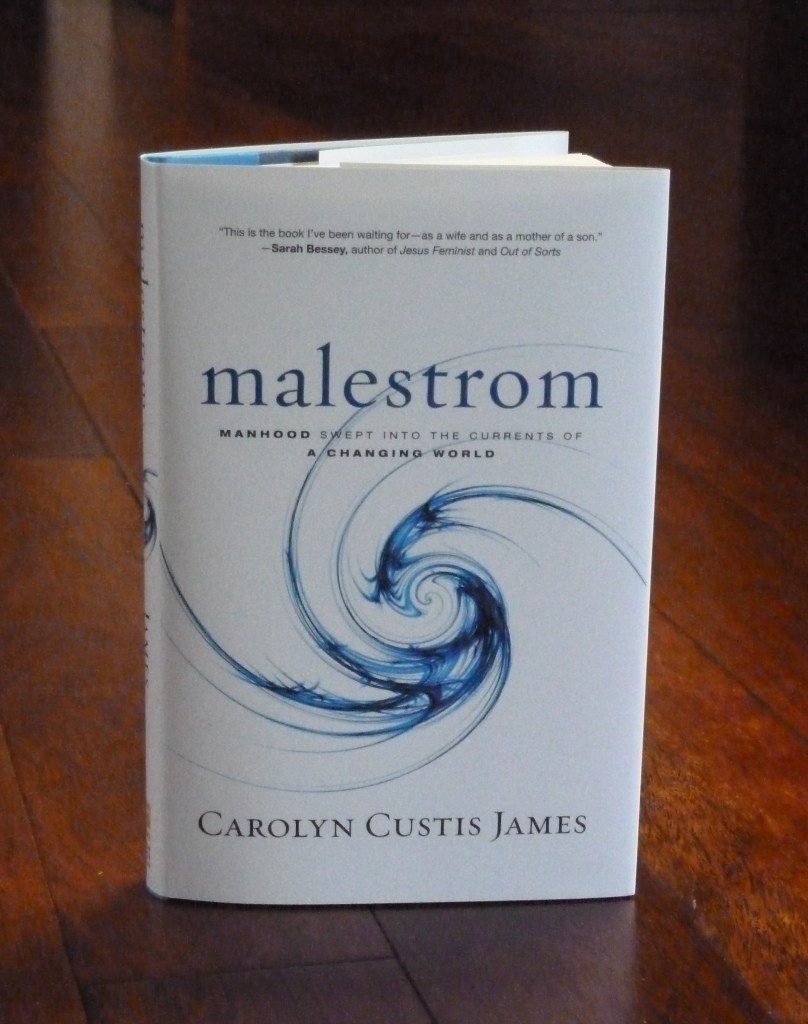
Although every book I’ve written (including Malestrom) offers a fresh re-look at the stories of women in the Bible, a great place to start is with Half the Church: Recapturing God’s Global Vision for Women. If you already have a copy, now would be a good time to re-read it.


Posted in Uncategorized | Leave a comment

It’s a Man’s Prerogative to Change His Mind

refothursdayheader

In celebration of the 500th anniversary of the Reformation, Christian History Institute is running a series of “Throwback Thursday” blog posts. The purpose is to educate more readers on the Reformation. Each contributor blogged on a quote from a reformer.

My quote comes from the mouth of Martin Luther when he finally saw the light—a second time.

“Men cannot do without women. Even if it were possible for men to beget and bear children, they still could not do without women.”                       —Martin Luther

To read the article go here.

Posted in Uncategorized | Leave a comment

Teenagers Sold “Like Pizza”—What Will Your Church Do?

sex-trafficking-awareness-mo

The nightmare for Elisia started the day her mother sold her to a man. She was only 12-years-old.

From that tender age her life descended into an appalling downward spiral no child should ever experience—sexual violence, pregnancies (the first at 14), a series of foster homes, and abuse. By the time she reached adulthood, she was locked in a dehumanizing system of sexual violence and under the iron-clad control of a pimp.

The degree of isolation, helplessness, and violation she suffered is unfathomable.

Nicholas Kristof tells the story of Asia Graves in his NYTimes op-ed article, “When Backpage.com Peddles Schoolgirls for Sex.” This 16-year-old Boston high school sophomore was “sold on the Internet ‘like a pizza’ . . . handed over to be raped by strange men every day.”

A Global Epidemic of Human Suffering

January is Human Trafficking Awareness Month. Studies estimate more than 27 million people are currently enslaved globally. They are trafficked for sex, forced labor, soldiers, suicide bombers, and organ harvesting. 70% are female; 50% are children. The human rights atrocities and the suffering these numbers represent are mind-numbing. In an effort to visualize what we’re looking at, ponder this alarming image (as I wrote in Malestrom)—the 30% statistic of men and boys trafficked today is “roughly the population of New York City proper.”

Victims come from every country, and every country consumes. Our youths are vulnerable. Pimps are smooth operators. They flatter, groom, and ensnare unsuspecting teenagers in such ordinary settings as shopping malls, schools, and coffee houses. Sometimes parents sell their own children.

Human trafficking is demand-driven. To our shame, demand is epidemic in the USA. Sex trafficking isn’t restricted to prostitution, but comes in other forms. Strip clubs and pornography, for example, victimize trafficked individuals. The pornography problem, currently epidemic among evangelicals, is no private matter for those who indulge. To be sure, it is soul-destroying for pornography clients and destructive to marriages and healthy relationships. But it is also funding the sex trafficking industry.

Human Trafficking in Plain Sight

I was shocked when I first heard a presentation about sex trafficking. Subsequently, I learned more, from Victor Malarek’s The Natashas: The Horrific Inside Story of Slavery, Rape, and Murder Inside the Global Sex Trade and Kristof and Sheryl WuDunn’s bestseller, Half the Sky: Turning Oppression into Opportunity for Women Worldwide.

The shock I felt from reading those books intensified when I discovered I’d actually been hearing human trafficking stories all my life. I grew up on stories of the heroic work of Amy Carmichael. Her remarkable Christian ministry in India centered on rescuing and raising little girls (and later little boys too) whose families were “dedicating them to the temple”—a euphemism for a life of prostitution.

Carmichael’s book, Things As They Are (first published in 1903), is an early version of Half the Sky.

Nor did anyone ever point out that human trafficking is also on the pages of my Bible—in stories I’ve heard and loved my whole life.

No Sunday School teacher ever explained that the young girl Esther was being trafficked for sex when she was rounded up with other young virgins for the king’s harem.

I never heard Hagar, the young Egyptian slave girl in the story of Abraham and Sarah, described as a victim of human trafficking either. Yet she was Abraham and Sarah’s property. They owned her. Hagar worked for the childless Sarah who ultimately gave her slave girl to Abraham to produce a male heir.

None of this is what anyone would call “consensual sex.”

“If we are honest, we must admit that Abraham was a human trafficker. He owned human beings—slaves he “bought,” slaves given to him as “gifts,” and slaves “born in his household” (which means he took ownership of children born to his slaves). Slavery was an accepted practice within patriarchy and is a common but hideous thread that winds through stories of leading figures in the Bible. That fact alone is enough to give us pause about patriarchy.”

Malestrom: Manhood Swept into the Currents of a Changing World (67)

These crimes were multi-generational. Jacob, Abraham’s grandson, participated in the same practices when he fathered sons by two slave girls. Ten of Jacob’s sons engaged in human trafficking when they sold their younger brother Joseph as a slave.

There’s no way to sanitize these stories or shy away from the ugly truth. The family God chose to be the agents of his purposes for the world were capable of horrific evil. Nor should we turn a blind eye to the fact that the revered founding fathers of our country were human traffickers of African slaves. As we all know, some of them used slaves for sex.

Human Trafficking and the Church Engaged

With biblical texts on human trafficking, Christians shouldn’t need the prodding of a national month of awareness to bring up the subject of human trafficking. These texts, plus the teachings of Jesus, who came “to proclaim freedom for the prisoners . . . [and] set the oppressed free” (Luke 4:18) and whose gospel brings redemption, hope, and healing, provide ample opportunities for pastors and teachers to speak out about these image bearer violations. They are compelling reasons for the church to engage. Many Christian individuals and organizations are already in this battle. But many more are needed.

If you’re just now learning about human trafficking or need to refresh your outrage over this egregious assault against God’s image bearers, then buckle up and read this quick tutorial: “55 Little Known Facts about Human Trafficking.” Then read one of the books listed above, or my book, Half the Church: Recapturing God’s Global Vision for Women, where I respond to Half the Sky from a Christian perspective.

Then ponder the question that confronts us all: What will you do?


This article was originally posted at www.missioalliance.org.

Posted in Uncategorized | Leave a comment

How Princess Leia helped me become an ezer & believe I was a warrior daughter of the King

princess-leia-1

This guest post was written by Rese Hood, M.Div., D.Min. in process (Gordon-Conwell) and with her kind warrior permission.


I spent most of yesterday alternately in shock and real grief as the news of Carrie Fisher’s passing became a non-stop headline in every platform of media. I couldn’t have explained it for most of the day but it finally came to me.

If it weren’t for Princess Leia/General Leia in Star Wars, I probably would have kept trying to kill myself until I succeeded. That character and that actress united in such a way that for the first time in the twisted universe that was my world, a very ordinary girl like me could emerge from wreckage and ruin a heroine, a fighter and a leader. And it was not just okay to be like her, it was essential.

When I was a sophomore in HS, I read a book called Star Wars with this kickass heroine princess. My friend Bill F. saw me reading it and told me it was a movie. (I had moved to Hawaii that summer when SW came out, so I was occupied with other things.) I am probably the only SW geek who saw the film because of the book.

Seeing the film changed my life. It was the first time I had ever seen anyone like me – smart, sassy, sarcastic, strong-willed and a natural leader – and a girl with brown hair (often oddly styled) and brown eyes as a hero. No capes, no super powers – her Force skills only barely hinted at. Nothing in the Galaxy could stop her or break her. As the other books (always released a few days prior to the film) and the movies followed, she grew stronger, rescued, led, loved and crushed evil. Even realizing her father was the most evil person in the galaxy and tried to destroy her personally couldn’t stop her. (I never kissed my brother though…EWWW!)

When The Force Awakens opened last year at the end of my son’s relationship with the other evil force in the universe – ha! – and I watched an older, wiser but stronger General Leia deal with the estrangement of her son and husband but stay focused on the larger objective of destroying the latest incarnation of evil, I was encouraged.

Somewhere between the first trilogy and the prequels (ugh!) and the reboot, plus the numerous books in various storylines, I found out that I could be reborn, made real and lasting royalty and My True and Good Father gave me the implements of battle and trusts me to lead. The Galaxy needs his Warrior Daughters – without them too much is lost. And, as I learned through Eowyn in Lord of the Rings, some evil can only be destroyed by a woman. (Another royal warrior woman…theme?)

I am literally still breathing because of Leia and Carrie Fisher. She gave me hope I could be someone more than I had been told. Those fictional narratives prepared the ground for the Great Story of which I am in reality a part. In which we all are a part as the commissioning of our Doctor of Ministry cohort last summer by Dr. Alice Mathews proved. Why that should hit me so hard at the moment was a mystery to me then.

Now I know why.

Posted in Uncategorized | 3 Comments

Truth Bombs for Christmas

Image by Gerd Altmann from Pixabay

One morning recently, before even getting out of bed, I was checking the news on social media (not always a positive way to start my day) when I came across a Facebook message proclaiming that I would be dropping “truth bombs” that same night during a women’s Christmas gathering at a local church.

Instantly, I thought to myself: “These are my kind of women! They want truth-bombs? Far be it from me to disappoint.”

Besides, in what is now described as a “post-truth” America, we could use a few truth bombs.

So I dropped several truth bombs that evening. When it was over, the church building was still standing, and there were no casualties—only explosive joy that a Savior was born and a lot of hope because the Kingdom of Jesus has come.

Truth Bomb #1—The first Christmas marked the launch of a covert global rescue operation.

This operation was thousands of years in the making. The first Christmas marked the beginning of God’s final assault in a cosmic battle that signaled the overthrow of the kingdoms of this world. This battle started—not in a war room—but in a garden at the dawn of creation when the enemy attacked and God’s image bearers revolted.

Subsequent history reveals the terrible consequences of human conflict, divisions, abuse, injustice, violence, and war.

But God never gave upon on his vision for us or for the world he loves. So he launched a global rescue effort that reached an historic climax with the birth of Jesus that first Christmas. It literally rocked the heavens. Hordes of angels were deployed. Their actions signaled the turning point in the battle between the Kingdom of Heaven and the kingdom of darkness.

Truth Bomb #2—God’s Christmas rescue of the world depended on the courageous willingness of a young teenage girl and the radically counter-cultural actions of a man.

The terms of Mary’s involvement in Christmas meant consenting to an out-of-wedlock pregnancy. Within the patriarchal world she inhabited, this decision would shatter her life expectations, her future, and her safety.

Mary was old enough (around 13 or 14) to know what happens to unmarried girls who show up pregnant. Even today, we hear horrifying reports of brutal honor killings of young women for choosing their own husbands, stepping out on their own, or even for being raped. And their executioners are their husbands, fathers, brothers, and uncles who kill to vindicate their male honor.

Remarkably, despite the very real, life-altering risks, Mary answered, “Yes.”

The first big danger she faced was Joseph. They were betrothed and soon to marry. Instead, Mary turns up pregnant, and Joseph doesn’t need a paternity test to prove he isn’t the father.

In first century patriarchal Palestine, the manly thing for Joseph to do was make her pay to vindicate his honor.

But this is where the story takes a remarkable turn.

Joseph’s actions reveal the in-breaking of Jesus’ kingdom in a man’s heart. Even before Joseph learns the truth about Mary, he is determined to shield her from the shame his culture would assume she deserved. When he learns the truth, he throws his full weight behind God’s calling on Mary and plays a decisive role to ensure her success and Jesus’ safety.

That first Christmas is a reminder that when God has important work to do, he often doesn’t choose the big shots. He chooses the unlikely, the marginal, the obscure. And the two of them—Mary and Joseph—give us one of the most powerful examples of the Blessed Alliance in all of scripture.

Truth Bomb #3—Christmas is the proclamation of unparalleled global good news.

Fear and despair sweep over us with news of the collapse of Aleppo, fleeing masses of displaced humanity, another terrorist attack, racism, misogyny, and violence. Global instability, natural disasters, power struggles, and wars, cancer of the body and of the soul are standard fare in the day’s news.

Christmas reminds us that God is determined—at unspeakable cost to himself—to reclaim his image bearers and the world he loves. We are not abandoned. We are loved. We have a Savior, a King. Jesus’ followers become naturalized citizens of a kingdom that is not of this world and that will ultimately prevail.

Jesus came to restore a fallen humanity to our Creator and to reconstruct human relationships according to a gospel ethos. His mission includes but goes well beyond salvation from damnation. God is redeeming and reclaiming his world. He’s putting things right in ways that lead to blessing, goodness, and flourishing for all.

Truth Bomb #4—Christmas has always been under attack.

When it comes to wartime attacks, the truly frightening danger is that those in the crosshairs will be caught off-guard. The first attack on Christmas—paranoid King Herod’s violent slaughter of infant boys in Bethlehem after magi leaked the news of a rival king’s birth—was anything but subtle. That threat blew the royal family’s cover and forced them into wartime refugee status in Egypt for years.

Today, some American evangelicals have identified an assault on Christmas and expressed a disturbing sense of loss when a store clerk or merchandising banner wishes them “Happy Holidays” instead of “Merry Christmas.” This embarrassing obsession with trivia lets our guard down and distracts us from a far greater danger.

The greatest threat to 21st Century Christmas is not that Christians are losing the right to control the public religious narrative. It is instead that we Christians ourselves have lost sight of the very essence of Christmas—the costly, life-transforming nature of the divine rescue operation launched undercover against lethal dark forces in the form of a tiny baby born in obscurity.

Christmas is the antidote to everything that plagues the human race and all that is wrong in God’s world. It is an operation of the most pressing urgency. Sinister forces of darkness fiercely opposed it. This threat is real and has thrown the American church off-mission and into a self-absorbed complacency and quest for dominance and control instead of loving others into following the true King who alone can satisfy the deepest longings of the human heart.

Truth Bomb #5—Christmas reminds us that we are not spectators to what God is doing.

We have work to do! God’s image bearers remain his preferred method of getting things done in the world. We are agents of the rescue operation the Creator launched that first Christmas. We are called to love this world and the people in it as he loves. Christmas reminds us to embrace our King and his Kingdom, to become part of heaven’s victory over sin and death and evil, to bear and to be good news to a lost and broken world.

So . . . no matter what confronts us when we check the morning news, let the enemy and his minions tremble when our feet hit the floor. Let Christmas re-energize us for the mission Jesus entrusts to us. Let the Good News of Jesus’ gospel empower us to live courageously as citizens of the Kingdom of Heaven!

Posted in Uncategorized | 7 Comments

The Donald and the Malestrom

Image by Couleur from Pixabay

Like many of you I am trying to make sense of the election. As I reflect on these developments, I am persuaded that it has revealed deeper more profound issues. If the pundits are correct, and I think they are, white working class men, including a large percentage of self-described “evangelicals,” have played a central role in this election.

These males are outraged by their declining place of prominence and privilege in today’s America. They feel threatened by strong currents of change—the rise of women, globalization, and seismic shifts in the economy and culture—and are determined to regain what they have lost. Their vote was a vote for a revived American patriarchy.

This is all too familiar to me. The macho posturing and oppressive, demeaning treatment of other subgroups is at the heart of what I wrote about in Malestrom: Manhood Swept into the Currents of a Changing World. It is as hurtful to the men themselves as it is to those who suffer from their actions. From Malestrom:

“The malestrom is the particular ways in which the fall impacts the male of the human species—causing a man to lose himself, his identity and purpose as a man, and above all to lose sight of God’s original vision for his sons.”

I believe the hope-filled message of Malestrom is particularly relevant to this crisis and more urgent than ever. Days after the election, one reader texted me,

“I revisited Malestrom very recently, and its relevance and premonition were CHILLING.”

I feel a burden, indeed a responsibility, to get this message out to as many people as possible. It is time for the church to engage seriously this crisis of masculinity.

If you share my consternation and believe that the Malestrom message points the way forward to counter false views of masculinity and its derivatives—hatred, racism, misogyny, xenophobia, and divisiveness—then help me get this message out.

Posted in Uncategorized | 10 Comments

On the Road Again!

1200px-panoaa8

San Salvador

After a relaxing summer, my fall schedule is heating up.

Today, I’m heading to Central America to speak at the Centro Internacional de Alabanza’s Women Congress (Ministerio Entrenosotras) in San Salvador. This will be my second visit to El Salvador. The first was in my pre-Frank James, pre-seminary, pre-writing days. I spent two months in Central America—mainly in Guatemala where I stayed and worked with my aunt and uncle, Don and Pat Rutledge, who were missionaries there. I also spent time with missionaries in San Salvador and Nicaragua.

The Gospel of Ruth: Loving God Enough to Break the Rules class is up and running in the Women’s Bible Study program at Calvary Church, Souderton, PA. Classes go into November (doesn’t meet October 4 and November 8). I’m teaching the class both morning and evening to accommodate different schedules. If you live anywhere in the area, I’d love for you to join us. For information go here.

September 29-30, my destination is Louisville, Kentucky for the Missio Nexus 2016 Mission Leaders Conference.

From there I’ll head straight to Boston for two events at Christ Church of Hamilton and Wenham:

     Sunday, October 2, Adult Education Classes
“Is Jesus good news for women?”

     Monday, October 3 Gathering for Hope/North Shore‘s 5th Anniversary Celebration
(Starts at 6:30pm)


sheleads-parter-twitter-header

If you haven’t already heard about the MissioAlliance She Leads Conference there are multiple ways of attending.

This conference is open to both men and women. The Blessed Alliance is a subject that is vital to all of us.

The live conference, “Reclaiming the Blessed Alliance for Faithful Mission,” is in Chicago, which we hope you’ll come if you possibly can. Multiple sites will be live streaming this event or you can view the conference from your own home.

How I wish we had done this when we were holding Synergy conferences.

Chicago (live conference)

  Livestreaming in several cities:

Boston, Dallas, Kansas City, Los Angeles, Nashville, Philadelphia, or Seattle

Go here if you’re interested in hosting an event.

Speaking of Synergy . . . lots of Synergy friends will be there. It’s a great opportunity to reconnect and to make new friends. So make plans and sign up to come!


[Photo credit: Renemgb, https://commons.wikimedia.org/w/index.php?curid=9732284}


Posted in Uncategorized | Leave a comment

Lost in Translation

animal-197161_1920

One of the first (and usually embarrassing) lessons we learned during my family’s four years of living in England was the absolute truth of the statement that “England and America are two countries divided by a common language.”

All of us North Americans made gaffes. No matter how astute we thought ourselves, there were always stumbles.

A Canadian friend of ours won the prize for the most embarrassing gaffe. After her interview for a new job, on hearing the good news that she was hired, she asked her proper English male employer, “Is it alright if I wear pants to work?” She was puzzled by his awkward reply and only later discovered to her chagrin what had been lost in translation. In Britishese, “pants” refers to underwear. Our friend had just asked her boss if it was permissible to wear underwear on the job!

If different meanings to the same words isn’t enough of a challenge, there is the fact that even within a single culture, words have a way of changing. How many kids have rolled their eyes when their parents used some out-of-date expression?

Earlier generations were quite comfortable using the word “man” or “men” for all humanity. Today, it sounds a little odd to our modern ears to hear our own Declaration of Independence remind us that “all men are created equal.” Never mind the fact that, despite the universal meaning of “men” in the English language back then, that revered statement actually didn’t ensure equality for Native Americans, slaves, women, or other males who didn’t own land.

If that important American document were being crafted today, a modern Thomas Jefferson would ignite a firestorm of protests if he chose the same outdated wording. Language is dynamic.

Enter the world of Bible translations, and the linguistic stakes are even higher.

Bible Translations Divided by a Common Language

Crossway recently released the 2016 and final edition of the English Standard Version (ESV) Bible. After edits to 29 out of more than 31,000 verses, they declared the 2016 version to be “the Permanent Text of the ESV Bible.” Their statement goes on to assert,

“In making these final changes, the Crossway Board of Directors and the Translation Oversight Committee thus affirm that their highest responsibility is . . . to guard and preserve the very words of God as translated in the ESV Bible.”

The changes they made are listed here.

The most controversial change is to words of curse in Genesis 3:16. ESV editors changed their earlier translation from “Your desire shall be for your husband, and he shall rule over you,” to “Your desire shall be contrary to your husband, but he shall rule over you.”

Others are weighing in on the serious implications of this translation change and the thinking behind it. See here and here.

What also troubles me, however, are the changes that weren’t made in the new version. According to General Editor Wayne Grudem, a major motive that led to the first version of this “essentially literal” (word-for-word) translation was what he calls the “gender-neutral” language he found in other translations—specifically the New Revised Standard Version (NRSV), but also found in other popular translations such as Today’s New International Version (TNIV) and the New Living Translation (NLT).

This final version of the ESV continues to resist what Grudem labels as “gender-neutral” language. The translations he opposes are matters of serious concern for female readers in particular.

Consider two examples.

When an apostolic letter begins with a greeting to “the brethren” or “the brothers,” the author is not addressing males only, but both men and women. The ESV translates Colossians 1:2 “To the saints and faithful brothers in Christ at Colossae.” Unless “saints” refers to women, the female members of the church appear to be suddenly excluded. The TNIV more accurately translates the same text to reflect Paul’s intended audience. “To God’s holy people in Colossae, the faithful brothers and sisters in Christ.”

Because of the awkwardness of the ESV translation, I’ve heard pastors in churches with ESV Bibles in the pews abruptly interrupt their public Bible reading to explain that the actual meaning of the text is “brothers and sisters.”

Another example is in the creation narrative, where God says “Let us make man in our image and likeness,” defining “man” as “male and female,” (Genesis 1:26 and 27). The Old English term “man” describes all humanity. Yet the ESV retains the Old English language, while the TNIV and NLT substitute “human beings.” That modern linguistic clarification doesn’t make the text gender-neutral, but rather gender-accurate—reflecting the actual meaning of the biblical text.

Evidently, the original ESV translators were unbothered by modernizing the Old English word “ass” to “donkey” (cf., Numbers 22:22; Joshua 6:21). Apparently their editors deemed it more important to clarify the meaning of “ass” than “man.”

In his Systematic Theology, Grudem defends his complementarian rational for insisting on retaining “man” for human beings:

“The theological issue is whether there is a suggestion of male leadership or headship in the family from the beginning of creation. The fact that God did not choose to call the human race “woman,” but “man,” probably has some significance for understanding God’s original plan for men and women. Of course, this question of the name we use to refer to the race is not the only factor in this discussion, but it is one factor, and our use of language in this regard does have some significance in the discussion of male-female roles today” (440)

As you may surmise, I feel strongly about the importance of gender-accurate translations. The ESVs “gender-exclusive” language obscures an accurate understanding for modern readers that impacts multiple texts in the Bible and can lead to false interpretations. Gender-accurate translations answer legitimate questions women are asking when we read the Bible: “Is this text addressing me? Or am I eavesdropping on a message that only applies to men?”

Modern readers must not be left in doubt as to whether the text is addressing everyone or just some of us. It is misleading to describe this kind of clarity as making the Bible “gender-neutral,” when it is a clearer literal statement of what the author actually intended. The 2016 ESV cements into the final version words that obscure the true meaning of the text.

Readers need to be aware of that.

Missing Daughters?

But here’s what makes this gender issue so complicated and, why it is important to consider carefully our translations.

In a letter the Apostle Paul wrote to believers in Turkey, the same translation problem surfaces. What the ESV translates as “So you are no longer a slave, but a son, and if a son, then an heir through God,” the TNIV translates “So you are no longer slaves, but God’s children; and since you are his children, he has made you also heirs” (Galatians 4:7)

This text follows the often-quoted statement, “There is neither Jew nor Gentile, neither slave nor free, neither male nor female, for you are all one in Christ Jesus” (3:28).

Paul was writing to a mixed audience. So to make sure readers understand that Paul is also including daughters, gender-accurate translations substitute “children” for sons. The sonship offered through Jesus is not just for sons (versus daughters). This has the unfortunate effect of obscuring something powerful Paul is communicating.

Ironically, the ESV sticks to “sons,” evidently unaware that they have unleashed one of the most powerful counter-cultural gender statements in the entire New Testament. Given the fact that in the first century patriarchal culture sons were prized above daughters—who didn’t inherit, didn’t show up in genealogies, and were married off to build another man’s family—the fact that Paul is telling a mixed audience that they are “all sons” is not diminishing women in the least. To the contrary, Paul’s words are elevating them to the same high status in God’s family as their brothers. Paul is telling women, Gentiles, and slaves that, in God’s family, they are all sons!

Jesus’ gospel is a revolutionary force in human society that re-establishes human equality. We are all sons!

This is why I keep saying, “Patriarchy is not the Bible’s message. Rather, it is the fallen cultural backdrop” that reveals the radical nature and potency of the Bible’s gospel message in contrast to the patriarchal world. We need to understand that world and patriarchy in particular—much better than we do—if we hope to grasp the radical countercultural message of the Bible.

So choose your Bible translations carefully. Important ideas can get lost in translation. Gender-accuracy matters and is important for all of us.

Earlier versions of this article were posted at www.missioalliance.org and HuffingtonPost.


For further reading, see Mark Strauss and Gordon Fee’s book, How to Choose a Translation for all it’s Worth: A Guide to Understanding and Using Bible Versions.

Posted in Uncategorized | 8 Comments

Something to ponder …

CrdCF4DWAAAVetq.jpg

From www.preemptivelove.org

Their latest blog post, “Loving Your Enemy, Even When It’s ISIS. Yes, Even Then” proves this is not an empty platitude.

Lynne Hybels urged, “Read this slowly…prayerfully…let these words undo you.”

This is the imago Dei. This is hesed.

No word in the English language captures its exact meaning [of the Hebrew word hesed]. Consequently . . . we end up with a smorgasbord of words like “kindness,” “mercy,” “loyalty,” “loving-kindness,” “loyal, steadfast, unfailing (or just plain) love”—words that certainly touch on what hesed means but by themselves don’t begin to do justice to this powerful, richly laden word. As a result, we easily skim over references to hesed without realizing we have just stumbled over one of the most potent words in the Old Testament.

With a little help from Hebrew scholars, we can come a little closer to the meaning of hesed than a llama is to a lamb. They tell us hesed is a strong Hebrew word that sums up the ideal lifestyle for God’s people. It’s the way God intended for human beings to live together from the beginning—the “love-your-neighbor-as-yourself” brand of living, an active, selfless, sacrificial caring for one another that goes against the grain of our fallen natures.

Two parties are involved—someone in desperate need and a second person who possesses the power and the resources to make a difference. Hesed is driven, not by duty or legal obligation, but by a bone-deep commitment—a loyal, selfless love that motivates a person to do voluntarily what no one has a right to expect or ask of them. They have the freedom to act or to walk away without the slightest injury to their reputation. Yet they willingly pour themselves out for the good of someone else. It’s actually the kind of love we find most fully expressed in Jesus.

In a nutshell, hesed is the gospel lived out.

—from The Gospel of Ruth: Loving God Enough to Break the Rules


Posted in Uncategorized | 2 Comments

Evangelical—When a Good Word Goes Bad

apple-455436_1920
Image by Bill Kasman from Pixabay

Anyone who has a finger on the pulse of American evangelicalism has to be wondering if the patient will survive.

During the current presidential election cycle, American evangelicalism has suffered what may prove to be a potentially lethal setback at the hands of a few evangelical leaders. Prominent evangelical figures that include such notables as Jerry Falwell Jr., Franklin Graham, Richard Land, James Dobson, and Eric Metaxas have drawn national attention by publically endorsing Donald Trump, a man whose actions, values, lifestyle, and rhetoric run counter to the life and teachings of Jesus.

How can American evangelicalism survive when, like an immune system gone awry, it begins to turn on itself? Yet, despite Trump’s racist, Islamophobic, misogynist, and xenophobic rhetoric, they have rushed to the Republican nominee’s side, pledged their support, and seem intent on influencing the rest of us to join them in violating our evangelical convictions.

More Evangelical Defections

In the aftermath, and despite an online outcry of resistance from appalled fellow evangelicals, things have only gotten worse.

In late July, Professor Wayne Grudem released his lengthy diatribe for endorsing Trump—“Why Voting for Donald Trump is a Morally Good Choice.” In it, Grudem glossed over the long list of Trump’s offenses, calling him a “flawed” candidate and affirming him as “a morally good choice.” His essay caused another dumbfounded evangelical to retort,“ How “Trump” and “morally” can meet in the same sentence defies the imagination.”[1]

If the shock waves created by Professor Wayne Grudem’s 5000+ word rationalization of his endorsement of Donald Trump weren’t enough, shortly afterwards Dr. James Dobson doubled-down on his earlier support of Trump with a video endorsement of the real estate mogul. Dobson, founder and former president of Focus on the Family, stated he is “deeply concerned about the direction our country is headed.”

In our republic, there is maximal freedom to express political preferences. But it is a good deal more troubling when an evangelical leader plays off their identity as an evangelical with the clear intent of influencing others to follow their lead.

With so many offensive statements radiating from the nightly news, evangelicals are right to protest these endorsements and to call these evangelical leaders to account. As a woman, I find it especially troubling that not only are both Grudem and Dobson willing to dismiss those offenses, they are sabotaging core values of their respective lifelong ministries.

Here’s what I mean.

Family Values and Biblical Manhood?

As the evangelical guru of family values, Dr. Dobson’s endorsement strikes a double blow to the fight against some of the most serious issues facing American families—battles he has historically engaged. Significant efforts are underway to combat the destructive plague of bullying. Bullying has led to suicides even of adolescents and has been a factor in some mass shootings. Dobson himself expressed alarm over what is happening. “Kids are regularly committing suicide because of the horrible bullying they endure.” Likewise, many are working vigorously to prevent young girls from hating, cutting, and starving themselves because they don’t conform to some culturally embraced ideal of the female body. Yet James Dobson would have us cast our votes for an unapologetic bully who routinely belittles his opponents, ridicules a disabled man, and who objectifies women (including both of his daughters).

What possible explanation can we give our children and grandchildren if we follow his lead and vote for Trump?

Grudem—a founder, formulator, and relentless defender of complementarian manhood has written tomes advocating the view that real men protect women. Finding any alignment between Grudem’s diehard complementarian stance and his advocacy for Trump is difficult to imagine. For goodness sake, Trump is a strip club owner. But there is more. Trump openly boasts of his sexual conquests and adulterous escapades and he degrades women with misogynist remarks. Grudem’s logic for supporting Trump escapes me.

You would think that if protecting women and girls truly mattered to complementarian Grudem, he’d be defending his endorsement for Hillary Clinton, who has done more than any politician in this entire election cycle to lift up, protect, and defend the rights of women and girls globally. Instead, Grudem wants to defeat her.

Better Trump than a woman president, I guess.

These endorsement reflect a fundamental failure of complementarianism. The commitment to protect women and children—a central tenant of evangelical family values and the complementarian manifesto—is all too easily abandoned.

The rise of Donald Trump and the abandonment by evangelical leaders of their own core convictions surely compel American evangelicals to reflect on what it means to be a Christian. In a very real sense, Trump and his evangelical advocates provide an opportunity for the rest of us to rethink where our true loyalties lie and to ponder how following Jesus defines our values and shapes our engagement in the public square. That same standard applies to how we as Christians evaluate every other candidate.

Reclaiming our Christian Identity

In his NYTimes article,  “Why Values Voters Value Donald Trump,” Daniel K. Williams raised the obvious question facing Christians.

“If conservative evangelical support for Mr. Trump requires [evangelicals] to retract their convictions about the values of decency, marital fidelity and Christian virtue in public life, are they at risk of attempting to gain the Supreme Court at the cost of their movement’s soul?”

Perhaps instead, the current evangelical crisis signals the demise of the distorted American version of evangelicalism and compels us to reclaim our true allegiance to Jesus and to recommit to be bearers of the good news of his kingdom.

The word “evangelical” comes from the Greek word euangelion (εὐαγγέλιον) which means “gospel” or “good news.” Historically for Christians the word evangelical identifies the followers of Jesus and connects them with the good news of his gospel—a gospel of God’s love and mercy for the world he loves through Jesus and the kingdom Jesus brings. Tragically, in America the word “evangelical” has been politicized to reflect white, right wing Republican values. The current election cycle has brought the misuse of that good word to a head where Christians must rethink what it means to be a follower of Jesus. For many evangelicals it means (at least for the moment) abandoning that label.

The need to rethink what it means to be an evangelical prompted me to reread Walter Brueggemann’s book, Truth Speaks to Power: The Countercultural Nature of Scripture. In it, he explains the fact that the kingdoms of this world are not nor ever will be the kingdom of God. He demonstrates in powerful ways how all through the Bible courageous individuals are confronting and speaking truth to the powerful and rich. Those voices belong to the ancient prophets and ultimately to Jesus who refused to play along with the powers that be, but instead confronted them with their responsibility to pursue justice and mercy for the vulnerable, the oppressed, and the marginalized. Most notably this meant widows, orphans, the poor, and foreigners.

“‘Isn’t that what it means to know me?” says the LORD  (Jeremiah 22:16, NLT).

Grasping for power, as Brueggemann notes, “is never innocent or disinterested; it is always, to some important extent, a front for self-interest perpetrated through violence” [p.47]. That violence, as we well know, comes in many forms.

The evangelical church detours from its true mission by seeking alignment with the rich and powerful instead of calling them to account and speaking for those whose voices have been silenced. Self-interest and self-protection run counter to the gospel. So does silence in the face of injustice.

Every time we kneel to pray the words Jesus taught his disciples to pray, we affirm our pledge of allegiance to Jesus’ kingdom—an allegiance to which all other loyalties defer. Our commitment is to the reign of God, to the advance of his kingdom on earth, and for his will to be done on earth as it is in heaven. As God’s image bearers, we are called to be agents of that kingdom first and foremost.

We have our work cut out for us. I would not presume to tell anyone how (or if) they should vote. That is a matter of conscience for all of us. But if we understand anything, it is that our starting point is not with evangelical leaders who are endorsing Trump or any other candidate, but by listening again to the ancient prophets and to Jesus . . . especially before we pull that lever in the voting booth.

Let’s make “evangelical” a good word again.


[1] “Is American Evangelical Christianity Sinking on the GOP Ship?”


For further reading:


A revised version of this article was published at Missio Alliance and at Evangelicals for Social Action.

Posted in Uncategorized | 3 Comments