9-Week Half the Church Series Starts Today!

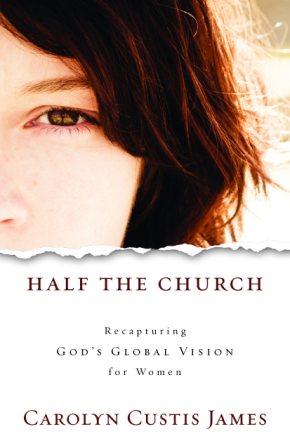
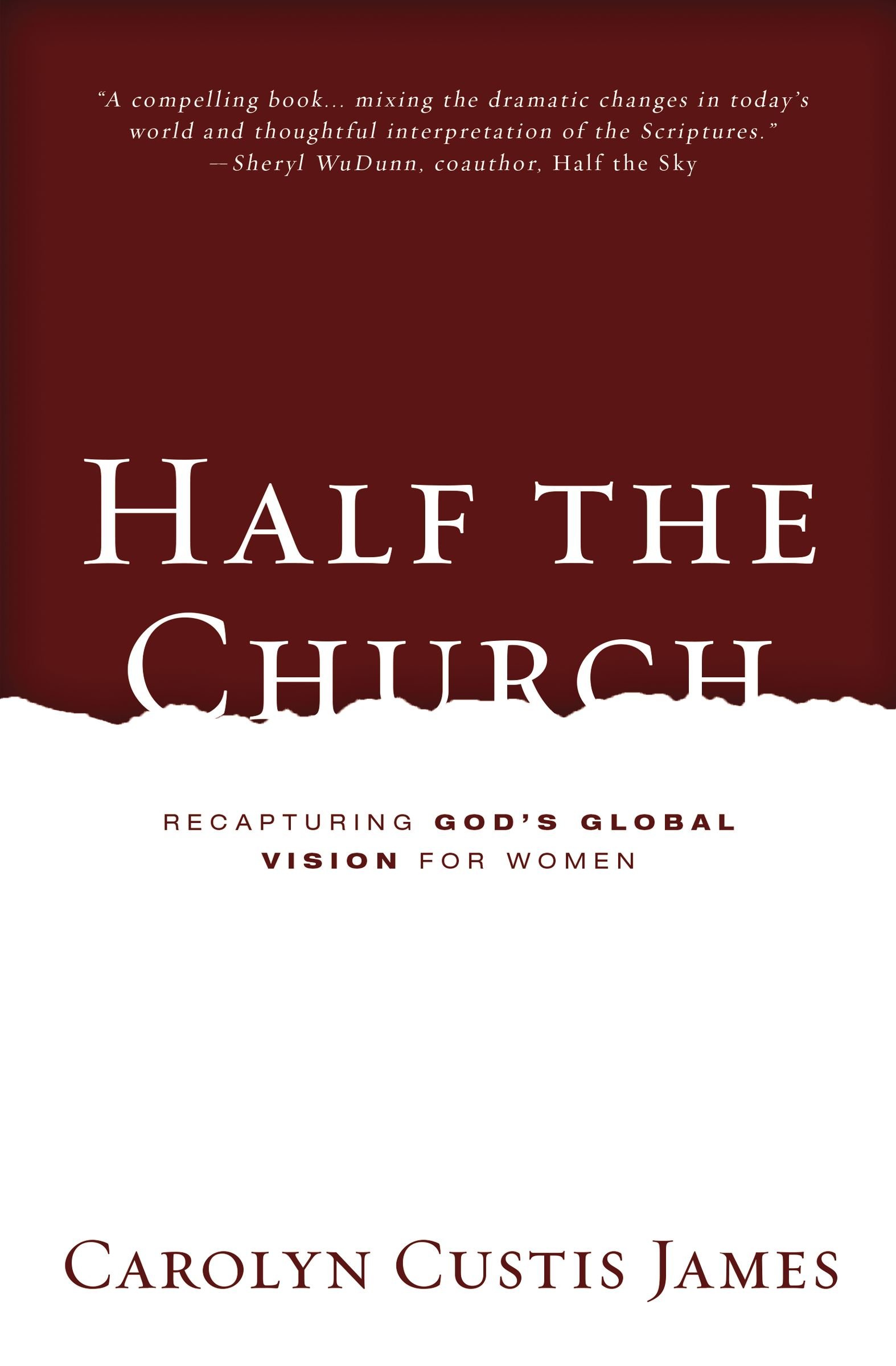
Today, Anita Lustrea, with co-host Melinda Schmidt, is launching a nine-week series about Half the Church on Midday Connection.  We’re going to discuss our way through the book, chapter-by-chapter.

Live broadcast is 1:00 ET/noon CT each week. Listen online or check their website for local listings.  If you missed the first broadcast, you can listen here.

Posted in Uncategorized | Leave a comment

The Windy City

This weekend, I’m heading to Chicago with a full agenda and the chance to catch up with a lot of friends.

Friday-Sunday, Mary Whelchel is hosting The Christian Working Woman’s 23rd Annual Weekend Getaway where I’ll be one of the speakers. Registration is still open if you’re in the area and can come for all or part of the weekend.

Monday, I’m meeting twice with the women of Trinity Evangelical Divinity School—9-11am with students and 6-8pm with the TEDS Wives Fellowship.

Between those Monday meetings, is an in-studio taping at Moody Radio of the second in a nine-week Midday Connection series Anita Lustrea is hosting on Half the Church. Instead of the usual telephone interview, I’ll be seeing Anita live and in action!  Starting tomorrow (Wednesday, April 6), she and I will discussing our way through every chapter of Half the Church.  If you’ve ever heard Anita’s interviews, you’ll understand why I’m looking forward to this nine-week series!  Audios are posted online for those who can’t catch the live broadcast.

Tuesday morning, I’m a guest on The Harvest Show in South Bend, Indiana. Once again, Half the Church will be the topic of discussion. 

It’s a packed schedule, and no doubt I will feel wind-blown by the time I head home. But I’m looking forward to conversations about Half the Church and to hearing from women in the Chicago area.

Posted in Uncategorized | 2 Comments

The Shepherd’s Heart

As little kids, most of us experienced at least once that horrible panicky feeling of being lost in the grocery store and the huge sense of relief that sweeps over you when mom or dad shows up to claim their missing child. When I recall my childhood, I associate that feeling with Sunday after church. As a P.K., I was often the last child to get picked up from the nursery.

Last October, when I was in Cape Town for Lausanne 2010, that panicky feeling returned. I was on a long-awaited field trip with the Reconciliation as the Mission of God group on the one free afternoon during the conference. I’d been looking forward to it all week long. But at the very first stop, I got separated from my group. By the time I realized my mistake, the whole group had moved on without me. I dashed out of the museum door to the street and looked in every direction. They were nowhere in sight. No one saw them leave or knew which way they had gone. I had a suspenseful several minutes until, to my great relief, I saw the leader of our group, Chris Rice, heading my way.

In today’s Lenten reading, Jesus asks the disproving Pharisees and ultimately every one of us to move beyond merely contemplating lost sheep to contemplate the heart of the shepherd.

All the tax collectors and sinners were gathering around Jesus to listen to him. The Pharisees and legal experts were grumbling, saying, “This man welcomes sinners and eats with them.”

Jesus told them this parable: “Suppose someone among you had a hundred sheep and lost one of them. Wouldn’t he leave the other ninety-nine in the pasture and search for the lost one until he finds it? And when he finds it, he is thrilled and places it on his shoulders. When he arrives home, he calls together his friends and neighbors, saying to them, ‘Celebrate with me because I’ve found my lost sheep.’ In the same way, I tell you, there will be more joy in heaven over one sinner who changes both heart and life than over ninety-nine righteous people who have no need to change their hearts and lives.

—Luke 15:1-7, CEB

The Pharisees were revolted by the company Jesus was keeping. Their attitudes mirror a young man in Khaleo Hosseini’s A Thousand Splendid Suns who “spoke quickly and with emphatic, arrogant confidence . . . the sort of quarrelsome young man who relished his authority, who saw offenses everywhere, thought it his birthright to pass judgment.”

In jarring contrast, Jesus doesn’t show the slightest flicker of revulsion and is, in fact, patently unapologetic about hanging out with society’s outcasts. Much to the astonishment of the Pharisees, and no doubt to his disciples, Jesus reinforces his regard for the outcasts by telling a story of a shepherd’s relentless pursuit of that one lost sheep and his unconcealed joy at finding it. And there is dancing in the streets of heaven over just one repentant sinner Jesus restores to the fold.

So here’s the kicker both for the Pharisees and for us. Jesus isn’t merely explaining himself to his critics. He’s raising the bar for how his followers are to live. When God created male and female in his image and likeness, he wasn’t merely establishing our superiority to plants and animals. He was also defining our exalted mission as human beings, namely, to represent God in this world. To speak and act for him.

The only way we know how this is to be done is by making Jesus—God’s perfect image bearer—our study and then by practicing what he preaches. For God’s image bearers, both male and female, Jesus is our role model. In his habit of dining with the outcasts of society and his story of a determined shepherd in pursuit of his lost sheep, Jesus is modeling what it means to live according to the image of God. If that doesn’t get through to us, then at the very least, when we pray “your will be done on earth as it is in heaven,” we should ponder heaven’s thunderous endorsement of Jesus’ value system and actions and begin imitating what heaven joyously approves.

The question N.T. Wright raises about this parable reveals the fact that there is kingdom potency in how closely our relationships with others resemble the pattern Jesus established. “What would we have to do, in the visible public world, if we were to make people ask the questions today to which [this story is] the answer?”

Lent is for me, a sober reminder of the disturbing gap between who I am now and who God created me to be. We may feel better about ourselves in comparison to others. But honest comparisons with Jesus—who calls for a radically different gospel way of thinking and living—will bring us to our knees in broken heartfelt repentance. And when that happens, the celebrating begins in heaven.

* * * * * * *
This post is part of the Lenten Blog Tour, in which 41 bloggers offer reflections on Lent using the new Common English Bible. Check in each day from Ash Wednesday to Easter Monday for more.

Read more about image bearer living in Half the Church. There’s more to this than we realize!

Posted in Uncategorized | 2 Comments

Identity Theft

“Every 79 seconds, a thief steals someone’s identity …”    — CBSnews.com

Identity theft is skyrocketing. Horror stories abound. Shredders are becoming as commonplace in households as toasters. Theft insurance is in demand. According to CBS news projections, “This year alone more than 500,000 Americans will be robbed of their identities… with more than $4 billion stolen in their names.” It can take years to recover.

An even bigger identity theft is happening today—targeting every woman and girl, robbing us of the labels that define us and give us meaning.

After years of being known as the wife of a successful businessman, my widowed grandmother was visibly shaken when someone addressed her on paper by her first name instead of his. Her identity had been stolen. Times do change. Three generations later, my daughter (seven at the time) thought it was hilarious when a letter arrived at our house addressed to “Mrs. Frank James.” She couldn’t believe anyone would address her Papa as “Mrs.” But Millennials have their own identity struggles.

A close friend who spent years building a strong career in church ministry was laid off, with no job prospect in sight. Another friend, after thirty years of raising kids, just entered the empty nest phase and feels lost. Their identities have been stolen.

Identity theft is a deeply personal issue for all of us. As leaders, we are not immune to the events that have us standing on solid ground one day and in quicksand the next. It only takes a phone call, a diagnosis, or a plummeting economy for our identities to be snatched away. Identity theft is also a leadership issue, for as leaders we must think through these issues for the women and girls who count on us to help them survive an identity crisis.

God has a thing or two to say about the subject of a woman’s identity. On page one of the Bible God issues a theft-proof identity card that travels with us—perfectly intact—from birth through the many seasons, demographic changes, and episodes of our stories.

When God said, “Let us make human beings in our image, in our likeness” (Genesis 1:26) he moved a woman’s identity beyond the reach of thieves. Enormous benefits come to us from those few words. Here are a few I find life giving.

Being God’s image bearer means my highest calling as a woman is to know him. I may do a lot of other things, but this one tops the list. I can’t know who I am or why I’m here without knowing the God who created me to be like himself. My mission in life is to know the God who made me and to imitate what I see in him. Nothing can take this away from me.

Being God’s image bearer means I represent God in this world. I am
his eyes, his ears, his hands, his feet, his voice. Wherever I go, whatever I do—I speak and act on his behalf. People are supposed to get a sense of what God is like by rubbing shoulders with me. Everything I do matters. Nothing can take this away from me.

Being God’s image bearer means it is not possible for me to live an insignificant life. God’s image bearers are kingdom builders. He strategically stations each of us where we have kingdom work to do. Even a cup of water taken to a small child in the dead of night carries kingdom significance in God’s eyes. Nothing can take this away from me.

It may still be wise to buy a shredder and check my credit occasionally. But I never need to fear the loss of my identity, for I am God’s image bearer and my identity is grounded in him. And nothing can take that away from me.

[This article was originally published in FullFill ezine. Reprinted with permission.]

For more—much more (!)—about what God has to say about his daughters, read Half the Church This is an important global issue that impacts both women and men.

Posted in Uncategorized | Leave a comment

Asking Deeper Questions

Posted in Uncategorized | Leave a comment

Publishers Weekly Starred Review

When my publisher notified me that Publishers Weekly issued a starred review for Half the Church, I wasn’t sure of the significance.  All of the reviews on Amazon come with stars—even the negative ones are starred.  So what’s all the fuss about?

According to slate.com, Publishers Weekly “reviews . . . influence which books get noticed, bought, and promoted in the media” and are “read by everyone in publishing.” So here’s PW’s review of Half the Church and a second review by the Library Journal.

Half the Church: Recapturing God’s Global Vision for Women
Carolyn Custis James. Zondervan, $18.99 (224p) ISBN 978-0-310-32556-7

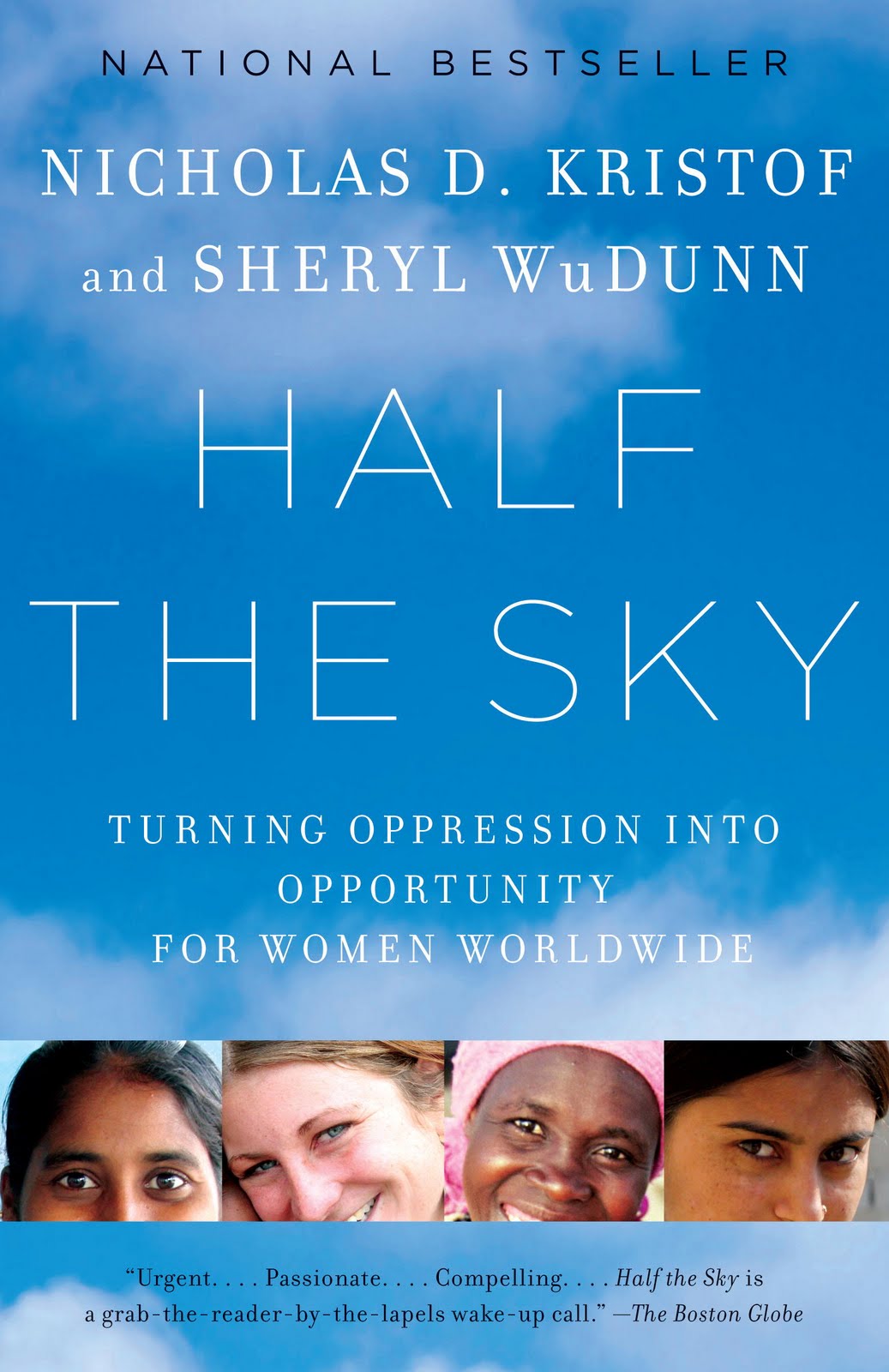
Author (When Life and Beliefs Collide) and conference speaker James takes on the church’s historical stance on women who enthusiastically embrace their God-given role as “ezer-warriors” (ezer is the Hebrew word for “helper”). James’s previous works form the foundation for this important study, which could appropriately be thought of as the Christian companion to the groundbreaking Half the Sky, with its clarion call to activism. James challenges all women to step up and get busy doing the hard work of righting wrongs, influencing their communities, and laboring right alongside their male counterparts to effect powerful and positive change worldwide. James draws liberally from the Bible to underscore that God’s plan is for men and women to work with each other as essential components of a “Blessed Alliance.” The author’s compelling message and passionate voice are amplified by the skill with which she presents this information in volatile, dangerous times. (Apr.)

Permalink: http://www.publishersweekly.com/978-0-310-32556-7 (978-0-310-32556-7)

James, Carolyn Custis. Half the Church: Recapturing God’s Global Vision for Women. Zondervan. Apr. 2011. c.206p. ISBN 9780310325567. $18.99. REL

James (founder, Synergy Women’s Network; The Gospel of Ruth: Loving God Enough To Break the Rules), a popular speaker in evangelical circles, tackles the thorny questions that surround women in evangelical Christianity and broadens her scope to include the fate and destiny of women around the world today. James sees men and women as potentially bound in a powerful partnership for good that does not oppress or belittle women—not easy positions for a woman to take in the heavily patriarchal world of conservative Protestantism.

VERDICT James’s potentially transformative work, a wake-up call for women in America’s Protestant churches, is ideally suited for church groups and pastors.

Posted in Uncategorized | 2 Comments

“Let them eat cake!"

What sounds like an unimaginative idea for a birthday party or a standard option for a wedding reception is actually the appallingly insensitive remark historically attributed to Marie Antoinette on hearing that the poor in France were without bread.

The princess’ inability to think beyond her own lavish lifestyle and abundant resources to contemplate the realities of famine and the resultant suffering of her people boggle the mind. History has given us distance from the dire conditions plaguing France during her time, and we make light of her heartless remark without realizing we have detected a speck in someone else’s eye, when we are guilty of a similar blindness.

It wasn’t until 9/11 tore apart a curtain that comfortably sealed us off from the rest of the world and we began to see the images of women concealed by sky-blue burkas, that I began to realize our localized discussions (and sometimes heated debates) over God’s calling on the lives of his daughters is taking place in isolation from the rest of the world and depriving countless women and girls of meaning and purpose the gospel intends for them no matter where or how their lives are playing out. What is worse, our isolation is causing us to set in stone a theology of women that doesn’t hold up in the lives of many women here and is irrelevant elsewhere in the world where situations aren’t as favorable as those we enjoy.

The difference between prosperity and deprivation is one thing. The desperate plight of women and girls in the world opens up a whole new dimension of existence that is wholly is missing from this discussion. Read Half the Church, if you wonder what I mean. When we ask what is the Bible’s message for us, do we include the girl who has been trafficked, the widow who has been cast out by her family to beg for a living, or the woman who has been gang raped? Does the message we embrace offer them just as much hope, redemption, and purpose as we seek for ourselves? Or are they too broken, too damaged to enjoy the blessings we savor to answer the calling God places on the lives of all his daughters? Are we settling for a prosperity gospel for women, when the gospel offers all women so much more?

What may surprise is that by opening our discussion of the Bible’s message for women and girls to include every woman and girl, bar none, we will discover the Bible’s message for us is richer, stronger, and more empowering for all of us than what we’ve been willing to accept. No matter how well life is going for us at the moment, none of us can count on answers for ourselves that collapse under the weight of other women’s lives or of an unexpected change in our own circumstances.

We need a whole lot more than cake to live with hope in a fallen world.

To explore this discussion further, read Half the Church to see how this larger global conversation helps us recapture God’s global vision for women and gives us an indestructible identity and purpose no matter how our stories play out.

Posted in Uncategorized | 4 Comments

Bold Reading

Last night, Frank and I went to the showing of a film on sex trafficking at Gordon-Conwell. My heart is heavy this morning with a fresh awareness of the serial horrors women and girls are suffering around the world as I write and with a renewed sense of urgency to raise awareness of this global crisis destroying the lives and the dignity of countless women and girls. Nice for the film to portray a rescue, but the ending of the film didn’t give any of us the slightest sense of relief. No one is searching for most who are caught in the web of human trafficking and some have been sold there by those who should protect them.

Once again, I want to urge the reading of Half the Sky, by Sheryl WuDunn and Nicholas Kristof. This book gives new meaning to the expression “must-read” and every Christian should read it.

Sheryl was at Synergy2011, and it was a privilege for us to hear her. Since then I’ve heard two different responses: first, a renewed and passionate desire on the part of those who attended to live out the fullness of the gospel in new ways and a willingness not only to explore how to get involved themselves but also to mobilize others. Second, I’m hearing a reluctance to read Sheryl’s book because some don’t want those images in their minds.

May God multiply the first group and help us never to let up so long as one person is held in the clutches of another. Learn about organizations in your area who are addressing sex trafficking locally and volunteer yourself and your resources to help.

If you are among those who are holding back, let me offer a word of encouragement.  I do understand your reluctance. I don’t want those images in my mind either. But I’m convinced (I’ve seen this in myself) that we will not care in the same way, much less act, if we hold at arms length the brutal realities women and girls are suffering and shield ourselves from the truth. By way of encouragement, you should know this is both a disturbing and a hopeful read. You will be heartened and inspired by the incredible stories of ezers-warriors who are fighting back, freeing themselves against hopeless odds, and then returning to free others. But they need lots of help that we have the power, the resources, and the divine mandate to give. 

So brace yourself and get reading. And when you finish reading WuDunn’s book, I hope you’ll also read my book, Half the Church to find out why Christians belong on the forefront of this humanitarian crisis. 

Posted in Uncategorized | 1 Comment

Smoking in Heaven

You won’t find any “No Smoking” signs in heaven. The book of Revelation envisions the prayers of God’s people as “golden bowls full of incense.” The beloved apostle John writes that “the smoke of the incense, together with the prayers of the saints, went up before God.” 

I love to think that when I pray for God’s Kingdom to come there’s a little more smoke in heaven.

Today is a day of prayer for Synergy, as we are on the countdown to our 7th annual conference in Orlando.

This year’s Synergy conference brings to a head a lot of thinking and wrestling over God’s purposes for his daughters and his sons, the state of our world, the good news we possess, and the need not only to be God’s representatives in this world as bearers of grace but also to be living examples of that grace by how we love one another and work together as the Body of Christ.

If you are unable to join us in Orlando, I still think you should reconsider. Both women and men are welcome! But at the very least, you can certainly join us this day by praying with and for us and adding to the smoke.

www.synergytoday.org/conferences.html
www.synergytoday.org/wudunn.html

Posted in Uncategorized | Leave a comment

Synergy Men

“Synergy isn’t like other women’s conferences!”

That’s what anyone will tell you who has been to a Synergy conference.

We’ve been called the “thinking woman’s conference” because you can count on our speakers and workshops to stretch your mind and challenge your thinking. We’re building bridges and forging deep friendships across all sorts of dividing lines that separate believers. We’re all over the map on the women’s issue and represent a wide variety of denominations and theological camps.

None of this is getting in the way of the mission God has given us because we know we can do more and do it better if we work together.

But the one distinctive that really sets Synergy apart from other women’s conferences is the fact that men have started coming too.

From the start, men like Frank James, David Kirkendall, Steve Douglass, and Charles Gilmer believed in what we were doing, opened doors, and cheered us on. But in 2007, Jack Kuhatchek of Baker Books broke the gender barrier by registering as an attendee.

Men have been coming ever since.

Naturally, this changes the conversation we’re having, and that can only be a good thing, for our pursuit of the Blessed Alliance of men and women and of a healthy Body of Christ cannot be attained unless and until our brothers join us in this effort.

So just in case you’re thinking you can’t invite your male colleagues or spouses along, think again. The welcome mat is out for our brothers, and we hope more of them come!

Posted in Uncategorized | 1 Comment