Minneapolis

What do President Obama and Carolyn James have in common? Both of us had speaking engagements last weekend in Minneapolis—home of the Twins, Garrison Keillor, the Billy Graham Association, Bethlehem Baptist Church, Solomon’s Porch, the most eye-popping Farmers Market, and who knows what else! And both of us were facing the secular press.

I was in town for the Religion Newswriters Association Convention—an annual gathering of journalists who cover religious topics for secular newspapers and media. I participated on a panel moderated by Julia Duin of The Washington Times, with fellow-panelists John Piper and Collin Hansen, CTI journalist and author of Young, Restless and Reformed. Our panel topic was the resurgence of Calvinism among young evangelicals (the subject of Collin’s book). This YR&R movement has drawn the interest of the media. You can read Collin’s CTI article about it here.

The press wanted to know more.

Participating on the panel gave me the opportunity to talk about a growing phenomenon I’m seeing among women that shares common threads with the YR&R, but goes well beyond Reformed circles to include a wide range of denominations. Everywhere I go, women I meet are hungry to learn more about God and to dig deeper into Scripture. This confirms my thesis (see When Life and Beliefs Collide) that God created women to be theologians—that knowing him is our highest priority.

This pursuit of deeper understanding isn’t the end of the matter, however, for these same women find that this deepening knowledge and love for God stirs up a passionate Don’t Waste Your Life activism. Women don’t just want to take in. They are compelled also to live out the rich and radically transforming theology they are learning. They don’t want their relationships with God to be all talk. They long to incarnate the gospel to those around them.

The other trend I’m seeing consistently is a God-given desire among women to work well with their Christian brothers. This isn’t about “taking over,” as some fear, but a healthy desire to be part of the team, to interact and contribute, to be diligent stewards of the gifts God has entrusted to them for his church—in sum, to make their lives count for the kingdom. I think all of these trends among women are worthy of press attention and certainly are reasons to celebrate.

Following our presentations, a journalist asked Piper to explain the strong male-emphasis and Complementarian stance of the YR&R movement. It was a follow-up question to comments I made in my presentation regarding the fact that, although many women fully embrace the YR&R movement, other women within the movement are keenly aware and bewildered by the fact that they are a secondary audience at YR&R conferences. They’re permitted to attend, but it’s clear they aren’t the target audience.

In the process of explaining, John Piper expressed concern about the “feminization of the church.” I must confess that expression always gives me pause. It never fails to strike me as disparaging women for their committed involvement as members of the Body of Christ. It casts a negative light on the exciting trends I’m seeing among women. At the very least it sends a clear message to women that we should forget celebrating the trends I’m seeing and make ourselves scarce.

Instead, I asked John about it afterwards. Which led to an interesting and thoughtful conversation I hope will continue.

Is it possible that there are too many women in the church? That their very presence and kingdom activity are deterrents for men to respond to the gospel or get involved in ministry? Did Paul worry about “feminization” when he planted the church in Philippi with a committed team of women? Can women—can anyone—do too much for the kingdom? And if men are holding back, is the solution to restrain or sideline women? Or does not the very scope of our mission in the world mean we should be calling both men and women to serve God heart and soul and to do it together?

Posted in Uncategorized | 21 Comments

Mary Magdalene—Apostle to the Apostles

“Culturally, it would have been acceptable for the apostles to marginalize the female followers of Jesus after he returned to the Father. It wasn’t acceptable to Jesus. Throughout Mary’s story, Jesus was making value-laden statements about women that went against the culture’s view of them. He clearly expected the men who followed him to see things his way and to value the women as he did. Women weren’t ancillary, but crucial to Jesus. He didn’t give them small jobs. He gave Mary two of the most significant—as the first witness to his resurrection and as an apostle to the apostles.”

Joel Spector, artist
Posted in Uncategorized | Leave a comment

Mary of Nazareth–The First Disciple

“In our endless search for strong, godly role models for women, we usually do not think of checking out the local high school for prospective candidates. Contrary to conventional wisdom, which teaches us to look for role models among Christians who are older than ourselves and to expect less of the young, the Bible often showcases exemplary young people whose hearts belonged to God and who gave up everything to follow him. Despite crushing odds, they held their ground against the Enemy and stood firm, and often alone, in their faith. . . . We make precious little out of the fact that the woman who plays such a central role in the unfolding of God’s plan in history and in the church–Mary of Nazareth–was only a young teenager when first introduced in Scripture. . . . God’s redemptive purposes for all humankind dangled by the slender thread of a thirteen or fourteen-year-old Jewish girl. Who would believe that thread could be so strong?”

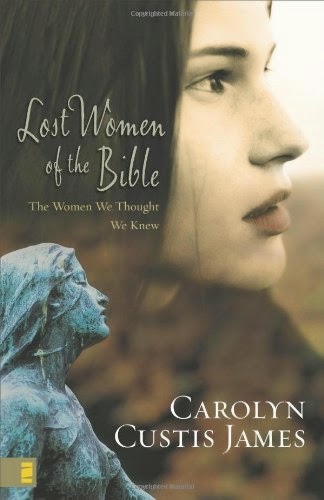
Lost Women of the Bible

Joel Spector, artist
Posted in Uncategorized | 1 Comment

Esther—A Sleeping Beauty

“. . . life is full of unpredictable twists and turns—long lulls, disappointments, tragedies, and big breaks—that push us out of the shadows and force us to summon up courage, strength, and gifts we never knew we had. Esther’s beauty didn’t fade or, if it did, no one seemed to notice. Instead, other aspects of her character surfaced, showing the world and proving to Esther herself that she had serious responsibilities before God and a whole lot more to offer than beauty and compliance. When Esther faced the crisis of her life, the powers of face and form were not enough, and her ability to please stood in her way. The situation called for her to think and strategize, to exercise courage, to stand on her own two feet, and to rely solely upon her God. That’s when Esther, long lost in her beauty, was finally found.”

Lost Women of the Bible

Joel Spector, artist
Posted in Uncategorized | Leave a comment

Hannah—The Power Behind the Throne

“From that day on Hannah was severed from the child she had longed for and loved with every fiber of her being. And, at the end of the day, she would go home with Elkanah and Peninnah—the same two people who had broken her heart a hundred times before by their choices and actions. Yet despite all of this, Hannah was secure and uncharacteristically confident, for she had come to understand that God is on his throne, and the one who trusts in him, though she is hurting, is standing on solid rock.”

Joel Spector, artist
Posted in Uncategorized | Leave a comment

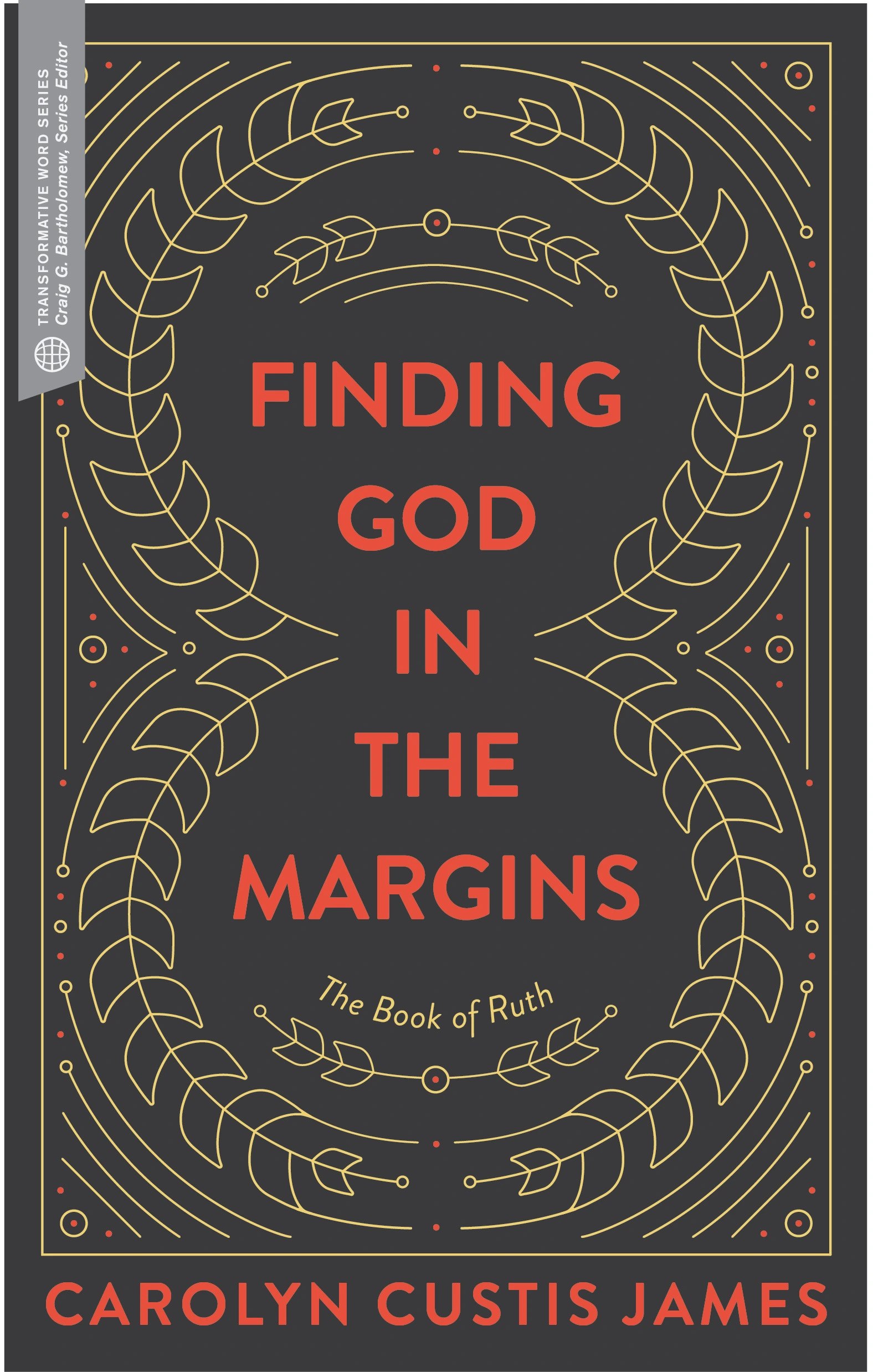
Ruth—A Gutsy Risk Taker

“Careful reexamination of the Hebrew text has effectively removed the shrink-wrap that for generations has encased Ruth. She emerges, not as the passive, deferential, demure woman we once thought we knew, but as a surprisingly gutsy risk taker. The young Moabite widow discards cultural protocol, her own hopes of happiness, and even plain reason when she embraces Naomi’s terrifying God and binds herself for life to her mother-in-law. In one pivotal moment, Ruth’s identity and center of gravity change forever. The rest of her story is a stunning (and at times shocking) chronicle of her efforts to live out what it means to be Yahweh’s child.”

Posted in Uncategorized | Leave a comment

Tamar—Missing in Action

“Tamar puts starch back into our definition of what it means to be a woman. She would have loved Paul’s letter to the Ephesians. He was speaking her language when he urged belieers to ‘be strong in the Lord’ and to arm themselves as warriors ready to ‘stand against the devil’s schemes’ (Ephesians 6:10-18).”


Lost Women of the Bible >


                Joel Spector, artist
Posted in Uncategorized | Leave a comment

Hagar—The Invisible Woman

Hagar’s story “levels a devastating blow against anyone who tries to make the case that women don’t count or that we are second-class citizens in God’s kingdom. God simply couldn’t have made a stronger statement of how much he values women and how central they are to what he is doing. Who can argue when God gives a woman like Hagar—a disenfranchised slave girl who is clinging to the bottom rung of the human ladder and utterly alone in life—this kind of one-on-one personal attention? God focuses on Hagar despite the fact that the child she carries is not the promised one and her story is only a messy interruption to the real story God is weaving. Yet he treats Hagar like she’s the most important person in the world as he follows her into the wilderness to affirm his love for her and bring a sudden and permanent end to her aloneness.”

Joel Spector, artist
Posted in Uncategorized | Leave a comment

Sarah—Life in the Margins

“God’s silence is one of the most disconcerting experiences any of his children endure. We can persevere through just about anything so long as we sense the warmth of his presence and the reassuring comfort of his love. But courage melts and we are taken hostage by fear and hopelessness when God seems far away. . . . Sarah suffered God’s stony silence . . . Silence in response to her tears and pleadings for a child. Silence in the beautiful promises that never included her. Silence that only reinforced Sarah’s fears that God remembered Abraham, but had forgotten her.”

Joel Spector, artist
Posted in Uncategorized | 3 Comments

Twitter

Sunday morning I experienced the power of technology in ministry when the ping of my cell phone woke me up. Twitter, FaceBook,and other social networking technologies have a surprising variety of uses, from exposing and fueling political crises, as we have witnessed in the Iranian election protests, to mindless chit-chat with friends. These technologies are also power tools for community and ministry to others.

For example, a friend emailed me recently to ask if I knew of a simple self-study on the book of Romans for his son who is in prison and newly turned to the Lord. Now there’s a tall order! A few words on Twitter (which traveled from there to FaceBook) and within minutes I had three solid recommendations to pass on to him.

Then there was that ping on Sunday morning. It was a text message—a tweet from Max Lucado. I have him and a couple of others I follow linked to my cell phone, so their Twitter messages come to me direct. Evidently, he was up early and sending encouragement to others. It was a timely word for me—a welcome first thought of the day.

May God calm your soul on this day.
May the Voice that soothed Galilee’s storm, still yours.
“It’s all right. I am here.” Mt. 14.27
Amen

Follow me on Twitter @carolynezer
Posted in Uncategorized | 2 Comments